


Abuja, NIGERIA — In the quiet corridors of Igboland’s mortuaries, where bodies lie still and unattended, a profound spiritual crisis is unfolding. Traditional spiritual leader Ogilisi Igbo has issued an urgent plea to the people of southeastern Nigeria: bury your dead.
According to Ogilisi, the rising insecurity, cultism, violence, and social unrest in the region are not merely political or economic phenomena but spiritual consequences of a deep cultural deviation. Souls of the dead, he argues, remain restless when bodies are preserved for long periods in mortuaries, and this restlessness, in turn, leads to chaos.
He made these remarks during a telephone interview with Time Africa, reiterating a message he says he has been preaching for more than two decades.
“I am appealing to Ndi Igbo because when strange things happen, we ask why. Igbos are not known to be cowards. We do not fear anyone. In the past, when someone died, we buried them promptly. Before the 1980s, mortuaries were not commercialized. We didn’t preserve bodies. We returned them to the earth.”
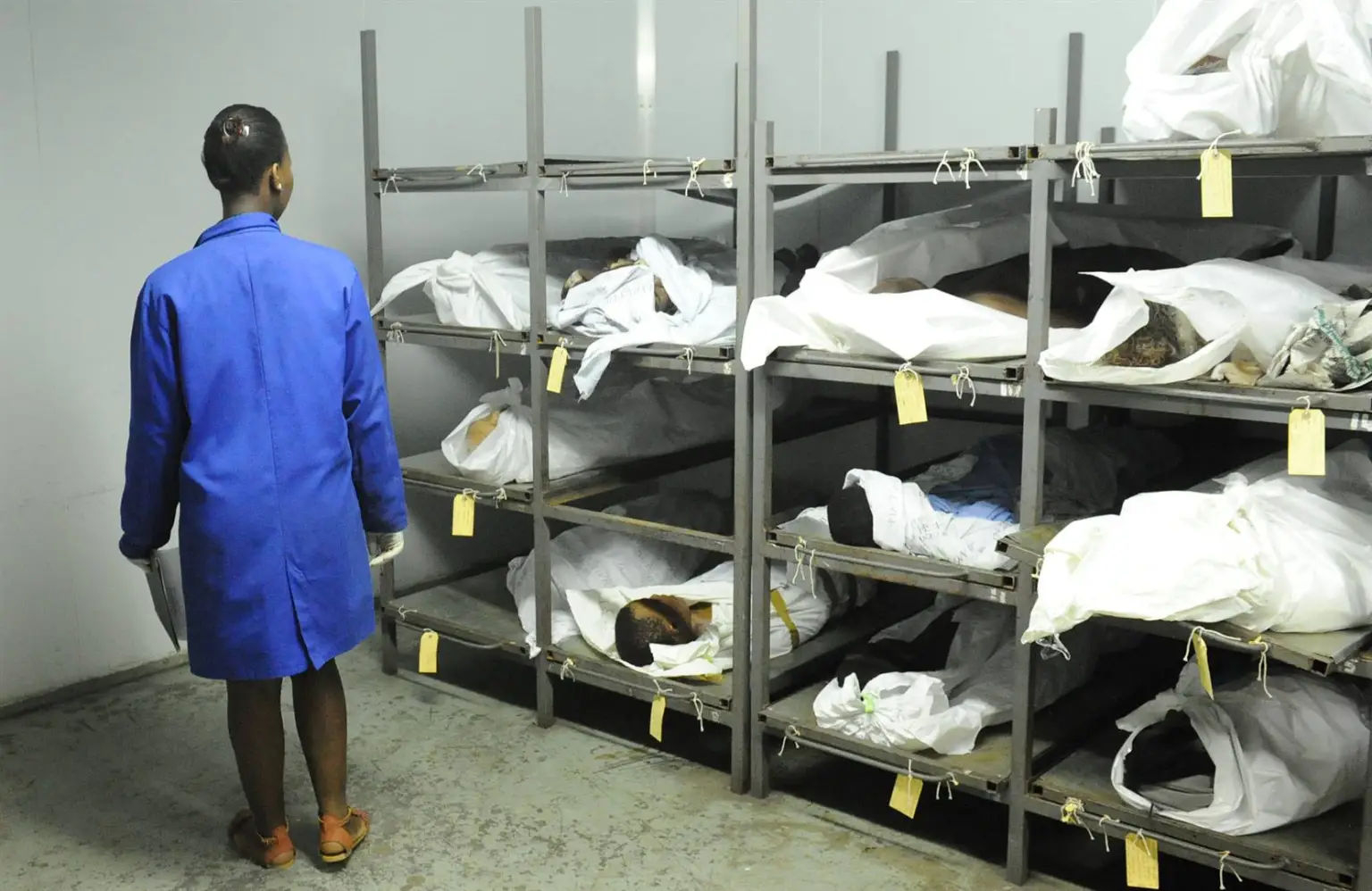
Ogilisi traces the shift in burial practices to the post-war period, when funeral ceremonies began to grow in extravagance and cost. Mortuaries, once rare, became places where bodies were kept for months or even years as families sought to organize so-called befitting burials.
“That was the beginning of our problems,” he said. “There is no reason why Christians in Nigeria, Igbos in particular, should continue overcrowding mortuaries. Some dead bodies have been there for 10, 15 years. This has provoked the angels.”
He argues that spiritual harmony in Igboland is now broken.
“The angels do not dwell in environments littered with corpses. Their duty is to guide souls, and they expect every soul to return to the Creator once it leaves the body. But instead of committing the dead to the earth, we keep them in cold rooms. That is an abomination.”
In traditional Igbo cosmology, and also in many strands of Christian belief, burial is the final act of severance between the body and soul. Ogilisi describes this using the concept of the “silver cord,” which he says connects the physical and spiritual realms.
“When a child is born, the umbilical cord is severed. When a person dies, the silver cord must also be cut through burial or cremation. That’s why we say, ‘dust to dust, ash to ash.’ Without that, the soul cannot return to God.”
He argues that failure to bury the dead prevents the soul from completing its spiritual journey, leaving it trapped and capable of disturbing the living.
Ogilisi describes a world now overwhelmed by “unclean spirits” and “zombies,” which he defines as spiritual manifestations of unburied corpses.
“There is a proverb in Igbo: enie ozu, enie ọnụma. When corpses are not buried, they generate spiritual disorder. That disorder is now manifesting as cultism, violence, and fear among our people.”
He contends that many of the social problems plaguing Igboland—gang killings, youth criminality, kidnappings, even mental illness—are tied to these wandering spirits.
“What is happening to the Igbos and Nigerian Christians? Why are they now powerless and afraid? It is because they enjoy keeping corpses. But corpses are not meant to stay on the surface of the earth for long. We must allow the soul to return to God.”
Ogilisi also speaks about ritual purity, referencing Old Testament texts from Leviticus and Numbers to support his view that spaces where corpses are kept are unclean.
“Dead bodies are not supposed to be taken to churches. Any tent where a dead body is kept becomes unclean. Whoever enters is unclean. Even when a corpse touches you, you must cleanse yourself.”
He criticizes what he calls the modern trend of celebrating the dead with elaborate display and ceremony.
“What the Igbo now do—throwing corpses up and down, displaying them for days—is an insult to the Creator. The highest form of respect you can give the dead is to bury them quickly. That’s what Muslims do. The funeral can be celebrated with the picture of the dead, not the body.”
He recalls the example of folk music legend Mike Ejeagha and political leader Dr. Dozie Ikedife, who both instructed their families to bury them immediately without placing them in a mortuary.
“They were buried quickly, and their souls rested. But today, some people keep corpses for years. Others who did that have even died themselves. Now their corpses lie in the same mortuary. All abandoned. The morticians don’t even keep proper records.”
According to Ogilisi, Anambra State has a burial law that prohibits keeping a corpse in a morgue for more than two months. However, implementation remains lax, and cultural expectations around lavish burials continue to fuel the trend.
He warns that this trend is spiritually dangerous.
“God uses angels to protect His people. But angels cannot dwell in places littered with corpses. Instead, demons come. They roam freely, entering our youths, turning them into criminals. This is not mere religion—it is spiritual law.”
Ogilisi claims that in some communities, vultures—a sacred bird in Igbo tradition—have vanished due to spiritual imbalance.
“In the past, vultures helped clean the land. Now they have fizzled out, and people have turned into vultures, hungry for corpses. We have turned our land into a morgue.”
Community leaders and cultural scholars have begun to echo these concerns. In some towns, burial societies and savings groups have emerged to support poorer families in burying their dead within a short time frame.
In Anambra and Enugu, local clergy have also started encouraging families to opt for immediate burial, sometimes holding memorial services weeks or months later to avoid expensive, drawn-out rituals.
At the policy level, there are calls for stricter enforcement of burial timelines and regulations on mortuary operations. Critics argue that many private mortuaries prioritize profit over public health and cultural integrity.
Public health officials also cite risks: decomposing bodies, even in refrigerated environments, can harbor pathogens. In rural areas without proper mortuary infrastructure, delays in burial can lead to outbreaks of disease.
But the spiritual implications seem to carry more weight for many in Igboland. In towns like Nnewi, Nsukka, and Umuahia, residents speak with growing unease about what they call “spiritual unrest.”
“In the old days, if someone died, we buried them that day or the next,” said an elder from Awka. “Now we wait, sometimes months. The land is no longer at peace.”
One young woman, a nurse in Enugu, shared that her family’s decision to delay her mother’s burial due to financial challenges caused tension and fear.
“We couldn’t afford the ceremony. But we were also afraid of keeping her too long. My father started falling ill. People said her spirit was angry.”
These fears, whether grounded in tradition or personal belief, underscore a wider cultural anxiety.
Funeral ceremonies in Igbo society have long been seen as expressions of love, status, and community. But as Ogilisi argues, when ceremonies outweigh the spiritual essence of burial, something vital is lost.
“The soul is the breath of God. Once it leaves the body, it must return. That is how peace is restored.”
Efforts are now underway in some communities to reorient cultural priorities. Grassroots education campaigns, led by traditional leaders and supported by faith groups, aim to bring urgency back to burial.
There are calls for burial support funds at the local government level. Civil society groups are pushing for mortuary transparency—urging facilities to publish lists of abandoned or long-stored corpses. In Enugu, one hospital reportedly disposed of more than 300 unclaimed bodies in a mass burial, highlighting the scale of the problem.
Still, resistance remains. Many families feel cultural pressure to provide a lavish send-off, even if it means going into debt or delaying burial for months or years.
Ogilisi warns that such delay is dangerous—for the living and the dead.
“The highest thing you can do for the dead is not a party. It is to bury them. Their souls need rest. Until we do that, the violence will continue. The demons will rule, and the angels will stay away.”
As spiritual, cultural, and legal forces converge, Igboland stands at a crossroads. Whether through faith, tradition, or policy, the region must find a way to restore spiritual balance—one burial at a time.












Discussion about this post