


Anambra State has stirred nationwide discussion with a new law that prohibits the retention of corpses in mortuaries for more than two months. Championed by Chief Rommy Ezeonwuka, also known as Ogilisi Igbo, and supported by state officials, the legislation aims to revive traditional Igbo burial practices, alleviate spiritual unrest, and protect families from the financial and social pressures associated with prolonged mortuary stays.
The law, which came into force this month, has ignited a debate across Igbo communities in southeastern Nigeria. Cultural custodians, activists, ordinary citizens, and advocacy groups have weighed in, offering perspectives that touch on spiritual, cultural, social, and financial implications.
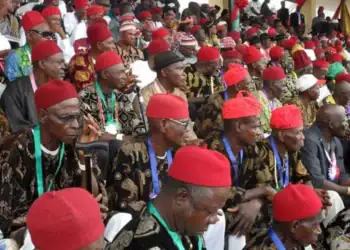
Chief Rommy Ezeonwuka, a respected custodian of Igbo heritage, has been at the forefront of the campaign for the law. Speaking during a high-level meeting with Anambra State officials, he underscored the importance of returning to traditional burial customs that prioritize timely interment over ceremonial extravagance.
“In Igbo culture, people were traditionally buried shortly after death, usually within four days, regardless of wealth or social status,” Ogilisi Igbo explained. He stressed that in exceptional circumstances—such as when family members lived far away—a body might be preserved at home for a few extra days, typically no more than seven, to allow relatives to attend. However, prolonged mortuary retention, he argued, is a recent development that departs from longstanding customs.
He pointed to the practices of traditional rulers as evidence of enduring customs. “Even today, kings in places like Arochukwu in Abia State are buried within four days and are not placed in mortuaries. The culture has always emphasised timely burial,” he said.
Ogilisi Igbo also emphasized the spiritual dimension of prompt burial, arguing that funeral celebrations should not impede the deceased’s rest. “Funerals are celebrations of life, not of death. They can be held one year, sometimes two years, even ten years after the person has died. But the deceased must be buried promptly so that they can find rest,” he noted.
The law in Anambra State mirrors similar legislation in neighbouring Enugu State, which imposes fines for extended mortuary retention. Ogilisi Igbo has called on other states to follow suit, stressing that the legislation must be accompanied by public education and cultural reorientation to ensure compliance. “It’s not just about law. Our people need to be given real reorientation so that they will begin to change their attitude towards this situation,” he said.
Supporters of the law argue that prolonged mortuary retention has multiple consequences. Beyond the financial burden of keeping bodies in hospital mortuaries—often at rates of thousands of naira per day—it can heighten social tension within families and communities. Some cultural activists also link delayed burials to spiritual unrest, suggesting that spirits cannot find peace if bodies remain unburied for extended periods.
However, some citizens have expressed concerns about the law’s enforcement. A resident of Onitsha, who requested anonymity, said: “Not everyone can afford to organise a funeral immediately. Some families wait to gather enough money or coordinate with distant relatives. A strict two-month limit might put pressure on already struggling households.”
In response, officials and cultural leaders emphasise that the law is not intended to prevent families from honouring loved ones through memorial services. Funeral celebrations and elaborate ceremonies can still be held months or even years after burial, allowing families to mourn properly while respecting cultural norms.
The Anambra State Ministry of Culture and Tourism has announced plans for a public awareness campaign to educate citizens about the new rules and the rationale behind them. Officials intend to collaborate with local chiefs, religious leaders, and community groups to ensure that people understand both the legal obligations and cultural significance of timely burial.
Advocates also point out that the law could help reduce the commodification of death, which has emerged in some urban areas where mortuary services have become a source of profit. By enforcing a limit on how long bodies can be stored, the law seeks to shift the focus back to communal and spiritual priorities rather than commercial considerations.
Some sociologists suggest that the legislation reflects a broader cultural revival across Igbo communities. In recent decades, Western-style mortuary practices and prolonged funeral planning have increasingly replaced traditional approaches, contributing to social tension and, according to some, spiritual anxiety. The law is seen as a way to reclaim heritage while addressing modern challenges.
Religious leaders in Anambra State have largely welcomed the law, seeing it as consistent with Christian teachings on respect for the dead and timely burial. However, they have also urged sensitivity, noting that some families require flexibility due to logistics, illness, or travel constraints.
For cultural activists, the law represents more than just a policy measure. “It is a statement about identity, heritage, and respect for our ancestors,” said a spokesperson for the Igbo Cultural Preservation Group. “Returning to traditional burial practices restores dignity to the deceased, reduces unnecessary stress for families, and reinforces our values.”
As Anambra State begins implementing the law, experts emphasise the need for monitoring and feedback. Successful enforcement will depend not only on legal measures but also on community engagement, education, and collaboration between government authorities and cultural custodians.
Chief Rommy Ezeonwuka remains optimistic about the law’s impact. He believes that, with proper awareness and community support, the legislation will help re-establish cultural norms, protect families from undue burdens, and promote spiritual peace. “We have an opportunity to remind our people of our heritage,” he said. “Prompt burial is not just a law; it is part of who we are.”
The Anambra initiative may serve as a model for other Nigerian states grappling with similar tensions between modern funeral practices and traditional customs. By combining legislation with cultural education, the state hopes to ensure that families can honour their loved ones without compromising spiritual or social wellbeing.














Discussion about this post