


Drumbeats rolled across the dusty plains of Sambuli as elders in flowing smocks and children in bright beads danced in unison, marking the 27th edition of the Ndipoandan Festival — a celebration that fuses harvest thanksgiving with a renewed push for development in one of Ghana’s most remote regions.
Held in Sambuli in the Saboba District of Ghana’s Northern Region, the annual gathering drew hundreds of sons and daughters of the Sambultiib clan of the Konkomba people, many travelling from Accra, Kumasi and even abroad to reconnect with ancestral roots.
Ndipoandan, meaning “New Guinea Corn Festival”, commemorates the harvest of guinea corn — known locally as sorghum — a drought-resistant crop central to life in northern Ghana’s semi-arid savannah. For the Konkomba, part of the wider Gur ethnic grouping spread across northern Ghana and neighbouring Togo, guinea corn is more than sustenance. It is the basis of traditional dishes and brewing, and a symbol of continuity in a landscape long shaped by subsistence farming.
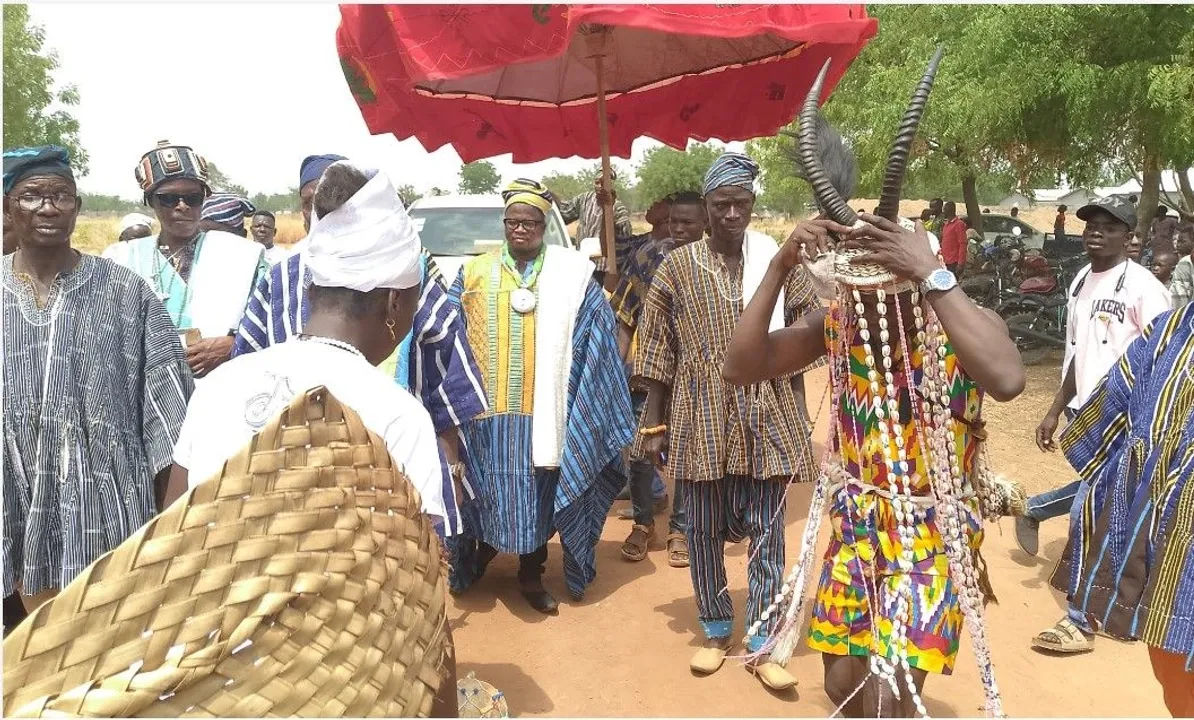
The festival traditionally marks the end of the farming season and the beginning of a new agricultural cycle. Prayers are offered for rain, fertility of the land and protection from conflict, before the first grains of the harvest are ritually consumed. This year’s celebrations combined those age-old rites with pointed appeals for unity and grassroots development.
Under the theme, “Our Culture, Our Heritage: Using Culture as a Tool to Bring Our People Together for Development,” speakers stressed that tradition must serve as a springboard for progress rather than a relic of the past.
Ubor N-Yabi Malibei, Chief of Sambuli, used his address to call for peaceful coexistence among residents and neighbouring communities, noting that northern Ghana has historically experienced sporadic chieftaincy and land disputes. Stability, he said, is essential if the area is to attract investment and retain its youth.
He also highlighted the persistent challenge of poor telecommunications connectivity, which hampers business, education and access to emergency services. “Development cannot thrive in isolation,” he told the gathering, urging both government agencies and private operators to extend infrastructure to underserved rural districts.
Saboba District, carved out of the former Chereponi-Saboba area in 2004, remains largely agrarian. According to Ghana Statistical Service data, agriculture employs the vast majority of residents, with limited access to paved roads, healthcare facilities and secondary schools. Seasonal migration to southern cities in search of work is common among young people.
Against that backdrop, festival organisers showcased several community-led initiatives aimed at reversing the cycle of underdevelopment. Among them are the construction of a maternity block to improve maternal and child health outcomes, a community centre intended as a hub for training and social events, and a Junior High School classroom block funded largely through communal labour and donations from diaspora members.
Guest of honour Ubor Dr Tassan Konja VI, Paramount Chief of the Kpasa Traditional Area in the neighbouring Oti Region, urged young people to combine pride in their heritage with modern skills. Education and entrepreneurship, he said, must go hand in hand if rural communities are to compete in a rapidly changing Ghanaian economy.
“Culture should unite us, but it should also propel us forward,” he said, encouraging investment in agribusiness, small-scale processing and digital enterprises that can add value to local produce.
Festivals such as Ndipoandan play an increasingly prominent role in Ghana’s broader cultural calendar. Across the country, traditional harvest celebrations — from Homowo among the Ga in the south to Damba in the north — have become platforms not only for cultural preservation but also for political engagement and development advocacy.
In Sambuli, the mood was both festive and reflective. Storytellers recounted the migration histories of the Konkomba, who trace their ancestry across the Oti River basin. Youth groups performed energetic dances to the beat of talking drums and flutes, while elders poured libations in remembrance of forebears.
For many attendees returning from cities or abroad, the festival offered a powerful reminder of shared identity. For local leaders, it was an opportunity to galvanise support for tangible improvements in living standards.
As the final drumbeats faded and families dispersed back to their farms and homes, the message of this year’s Ndipoandan was clear: heritage remains the anchor of community life in northern Ghana — but its true strength lies in its ability to inspire collective action for a more prosperous future.











Discussion about this post