
When Africa’s richest industrialist, Aliko Dangote, announced plans to build the continent’s largest Linear Alkyl Benzene (LAB) plant, the news was framed as another milestone in Nigeria’s industrial awakening. The plant is designed to produce 400,000 tonnes of LAB annually. This project another paradigm-shift in the Nigeria’s economic, social and political landscape.
The new facility, to be located inside the sprawling Dangote Refinery complex in Lagos, is planned to meet Africa’s total demand for LAB, the critical feedstock used to produce surfactants for detergents and cleaning agents. If completed as planned, it will dwarf existing plants in Algeria and Egypt, positioning Nigeria as the continent’s primary supplier of a raw material found in nearly every household cleaning product.
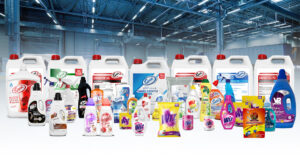
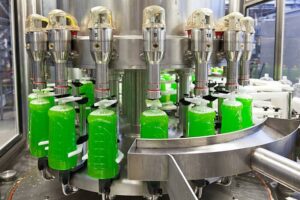
Linear Alkyl Benzene may sound technical, but its impact is totally domestic. LAB is converted into Linear Alkyl Benzene Sulfonic Acid (LABSA), the foaming agent that powers laundry powders, dishwashing liquids and industrial cleaners. In homes across Nigeria and the wider continent, the price of soap and detergent is tied to the availability of this compound.
By eliminating imports of LAB, Nigeria could stabilize prices and shield manufacturers from foreign exchange volatility, a persistent burden on small and medium-scale detergent producers. Entrepreneurs who run mini factories in Aba, Kano and Lagos, the access to locally produced feedstock could mean fewer supply disruptions and more predictable costs. Though caution that local production does not automatically translate into lower retail prices. Distribution bottlenecks, energy costs and currency pressures may still influence what consumers ultimately pay.
The LAB plant strengthens the transformation of the refinery complex into a vertically integrated petrochemical hub. Alongside the refinery and fertilizer operations, the addition of detergent feedstock manufacturing expands Dangote Group’s reach further into downstream consumer markets. Supporters within the Nigerian National Petroleum Company (NNPC) describe the development as strategic import substitution that will conserve foreign exchange, boosting industrial self-sufficiency. It also aligns with long-standing ambitions to extend value addition within Nigeria’s oil and gas sector rather than exporting crude and importing finished or semi-finished products.
However, questions about market concentration are quietly rising in different corners. With one conglomerate already dominant in cement, fertilizer and now refining, concerns linger about competition and regulatory oversight, if it wont be manipulated. Will smaller petrochemical investors find space to thrive, or will the scale of this project create barriers to entry? These questions and many more, are the probable questions that would linger in many minds.
LAB’s straight-chain alkyl structure makes it more biodegradable than older detergent compounds that usually pollute waterways. Industry experts note that modern processes, including technologies such as DeTAL, reduce hazardous byproducts during production. Still, communities around the Lekki corridor, where the refinery complex is located, are sensitive to environmental risks. Fishermen, natives and local residents, have previously voiced concerns about emissions, marine impacts and land use changes tied to industrial expansion. But then again, while the company maintains that operations meet global environmental standards, sustained transparency and monitoring will likely shape public trust.
Construction and eventual operations promise employment opportunities, from engineers and chemical technicians to logistics workers and service providers. In Nigeria, where youths are grappling with high unemployment rate, this project prospects would carry political weight. Also, the multiplier effect will depend on how integrated local supply chains evolve and become. If packaging firms, transport companies and ancillary industries cluster around the complex, broader community benefits could follow. If not, the gains may remain concentrated within corporate community.
At 400,000 tonnes per year, the plant’s capacity far exceeds current African production levels. This indicates an ambition transcending Nigeria’s borders. By positioning itself as Africa’s LAB hub, Nigeria could reshape regional trade flows, reducing dependence on Asian and Middle Eastern imports. While for the African Continental Free Trade Area (AfCFTA) relevance, the industrial project will offer an assurance that African manufacturing can meet African demand competitively?
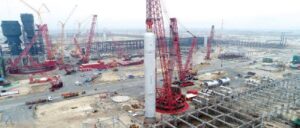
The announcement, which was made during a refinery tour with NNPC officials, underlines a broader narrative that portrays the transforming of a $20 billion refinery complex, into a comprehensive industrial ecosystem. It is a vision of vertical integration, import substitution and continental export leadership.
So, as bulldozers prepare the ground, the story unfolding is not only about molecules and megatonnes. It is about the cost of soap in local markets, the livelihoods of small manufacturers, the balance of industrial power and the environmental footprint left behind. In the end, the success of the forthcoming Africa’s largest detergent feedstock plant, will be measured in tonnes of LAB produced, and how widely its economic and social dividends would be felt.









Discussion about this post