
Sunday, May 10, 2026
  • Who’sWho Africa AWARDS
  • About One Africa Magazine
  • Contact Us
www.oneafricamagazine.com
  • Home
  • Magazine
  • News
  • Interviews
  • Sports
  • World News
    • US
    • South America
    • Asia
    • Europe
    • Middle East
    • Australia and Antarctica
  • Crime
  • Politics
  • Lifestyle
  • Column
  • Special Report
  • WHO’SWHO AWARDS
No Result
View All Result
www.oneafricamagazine.com
  • Home
  • Magazine
  • News
  • Interviews
  • Sports
  • World News
    • US
    • South America
    • Asia
    • Europe
    • Middle East
    • Australia and Antarctica
  • Crime
  • Politics
  • Lifestyle
  • Column
  • Special Report
  • WHO’SWHO AWARDS
No Result
View All Result
www.oneafricamagazine.com
No Result
View All Result
  • Home
  • WHO’SWHO AWARDS
  • News
  • Magazine
  • World News

Home » Column » If illegal logging starts again, Liberia could lose more than its beloved pygmy hippos | Ellen Johnson Sirleaf

If illegal logging starts again, Liberia could lose more than its beloved pygmy hippos | Ellen Johnson Sirleaf

About 270,000 people died in Liberia’s timber trade-fuelled civil war. I helped to rebuild and protect its forests. Now Europe is threatening to undermine all our hard work

May 14, 2025
in Column, Featured
0
Ellen Johnson Sirleaf, the former president of Liberia and first elected female head of state in Africa, stands for a portrait on World Malaria Day in Washington, D.C. Sirleaf, now a leader for global health issues, jokes that this is an "Angela Merkel" pose.
Shuran Huang/For NPR

Ellen Johnson Sirleaf, the former president of Liberia and first elected female head of state in Africa, stands for a portrait on World Malaria Day in Washington, D.C. Sirleaf, now a leader for global health issues, jokes that this is an "Angela Merkel" pose. Shuran Huang/For NPR

Share on FacebookShare on Twitter

ReadAlso

After losing influence in West Africa, France seeks a regional reset

Woman jailed in Somalia for peaceful protest ‘stripped, kicked and beaten’

It is sad when a ruthless military dictator funds his government by destroying ecologically important rainforest, logging tropical trees and displacing and robbing the people who live in and depend on the forests for their livelihoods and culture.

This happened in my country, Liberia.

When, in 2005, I became the country’s first president to be elected after a devastating civil war that deposed that dictator, I was charged with helping Liberia recover.

Liberia has more than half of west Africa’s remaining forests, which cover almost half of the country, approximately 6.6m hectares (16m acres) based on the 2019 National Forest Inventory. But our special trees have long been threatened because the timber fetches premium prices.

At the end of the war, we found that about 60% of our country had been allocated in 28 logging “concessions” – agreements with companies providing exclusive rights to log the forests.

My government cancelled all of these concessions and implemented a moratorium to better understand what we were harvesting and where it came from. We lifted the moratorium after we introduced a transparent process to allocate new logging and other land-use concessions.

In 2006, we secured passage of the National Forestry Reform Law, which recognised the problems of the past and stressed the integration of community, conservation and commercial forest management for the benefit of all Liberians. The reform process was supported by the UN, the World Bank and the European Union, aiming to improve Liberia’s forest governance, promote sustainable management, enhance transparency in the sector and secure the future of its vast forest resources.

Today, the Forestry Development Authority (FDA) runs systems that track timber harvesting, locating the geographic source and species of every piece of wood exported from Liberia. With this transparency, the timber market can steer clear of anything harvested illegally – from protected areas, endangered trees or community lands without consent.

Timber exports accounted for 7.5% of Liberia’s GDP in 2020, much of it shipped to Chinese markets. EU log imports from Liberia were $2m in 2020, one-seventh of that sold to China. It is important to diversify our reliance on this one market to help generate a more sustainable future for the sector, and greater access to European markets is essential to achieving this ambition.

The system Liberia uses to track timber production was developed after we signed the Voluntary Partnership Agreement (VPA) with the EU. The VPA was an important signal that Liberia was serious about gaining control over logging, and that the EU recognised these positive developments. Commendably, transparency in sourcing is required of all timber produced under a VPA, including for export to EU markets.
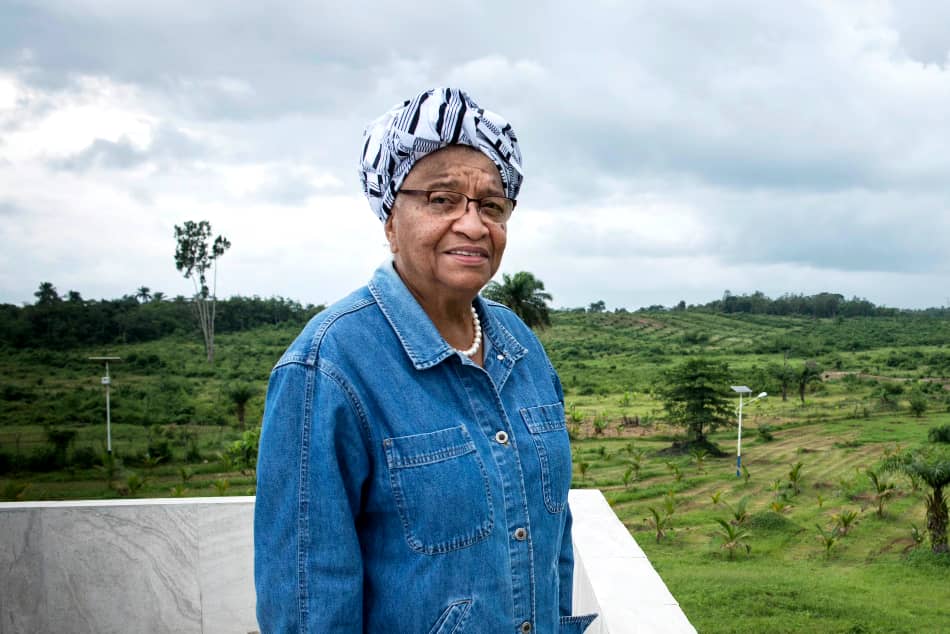
Ellen Johnson Sirleaf on her farm in Bomi county, Liberia in 2017. Photograph: Monique Jaques/The Observer

This agreement was one of the first critical steps implemented by my government. Forest sector oversight and increasing the credibility of timber exports, including for European markets, has been crucial in Liberia’s recovery.

But the mood today is to retreat from international commitments and cooperation. The EU has moved to cancel this agreement, threatening a key segment of our economy. And without recognition in markets that give importance to compliance with our regulations, we are worried that the illegal timber trade will once again take root in our country.

We risk the disintegration of the system that has supported forest sector oversight, one that established a unique benefit-sharing mechanism for local people, resulting in $4.3m going to communities already, with additional revenues to come that are tracked through Liberia’s systems, set up through the VPA.

Considering the context of Liberia, with its history of conflict, restoring the forestry sector is a slow process with many ups and downs. Cancelling the VPA would undermine our achievements over the years and seriously put at risk any governance reforms.

This is not theoretical. The Grebo-Krahn national forest, on Liberia’s border with Ivory Coast, might not have survived to this day without more sustainable and economically feasible alternatives.

Grebo-Krahn is home to pygmy hippos, a critically endangered species that became popular recently on social media when two zoos posted images of pygmy hippo calves. There are only 2,000 of them left in the wild, most of them in Liberia.

We worry what will become of this species, along with other endangered wildlife.

There is huge concern for the communities that live in and depend on the forest and all other threatened regions if illegal timber becomes the norm once more.

We live in an interconnected global community where mutual support is essential. While the EU-Liberia VPA may not hold significant weight in every part of the world, it has been crucial to our social and economic security. This is an agreement that must not be cancelled.

  • Ellen Johnson Sirleaf, the 24th president of Liberia, was the first elected female head of state in Africa. She won the Nobel peace prize in 2011


ADVERTISEMENT

Related

Tags: AfricadeforestationGlobal developmentLiberiaOpinionTrees and Forests
ADVERTISEMENT
Previous Post

Why the ant-smuggling trade is booming – and why we should care

Next Post

Microsoft shuts down Skype

You MayAlso Like

Featured

US ‘Shameless Exploitation’ in Proposed Zambian Health Aid Deal Exposed

May 10, 2026
Column

How Senator Ned Nwoko Changed My Life Through His Scholarship

May 6, 2026
Column

Who will be the next UN chief?

April 26, 2026
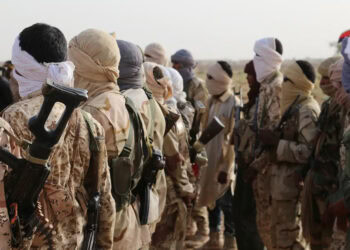
Tuaregs fighters of the Coordination of Movements of the Azawad (CMA) gather near Kidal, Mali, Sept. 28, 2016. (AFP)
Column

Mali War Update: Kidal Clashes, Jihadist Alliances, and Nationwide Attacks Explained

April 26, 2026
Column

How Ghana is championing Pan-Africanism

April 23, 2026
Column

Igbo Politicians Alignment to the “Centre” Politics: Opportunism Without Results—Until Peter Obi | By Chidipeters Okorie

April 21, 2026
Next Post

Microsoft shuts down Skype

A nurse with patients at a hospital in Kisumu, Kenya, on April 24. Nearly 18 percent of adults in Kisumu have HIV — about four times the national average of 4.5 percent. (Michel Lunanga/Getty Images)

After 100 days, the toll of Trump’s foreign aid cuts has begun to sink in

Discussion about this post

US ‘Shameless Exploitation’ in Proposed Zambian Health Aid Deal Exposed

Renewed Hope for Nollywood Backs Tinubu’s Creative Economy Agenda

Pastor Idowu Okeze’s Empowerment in Igbuzo Described as Organic, Not Political

Ghana becomes latest African country to reject US health deal

Woman jailed in Somalia for peaceful protest ‘stripped, kicked and beaten’

After losing influence in West Africa, France seeks a regional reset

  • US ‘Shameless Exploitation’ in Proposed Zambian Health Aid Deal Exposed

    543 shares
    Share 217 Tweet 136
  • Renewed Hope for Nollywood Backs Tinubu’s Creative Economy Agenda

    542 shares
    Share 217 Tweet 136
  • Pastor Idowu Okeze’s Empowerment in Igbuzo Described as Organic, Not Political

    541 shares
    Share 216 Tweet 135
  • Ghana becomes latest African country to reject US health deal

    541 shares
    Share 216 Tweet 135
  • Woman jailed in Somalia for peaceful protest ‘stripped, kicked and beaten’

    541 shares
    Share 216 Tweet 135
  • Trending
  • Comments
  • Latest

US ‘Shameless Exploitation’ in Proposed Zambian Health Aid Deal Exposed

May 10, 2026

Renewed Hope for Nollywood Backs Tinubu’s Creative Economy Agenda

May 10, 2026

Pastor Idowu Okeze’s Empowerment in Igbuzo Described as Organic, Not Political

May 10, 2026

Ghana becomes latest African country to reject US health deal

May 10, 2026

US ‘Shameless Exploitation’ in Proposed Zambian Health Aid Deal Exposed

May 10, 2026

After losing influence in West Africa, France seeks a regional reset

May 10, 2026

Algeria to Become Arab World’s 4th Largest Economy by 2026, IMF Data Shows

May 10, 2026

Mixed reactions trail Niger’s ban on French broadcasters

May 10, 2026

ABOUT US

www.oneafricamagazine.com

TIMEAFRICA MAGAZINE is an African Magazine with a culture of excellence; a magazine without peer. Nearly a third of its readers hold advanced degrees and include novelists, … READ MORE >>

SECTIONS

  • Aviation
  • Column
  • Crime
  • Europe
  • Featured
  • Gallery
  • Health
  • Interviews
  • Israel-Hamas
  • Lifestyle
  • Magazine
  • Middle-East
  • News
  • Politics
  • Press Release
  • Russia-Ukraine
  • Science
  • Special Report
  • Sports
  • TV/Radio
  • UAE
  • UK
  • US
  • World News

Useful Links

  • AllAfrica
  • Channel Africa
  • El Khabar
  • The Guardian
  • Cairo Live
  • Le Republicain
  • Magazine: 9771144975608
  • Subscribe to TIMEAFRICA MAGAZINE biweekly news magazine

    Enjoy handpicked stories from around African continent,
    delivered anywhere in the world

    Subscribe

    • About One Africa Magazine
    • Privacy Policy
    • Contact Us
    • WHO’SWHO AWARDS

    © Copyright TimeAfrica Magazine Limited 2026 - All rights reserved.

    No Result
    View All Result
    • WHO’SWHO AWARDS
    • Politics
    • Column
    • Interviews
    • Gallery
    • Lifestyle
    • Special Report
    • Sports
    • TV/Radio
    • Aviation
    • Health
    • Science
    • World News

    © Copyright TimeAfrica Magazine Limited 2026 - All rights reserved.

    This website uses cookies. By continuing to use this website you are giving consent to cookies being used. Visit our Privacy and Cookie Policy.