

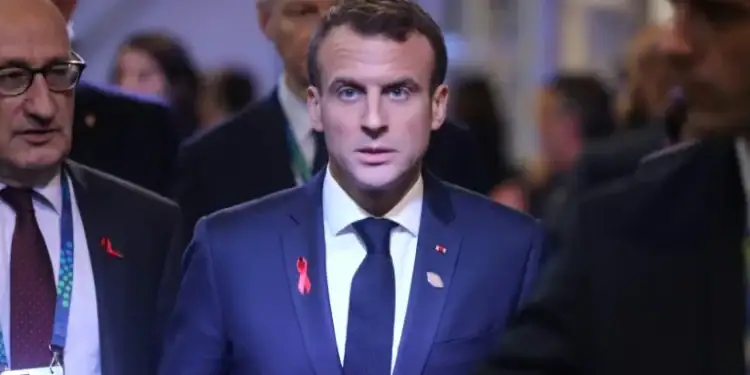
Shorn of influence in several of its former West African colonies, France will attempt to reposition its African strategy next week at a major summit in Nairobi, Kenya — the first time the gathering has been held in an English-speaking country.
The two-day Africa summit, taking place on Monday and Tuesday, is expected to bring together heads of state, business leaders and representatives of multilateral development banks. It comes at a moment when Paris is grappling with shrinking influence across the Sahel and parts of West Africa, where its long-standing military, political and economic presence has been significantly reduced.
A year before the end of his presidency, Emmanuel Macron is seeking to project what an Élysée adviser described as a “renewed partnership” with Africa, focused less on post-colonial security arrangements and more on investment, trade and institutional cooperation.
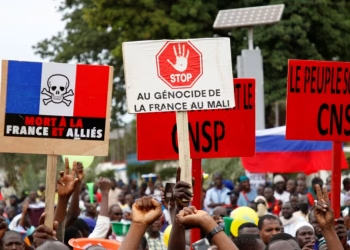
France’s traditional role in West Africa has been eroded by a wave of military coups since 2020 in the Sahel region, which have brought to power juntas that have expelled French troops and shifted alliances towards Russia-linked security actors such as the Wagner Group and its successor, Africa Corps. These governments have argued that French military presence is incompatible with national sovereignty, accelerating a rapid retreat of French forces from the region.
The trend has been visible beyond the Sahel. Senegal, once a cornerstone of France’s regional military footprint, formally ended the presence of French troops last July. President Bassirou Diomaye Faye, who is expected to attend the Nairobi summit, has framed the decision as part of a broader assertion of sovereignty over defence and foreign policy.
“It does feel like a rebranding of how France is positioning itself on the continent,” said Beverly Ochieng, a Senegal-based senior analyst at Control Risks. “It is moving away from some of its former colonial partners, security partners, towards countries where it has a different cultural footprint.”
Since taking office in 2017, Macron has repeatedly promised to dismantle “Françafrique”, the informal system of political, military and economic ties that long bound France to its former colonies, often criticised for sustaining authoritarian regimes and opaque networks of influence.
According to Alain Antil of the French Institute for International Relations, Paris has since attempted a recalibration, including efforts to repair relations with countries such as Rwanda and Algeria, while expanding engagement with civil society groups, youth movements and private sector actors across the continent.
Trade has also become a central pillar of this shift. French imports from Africa rose by around a quarter between 2021 and 2024, according to the International Trade Centre, reflecting a broader push to reframe ties around economic interdependence rather than security dominance.
Recent deals have included a €300 million investment agreement between France and Nigeria aimed at supporting infrastructure, healthcare, transport and renewable energy projects. Officials say similar initiatives in clean energy, artificial intelligence and education are expected to feature prominently during Macron’s visit, which will also include stops in Egypt and Ethiopia.
France has also sought to expand security partnerships beyond its traditional sphere of influence. A defence agreement signed with Kenya in October last year focused on intelligence sharing, maritime security and peacekeeping cooperation, reflecting Paris’s effort to diversify its strategic relationships on the continent.
However, France’s renewed outreach faces stiff competition. In several African countries, Chinese infrastructure financing and Gulf state investment have proven more attractive, often due to their scale and fewer political conditions. In Kenya, President William Ruto’s government last year terminated a highway expansion contract led by France’s Vinci SA, valued at $1.5 billion, awarding it instead to Chinese firms over concerns about financial risk.
Ruto, who will co-host the Nairobi summit, is expected to use the gathering to push for reforms to the global financial system, particularly to ease the burden of debt on African economies. France has pledged support for the initiative, signalling an attempt to align its new African strategy with broader calls for economic restructuring.













Discussion about this post