The Biden Administration unveiled a new defense strategy Thursday that puts the U.S. military on a Cold War-footing with China and Russia, detailing a plan to confront two nuclear peer adversaries for the first time in history with a multi-year build-up of modernized weaponry, enhanced foreign alliances and a top-to bottom overhaul of the American nuclear arsenal.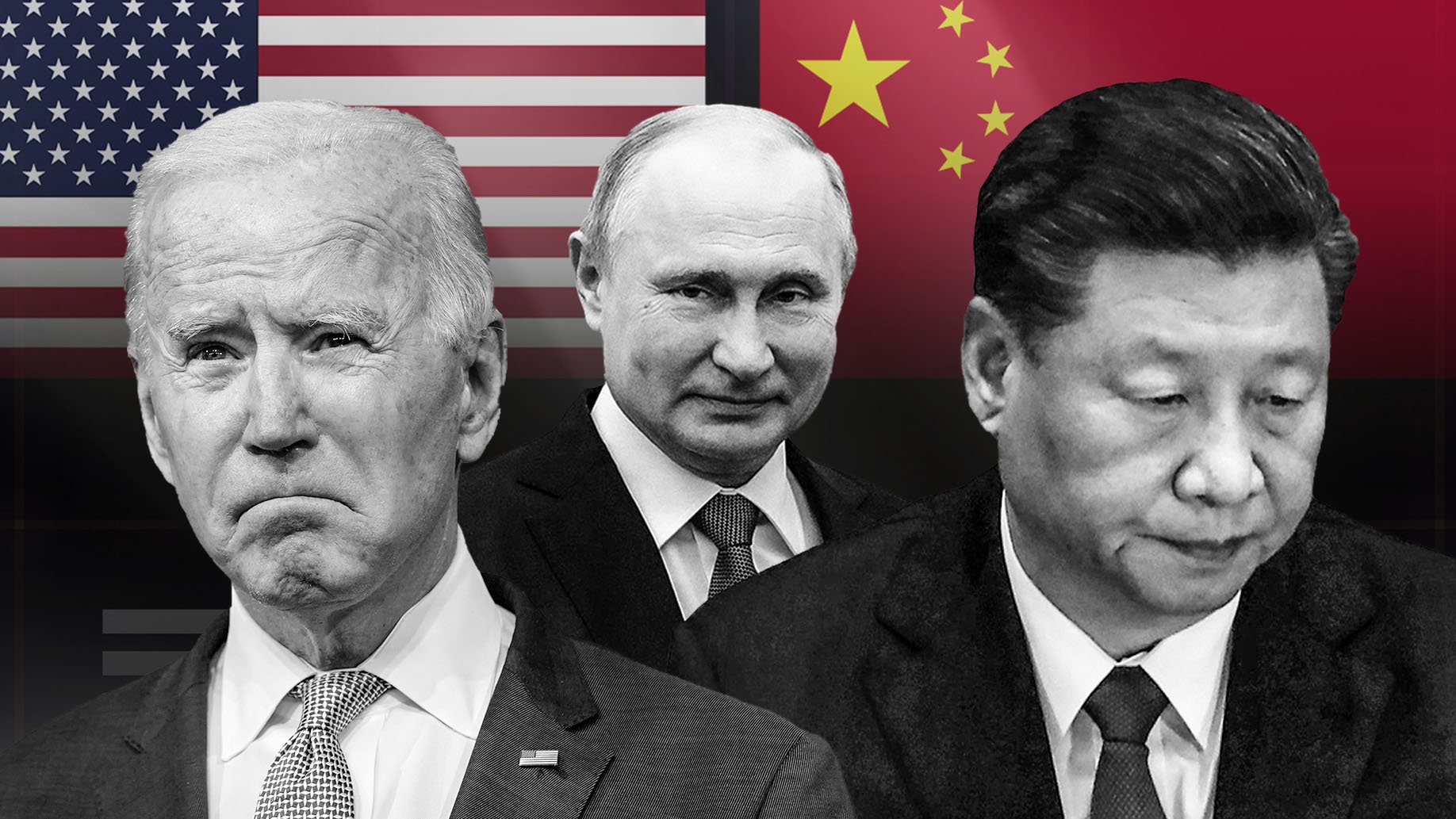 The 80-page document serves as the Administration’s roadmap for global security for the decades to come, and makes clear the U.S. faces two powerful but very different competitors. It characterizes China as a long-term “pacing challenge” with its growing power projection in the Pacific region, while deeming Russia to be an immediate “acute threat” amid its ongoing war with Ukraine and continual threats to launch a nuclear strike.“We chose the word ‘acute,’ carefully,” Defense Secretary Lloyd Austin told reporters at the Pentagon. “Unlike China, Russia can’t systemically challenge the United States over the long-term, but Russian aggression does pose an immediate and sharp threat to our interests and values.” In recent weeks, Russian missile strikes on civilian targets in Ukraine and unfounded claims of a pending “dirty bomb” detonation have sparked fears the world is inching ever closer to the brink of nuclear war. The Administration has deep concerns about the conflict escalating, Austin said, but remains committed to continuing to support Ukraine with weapons and the means to defend itself.Russian President Vladimir Putin has repeatedly discussed the possible use of nuclear weapons in the eight-month-old war and this week observed nuclear drills, called Grom or “Thunder” exercises, involving Russian submarines, bombers and ballistic missile launches inside Russia. Austin shot-down speculation that the war games were subterfuge for a real nuclear attack, saying U.S. intelligence had not observed any indication that such preparations were taking place. He added that senior Russian officials had privately said there are no plans to use a nuclear device in Ukraine, but the U.S. remained cautious.“It would be the first time that a nuclear weapon has been used in over 70 years, so that certainly has a potential of changing things in the international community,” Austin said. “We’re going to continue to communicate that any type of use of a weapon of that sort, or even the talk of the use of a weapon of that sort, is dangerous and irresponsible.”China, meanwhile, is depicted in the strategy document as the “most consequential strategic competitor for the coming decades.” The U.S. says Beijing is actively seeking to weaken U.S. alliances with Asian partners, building up its military and nuclear forces and threatening invasion of the U.S.-allied island of Taiwan. China “is the only competitor out there with both the intent to reshape the international order, and increasingly the power to do so,” Austin said.
The Administration has determined that Beijing is planning a threefold increase in nuclear warheads to 1,000 by 2030, while simultaneously constructing hundreds of new silos capable of launching long-range ballistic missiles, potentially targeting the U.S. and its far-flung nuclear forces. While the U.S. has more than 10 to 1 advantage over China in the number of nuclear warheads and the weapons to deliver them, the Pentagon sees a need to prepare for the decades ahead. The Chinese nuclear build-up is an unprecedented challenge for the military, which since the end of World War II has only had to focus on deterring one near-peer adversary—formerly the Soviet Union, now Russia—from launching a nuclear attack.“I do not want to suggest that this is a solved or closed problem and that we now have the answers,” a senior defense official, who wasn’t authorized to speak publicly on the matter, told reporters. “This is new territory for us… How do you successfully fight one adversary, while having enough reserve to hold the other bay? And just the second part of that cannot be a solution where if China has 1,000 (nuclear warheads) and Russia has 1,000, that we need 2,000, because that is an arms race that nobody should want to be in.”The strategy laid out by Austin largely breaks from President Joe Biden’s campaign pledge to reduce the role of nuclear weapons in U.S. strategy. There are a few nods in the direction of disarmament, including directives to stop developing a nuclear-armed sea launched cruise missiles, retire the largest gravity bomb, the B83, in the U.S. arsenal, and eliminate the declared policy to hold onto nuclear weapons as a “hedge against an uncertain future.” But there is no drastic change that non-proliferation experts were hoping for.“It largely continues the nuclear deterrence strategy and posture, including capability added in the Trump Administration. It is unclear how it reduces the role of nuclear weapons as the President directed,” says Leonor Tomero, who served as Biden’s Deputy Assistant Secretary of Defense for nuclear and missile defense before leaving in October 2021. “There is an urgent need to reduce the risk of nuclear war, especially at a time when nuclear tensions are higher than they have been for years.”The risks of miscalculation and of unintended rapid escalation could lead to nuclear weapons use, Tomero says. “These new threats require clear solutions and practical steps to adapt and strengthen deterrence to reduce these risks,” she says.Right now, the U.S. and Russia are limited on the number of strategic warheads and delivery systems until February 2026 under a bilateral treaty known as New START. China, however, is not part of that agreement and has shown no signs of wanting to rein in their nuclear weapons programs, which raises questions about whether continued nuclear arms reductions by other countries will be possible.“There are repeated references to adjusting U.S. posture in the future, which tees-up a future Administration to increase the size of the arsenal or resume nuclear testing,” says Jeffrey Lewis, an analyst with the James Martin Center for Nonproliferation Studies at the Middlebury Institute of Strategic Studies.The advancement of non-nuclear weapons systems, such as hypersonic missiles, as well as space-based and cyber capabilities are also concerning to the administration. The strategy calls for “building enduring advantages,” involving investments in the Defense Department’s workforce, improvements in weapons-buying processes and preparing for climate change. Other challenges discussed in the document emanate from Iran and North Korea, and “violent extremist organizations,” which is military jargon for terrorist groups.The Biden team’s focus on Moscow and Beijing is consistent with the U.S. national security complex’s desire to pivot from the morass of violence and counter-terrorism operations in the Middle East and engage in Great Power competition. Each Administration is mandated by Congress to issue a new national defense strategy every four years, and two versions are drawn up: one secret, one public. The document released Oct. 27 marked the first time the strategy also included the so-called Nuclear Posture Review and Missile Defense Review, which shape funding allocations for the coming years. “By weaving these documents together,” Austin said, “we help ensure that the entire department is moving forward together and matching our resources to our goals.TIME


President Biden unveils strategy that puts the U.S. military on a Cold War-footing with China and Russia
ADVERTISEMENT
ADVERTISEMENT
You MayAlso Like









Pastor Idowu Okeze’s Empowerment in Igbuzo Described as Organic, Not Political
Ghana becomes latest African country to reject US health deal
US ‘Shameless Exploitation’ in Proposed Zambian Health Aid Deal Exposed
Woman jailed in Somalia for peaceful protest ‘stripped, kicked and beaten’
Renewed Hope for Nollywood Backs Tinubu’s Creative Economy Agenda
- Trending
- Comments
- Latest









TIMEAFRICA MAGAZINE is an African Magazine with a culture of excellence; a magazine without peer. Nearly a third of its readers hold advanced degrees and include novelists, … READ MORE >>
Discussion about this post