


The Middle East has entered one of its most volatile periods in decades after the United States and Israel launched coordinated military strikes against targets inside Iran, in an operation described by President Donald Trump as “Operation Epic Fury.” The large-scale offensive marks a dramatic escalation in tensions that have simmered for years between Tehran, Washington and Jerusalem.
In the early hours of Saturday morning, American and Israeli forces struck multiple Iranian military, nuclear and government-linked facilities. US defence officials confirmed the operation involved air and sea-based assets, including long-range cruise missiles and bomber aircraft targeting strategic installations. Israeli forces simultaneously carried out strikes on what were described as missile production centres and command structures linked to Iran’s security apparatus.
In a nationally televised address, Mr Trump confirmed that what he termed a “major combat operation” was under way. He framed the assault as a necessary step to neutralise imminent threats posed by Iran’s ballistic missile capabilities and its regional activities. The president said the goal was to defend American interests and ensure the security of allies in the region, particularly Israel.
The naming of the campaign as “Operation Epic Fury” underscored the scale and intensity of the action. According to administration officials, planning for the operation had been under consideration for months amid stalled diplomatic engagement over Iran’s nuclear programme and regional influence.
In one of the most striking aspects of his address, Mr Trump issued a direct appeal to members of Iran’s armed forces and security services, urging them to lay down their weapons. He warned that continued resistance would lead to devastating consequences. He also addressed the Iranian public directly, suggesting that the moment presented an opportunity for political change within the country. The rhetoric marked a sharp shift toward explicit calls for regime transformation rather than containment or deterrence.

Tehran swiftly condemned the strikes as a violation of its sovereignty and international law. Iranian officials described the attacks as unprovoked aggression and vowed a decisive response. Within hours, missile launches were reported targeting Israeli territory as well as US military installations in parts of the Gulf region. Air defence systems were activated in multiple countries as sirens sounded and interception efforts were mounted.
Explosions were reported in several Iranian cities, including the capital, as plumes of smoke rose above military compounds and suspected industrial sites. Iranian state media broadcast images of damaged infrastructure and mobilised emergency crews responding to the aftermath. Civilian areas in proximity to military targets were also affected, prompting concern about collateral damage.
Israel placed its population on heightened alert, with schools closed in several regions and public gatherings restricted. Emergency services prepared for the possibility of sustained retaliatory barrages. US bases across the Middle East similarly moved to elevated security postures amid fears of further escalation.
The joint operation appears to have been driven by long-standing Israeli concerns over Iran’s missile and nuclear capabilities, coupled with Washington’s growing frustration over stalled negotiations and Tehran’s regional posture. While previous administrations have relied heavily on sanctions and diplomatic pressure, Operation Epic Fury represents a significant shift toward direct military confrontation.
The wider regional implications are profound. Gulf states have tightened security, and some have temporarily closed airspace amid fears of expanding hostilities. International airlines have rerouted flights to avoid potential conflict zones. Global markets reacted nervously as investors assessed the risk of disruptions to energy supplies in one of the world’s most critical oil-producing regions.
Beyond the immediate military exchanges, the humanitarian impact is already becoming apparent. Hospitals in affected areas have reported treating casualties from the initial strikes and retaliatory launches. Communications disruptions in parts of Iran have complicated efforts to verify the full scale of damage and loss of life. Families across the region are grappling with uncertainty as governments issue emergency advisories.
Diplomatic channels are under intense strain. Several governments have called for urgent de-escalation and renewed dialogue to prevent a broader war. The United Nations has convened emergency discussions as member states debate the legality and consequences of the offensive. Deep divisions remain among global powers over how to respond.
For Israel, the strikes reflect long-held warnings that Iran’s military capabilities pose an existential threat. Israeli leaders have repeatedly signalled that they would not tolerate what they perceive as unchecked expansion of Tehran’s missile arsenal or nuclear infrastructure. For Washington, the calculus blends regional security concerns with domestic political considerations and longstanding strategic rivalry.
The explicit call for regime change adds another layer of uncertainty. Historically, efforts to catalyse political transformation through military intervention have carried unpredictable outcomes. While some Iranian dissidents have criticised their government, it remains unclear whether external military pressure will galvanise widespread internal upheaval or instead consolidate nationalist sentiment around the current leadership.
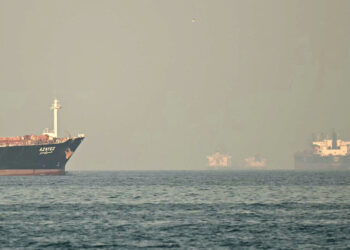
Analysts warn that the conflict risks triggering proxy confrontations across the region. Armed groups aligned with Tehran in neighbouring countries could launch attacks against US or Israeli interests, broadening the theatre of operations. Maritime routes in the Gulf, through which a significant share of global oil supplies passes, are also vulnerable to disruption.
In Washington, political reactions have been divided. Supporters of the president argue that decisive action was overdue and necessary to deter future aggression. Critics question the legal basis for the strikes and warn of entanglement in a prolonged regional conflict. In Israel, the operation has drawn backing from across much of the political spectrum, though concerns persist about the duration and consequences of escalation.
As the situation unfolds, uncertainty dominates. The coming days will reveal whether Operation Epic Fury remains a limited military campaign or evolves into a sustained confrontation with far-reaching consequences. Much will depend on the scale of Iran’s retaliation and the willingness of all sides to recalibrate before the crisis spirals further.
With missiles launched, warnings issued and rhetoric hardened, the space for diplomacy has narrowed sharply. Whether it can be reopened before more lives are lost remains the defining question of this rapidly developing crisis.











Discussion about this post