
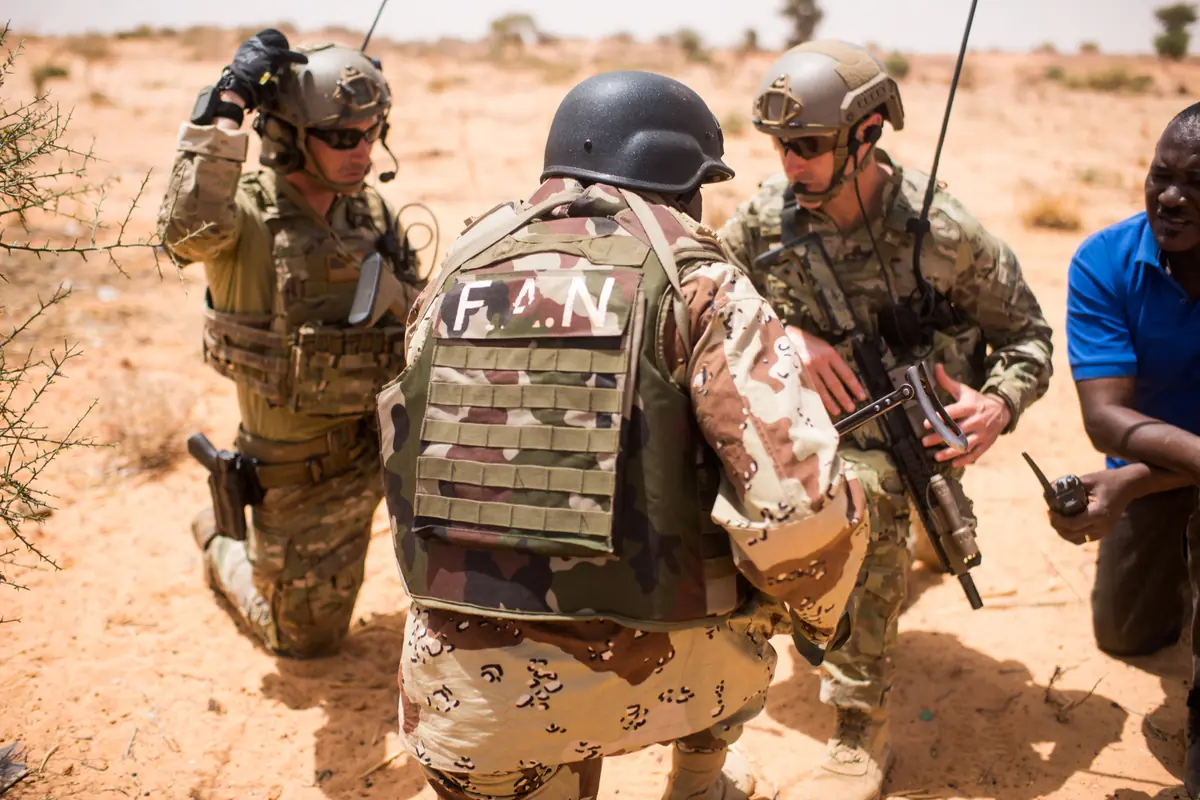
The United States has confirmed that it has deployed a small team of military personnel to Nigeria to support the country’s ongoing efforts to counter terrorism, marking a significant development in bilateral security cooperation between Washington and Abuja.
The announcement was made this week by General Dagvin R. M. Anderson, head of the United States Africa Command (AFRICOM), who said the deployment follows a mutual agreement between the two governments that existing efforts to tackle violent extremist groups were insufficient on their own.
In a briefing, General Anderson described the mission as a targeted and limited commitment aimed at strengthening Nigeria’s capabilities in combating armed Islamist groups, including Boko Haram and Islamic State‑linked factions active across the country’s north and northwest. He did not disclose detailed information on the size of the contingent or the specific capabilities it will provide, but said the presence will bring “unique United States capabilities” to augment Nigeria’s longstanding counter‑terrorism operations.
The deployment follows a series of US military engagements in Nigeria. In December 2025, American forces, in coordination with Nigerian authorities, carried out precision airstrikes targeting militants linked to the Islamic State in Sokoto State. Both countries described the strikes as part of intensified efforts to degrade the operational capacity of extremist networks.
At the same time, the security situation in Nigeria remains complex. Armed Islamist organisations such as Boko Haram and the Islamic State West Africa Province (ISWAP) continue to wage insurgencies that have displaced millions and caused significant loss of life over more than a decade. Attacks on civilians and military targets have persisted despite sustained operations by the Nigerian military and international partners.
The latest US deployment was confirmed shortly after a high‑profile attack in Kaduna State in which assailants abducted dozens of churchgoers, underscoring the volatility of the domestic security landscape. Although the full scope of the US military’s role has not been detailed publicly, observers say intelligence sharing, reconnaissance support and joint planning are likely priorities.
The Nigerian government has formally welcomed greater collaboration, emphasising that all operations are being undertaken with respect for its sovereignty. A press release from Nigeria’s Ministry of Foreign Affairs in late 2025 outlined ongoing security cooperation with international partners, including intelligence exchange, coordinated operations and strategic planning aimed at weakening terrorist networks and improving regional security.
Nevertheless, the presence of foreign troops on Nigerian soil has sparked debate. Previous discussions between US congressional delegations and Nigerian officials touched on concerns about external military involvement, with some lawmakers signalling support for broader engagement while rejecting the notion that “boots on the ground” were a necessary element of cooperation. They instead advocated for capacity‑building and diplomatic engagement as key pillars of support.
Analysts say the latest deployment reflects a shift in the Trump administration’s approach to security in West Africa, with greater emphasis on proactive measures against expanding militant threats. This comes amid broader concerns about the spread of violent extremism across the Sahel and neighbouring regions, where groups affiliated with al‑Qaeda and the Islamic State have exploited governance gaps and porous borders.
For Nigeria, the partnership with the United States comes at a critical time. Frequent attacks by extremist and bandit groups have strained security forces, disrupted local economies, and contributed to cycles of displacement and humanitarian need. Critics of the government have argued that deeper cooperation with international partners is necessary to bolster Nigeria’s capacity to respond effectively to multifaceted security threats.
At the same time, there are cautions against over‑reliance on foreign military support. Observers note that long‑term solutions will require sustained investment in Nigeria’s own military capacity, governance reforms, and community‑level strategies to address the root causes of violent extremism.
The exact duration and mandate of the US forces in Nigeria remain unclear. US and Nigerian officials have so far stressed that the collaboration is designed to respect Nigeria’s sovereignty while enhancing the effectiveness of counter‑terrorism operations in the region.