
Saturday, May 9, 2026
  • Who’sWho Africa AWARDS
  • About TimeAfrica Magazine
  • Contact Us
Time Africa Magazine
  • Home
  • Magazine
  • WHO’SWHO AWARDS
  • News
  • World News
    • US
    • UAE
    • Europe
    • UK
    • Israel-Hamas
    • Russia-Ukraine
  • Politics
  • Crime
  • Lifestyle
  • Sports
  • Column
  • Interviews
  • Special Report
No Result
View All Result
Time Africa Magazine
  • Home
  • Magazine
  • WHO’SWHO AWARDS
  • News
  • World News
    • US
    • UAE
    • Europe
    • UK
    • Israel-Hamas
    • Russia-Ukraine
  • Politics
  • Crime
  • Lifestyle
  • Sports
  • Column
  • Interviews
  • Special Report
No Result
View All Result
Time Africa Magazine
No Result
View All Result
  • Home
  • WHO’SWHO AWARDS
  • News
  • Magazine
  • World News

Home » Science » Sunita Williams’ battle with bone loss as 9 day mission turned into 52 days

Sunita Williams’ battle with bone loss as 9 day mission turned into 52 days

NASA astronaut Sunita Williams and Barry Wilmore experienced delays in their return to Earth due to a helium leak in their spacecraft, the Starliner. This extension has exacerbated Williams’ battle with bone density loss. The delay underscores the complexities of space travel, highlighting both the technical issues and health challenges like fluid redistribution and increased radiation exposure

August 1, 2024
in Science
0
Share on FacebookShare on Twitter

NASA astronaut Sunita Williams, alongside Barry Wilmore, remains aboard the International Space Station (ISS) due to ongoing issues with their spacecraft. As per the recent reports Sunita Williams is undergoing a battle of bone loss as originally set to return on June 14, their return has been delayed to June 26, with potential for further postponements.
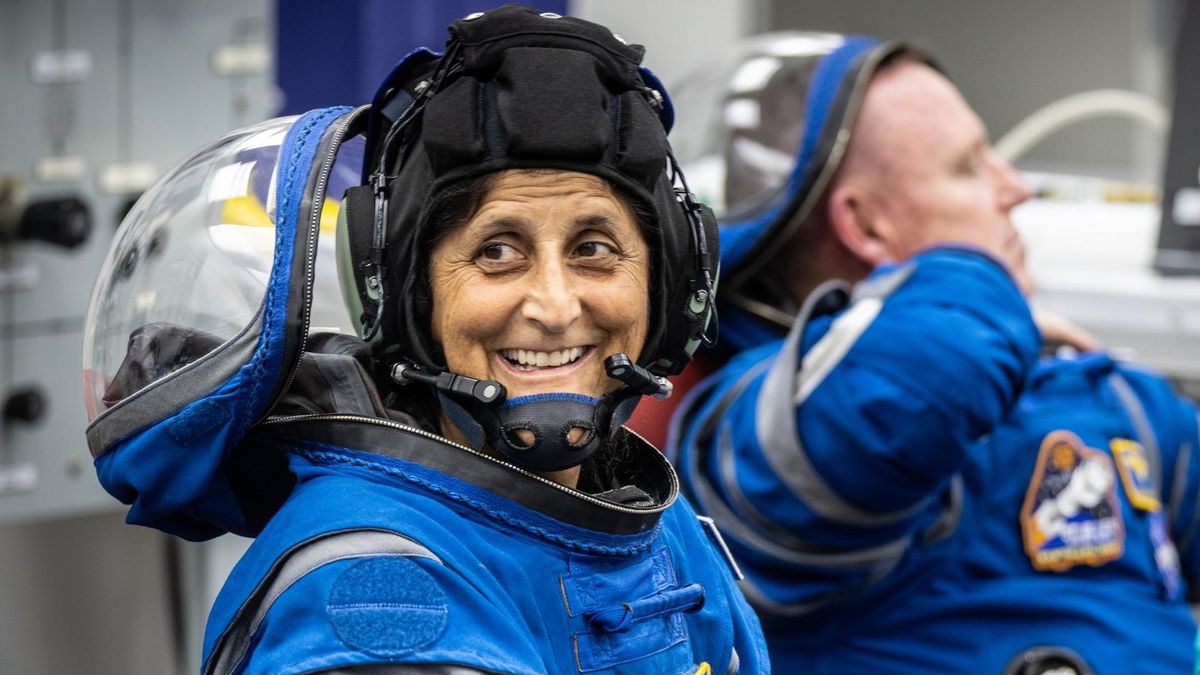
The spacecraft, a Starliner, encountered a helium leak in the service module—a crucial component for spacecraft operations—prompting the extended stay.

The absence of gravity leads to a rapid decrease in both muscle mass and bone density, resembling conditions like osteoporosis. For astronauts like Sunita Williams, this phenomenon is a major concern. Despite adhering to rigorous exercise regimes designed to counteract these effects, bone loss remains an inevitable consequence of prolonged space missions. In microgravity, bones no longer bear weight, causing them to lose density as they are not subjected to the same stresses they experience on Earth. This leads to the thinning of bone tissue, which can increase the risk of fractures. Williams’ extended stay in space has exacerbated these issues, with her bone density potentially decreasing at a rate faster than on Earth.

ReadAlso

Artemis II Astronauts Describe ‘Otherworldly’ Journey Beyond the Moon

NASA finally sends humans to the Moon after half a century on Artemis II mission

The delay stems from a helium leak detected in the spacecraft’s service module. The Starliner, which docked at the ISS on June 6, was initially scheduled for a return in mid-June. However, the malfunction necessitated an extended mission. This technical hiccup not only affects the astronauts’ schedules but also highlights the complexities and unforeseen challenges of space travel.

Health effects of microgravity

ADVERTISEMENT

Microgravity presents several health challenges for astronauts, exacerbated by extended stays in space. One of the most significant issues is fluid redistribution, which results in facial puffiness and decreased fluid volume in the legs. These changes can disrupt cardiovascular function and complicate blood pressure regulation upon returning to Earth.

Mitigation strategies and research

NASA has implemented various strategies to address bone loss, including specialised exercise regimens and nutritional interventions. Astronauts perform resistance and aerobic exercises to help maintain bone density. Additionally, research is ongoing to develop more effective countermeasures, such as pharmacological treatments and advanced exercise protocols.

Urinary system impact

Microgravity also affects the urinary system. Fluid shifts and altered metabolism increase the risk of kidney stones due to elevated calcium levels in urine. Hormonal changes and shifts in gut microbiota further complicate nutrient absorption and overall health, necessitating ongoing medical monitoring and preventive measures.

Sensory and balance adjustments

Astronauts in microgravity experience changes in spatial orientation, balance, and coordination. Space Motion Sickness (SMS) is common initially but usually resolves as astronauts adapt. Adjustments to these changes are crucial for maintaining daily function and operational efficiency in space.

Visual impairments

Prolonged missions can lead to visual impairments, including hyperopic shift and optic disc edema. These conditions are linked to changes in intracranial pressure and fluid distribution in the brain and eyes. Ongoing research aims to understand these mechanisms better and develop solutions to mitigate their impact.

Radiation exposure risks

Space missions expose astronauts to higher radiation levels than on Earth, increasing the risk of DNA damage and cancer.

Related

Tags: AstronautBarry WilmoreNASASunita Williams
ADVERTISEMENT
Previous Post

Rwanda spearheading Africa’s surgical revolution

Next Post

Merriment, Joy, As Eze Aro Holds 4-Day Coronation Festival

You MayAlso Like

Artemis II commander Reid Wiseman, pilot Victor Glover, mission specialist Christina Koch, and mission specialist Jeremy Hansen at the NASA Johnson Space Center on 16 April, 2026 in Houston, Texas (Getty)
Science

Artemis II Astronauts Describe ‘Otherworldly’ Journey Beyond the Moon

April 18, 2026
Planet Earth -  ecology concept, global warming concept, the effect of environment climate change. Elements of this image furnished by NASA (https://visibleearth.nasa.gov/)
Science

Scientists warn of rising risk of Earth becoming irreversible ‘hothouse’

February 13, 2026
Press Release

AI doctor four times better at identifying illnesses than humans

June 30, 2025
Science

Apple working on brain implant to let users control devices with just their thoughts

May 14, 2025
Science

Goodbye to oxygen on Earth — this is the date scientists have set for when the air will no longer be breathable

March 2, 2025
Science

Meaning of “i” in iPhone, iPad, and other Apple products

February 2, 2025
Next Post

Merriment, Joy, As Eze Aro Holds 4-Day Coronation Festival

Sudan’s military leader escapes assassination, drone strike kills 5

Discussion about this post

World Asthma Day 2026: CIDO Foundation Provides Free Asthma Care in Delta State

How Senator Ned Nwoko Changed My Life Through His Scholarship

  • World Asthma Day 2026: CIDO Foundation Provides Free Asthma Care in Delta State

    542 shares
    Share 217 Tweet 136
  • How Senator Ned Nwoko Changed My Life Through His Scholarship

    545 shares
    Share 218 Tweet 136
  • Trending
  • Comments
  • Latest

World Asthma Day 2026: CIDO Foundation Provides Free Asthma Care in Delta State

May 6, 2026

How Senator Ned Nwoko Changed My Life Through His Scholarship

May 6, 2026

US World Cup 2026 hotel bookings lag as demand falls short of expectations

May 6, 2026

How Senator Ned Nwoko Changed My Life Through His Scholarship

May 6, 2026

World Asthma Day 2026: CIDO Foundation Provides Free Asthma Care in Delta State

May 6, 2026

Peter Obi Explains Exit from ADC

May 3, 2026

ABOUT US

Time Africa Magazine

TIMEAFRICA MAGAZINE is an African Magazine with a culture of excellence; a magazine without peer. Nearly a third of its readers hold advanced degrees and include novelists, … READ MORE >>

SECTIONS

  • Aviation
  • Column
  • Crime
  • Europe
  • Featured
  • Gallery
  • Health
  • Interviews
  • Israel-Hamas
  • Lifestyle
  • Magazine
  • Middle-East
  • News
  • Politics
  • Press Release
  • Russia-Ukraine
  • Science
  • Special Report
  • Sports
  • TV/Radio
  • UAE
  • UK
  • US
  • World News

Useful Links

  • AllAfrica
  • Channel Africa
  • El Khabar
  • The Guardian
  • Cairo Live
  • Le Republicain
  • Magazine: 9771144975608
  • Subscribe to TIMEAFRICA MAGAZINE biweekly news magazine

    Enjoy handpicked stories from around African continent,
    delivered anywhere in the world

    Subscribe

    • About TimeAfrica Magazine
    • Privacy Policy
    • Contact Us
    • WHO’SWHO AWARDS

    © Copyright TimeAfrica Magazine Limited 2026 - All rights reserved.

    No Result
    View All Result
    • WHO’SWHO AWARDS
    • Politics
    • Column
    • Interviews
    • Gallery
    • Lifestyle
    • Special Report
    • Sports
    • TV/Radio
    • Aviation
    • Health
    • Science
    • World News

    © Copyright TimeAfrica Magazine Limited 2026 - All rights reserved.

    This website uses cookies. By continuing to use this website you are giving consent to cookies being used. Visit our Privacy and Cookie Policy.