


49 years ago on Friday, 13th February 1976, I was a primary school pupil when Nigeria’s former Head of State, the late General Murtala Ramat Mohammed was cold-bloodedly murdered. Very naive then, I could not understand the future implications of that political disaster, ignorantly unaffected by the national tragedy.
Coincidentally, I was offering Government as a subject. My Government teacher Mr. David Audu was a fanatical and brilliant supporter of Murtala, extolling the late hero’s unrivaled virtues. One day, he gave an essay writing assignment. We were at a liberty to choose any topic. I purposely and meticulously wrote on Murtala. After perusing all the scripts, he extolled me for fixing a square peg in a round hole.
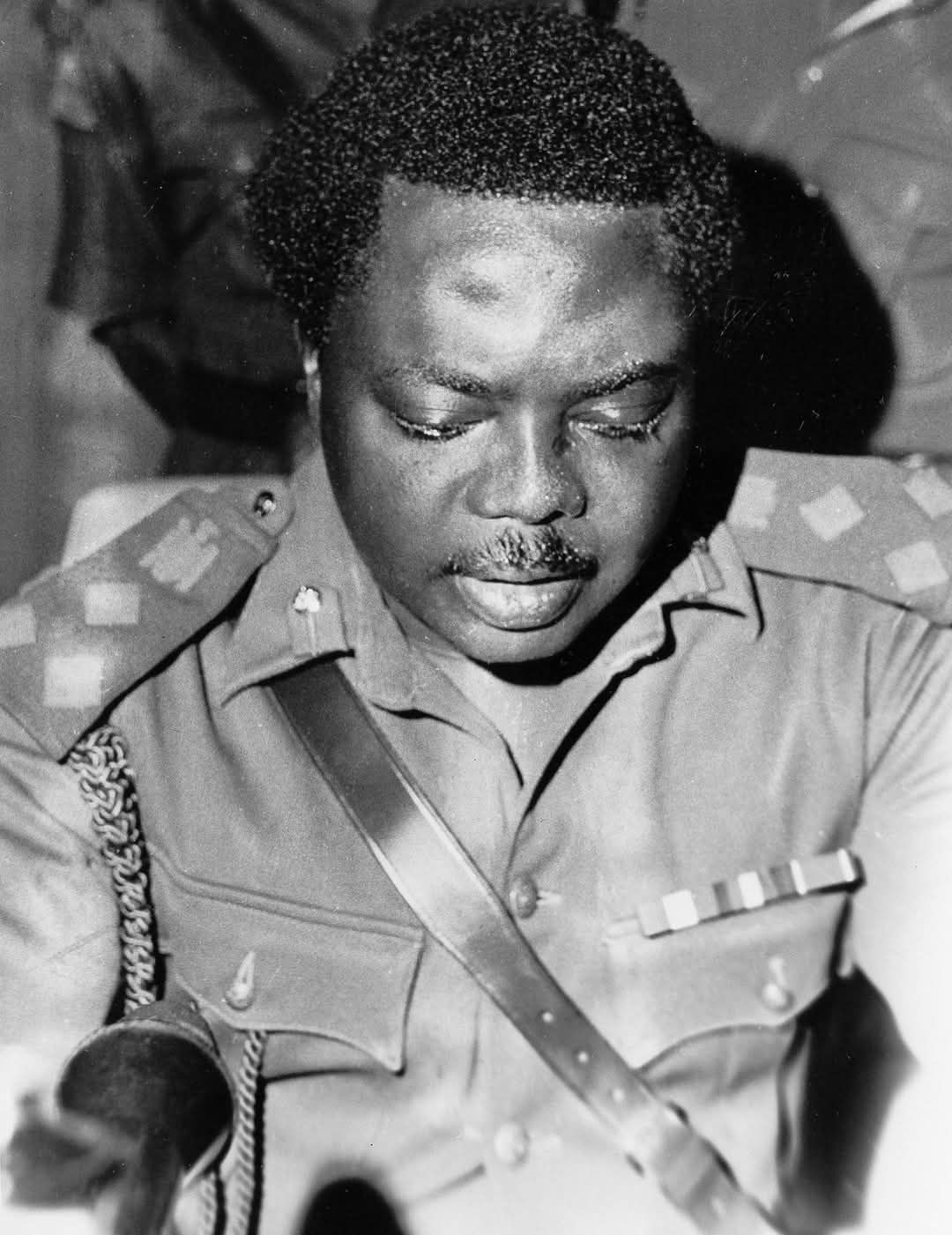
Till date, my unequivocal passion about Murtala’s exemplary leadership has continued to inspire and excite me, unraveling more of his strengths and achievements, evaluating his transformation agenda for his beloved country, albeit he had his weaknesses as a human being. Over the time, I came to learn that Murtala meant different things to different people, groups and interests. I have tremendously learned about Murtala’s influential leadership, resonating with great events, fostering higher aspirations and inventing fresh ideologies. Sadly, however, the gathering momentum abruptly came to a halt. As the late Yusuf Maitama Sule literarily depicted, ” Murtala was like a brilliant star that appeared suddenly and disappeared suddenly”.
For his colleagues in the army, they sincerely celebrated and appreciated his bizarre bravery. This soldering ingenuity was reaffirmed because of his impactful performances during military operations. People endowed with disciplined mind will never forget him as a renowned disciplinarian. His fierce and resolute battle against the cancer corruption when he was handling the mantle of leadership had temporarily fixed Nigeria on the right path of national reconstruction.
Murtala’s invigorating thoughts and actions had raised the hopes of the downtrodden, gladening the mainstream elements of the middle class. While his vision was vaccinated against the virus of self-aggrandizement, he looked conspicuously ambitious and restless to lift Nigeria up. That is why he is fondly remembered for his quality leadership trend of ‘ with immediate effect’. A journalist, Femi Obafemi, overwhelmed by Murtala’s spurring and effective performance, adopted the slogan of ‘ Ramatism’, heralding the birth of a new movement for Nigeria’s prosperity. Ramatism was generated from Ramat, Murtala’s middle name. According to Obafemi, the message of Ramatism had indeed engulfed all the nooks and crannies of Nigeria, winning millions of hearts for the evolution of a modern Nigeria.
As the climax of his radical reforms yielded positive results, his nationalistic disposition transcended beyond Nigeria. He was an emerging new African, who brought glad tidings in his famous speech ‘Africa has come of age’. He was fully occupied with the redemption message of freeing Africa, sharply accusing the Western Imperialists of the perpetuation of neo-colonialism.The African reawakening or consciousness as envisaged in that historical event was nothing other than a big thorn in the flesh of the Imperialists who were seriously undermining Africa’s true independence.
From the point of view of historical analysis, Murtala is an unforgettable and dynamic leader. Great analysts calculated his days in office as 200 and strongly believed that in those days he had achieved what others failed to achieve in many years. They popularly referred to ‘the last 200 days of Murtala’. They were the unprecedented days of unpredictable, political and developmental actions. They were days of rising hopes and dreams for Nigerians. Unknown to us, those hopeful days, incidentally, coincided with his last days of existence in which he was performing his final national assignment.
In just 200 days, Murtala created seven new states, seven federal universities, proposed Abuja as the new federal capital, reduced inflation to the barest minimum, constructed low cost housing across the country, fought corruption and banned some corrupt Nigerians from holding public office, executed mass purge in the federal civil service, though the action generated mixed reactions. Under the same period, Murtala released a blueprint for the return to civil rule and of course, he vigorously pursued a dynamic foreign policy with Africa as his focal point. These were some of the stupendous achievements of Murtala in 200 days. In a nutshell, Murtala’s realistic government was greatly supported by his unbreakable political will, showcasing leadership as a sacred trust and not for self-indulgence.
After his assassination by the brutal reactionaries on Friday 13th February, he emerged as a symbol of national unity as well as a servant leader who had lived and died for Nigeria. The evidence for this was that Nigerians from all walks of life, the rich and the poor, the young and the old, men and women had converged at the Murtala Mohammed International Airport Ikeja to bid him farewell when his corpse was arranged to be flown to Kano for burial. There were intense emotions. The mammoth mourners were weeping and yelling. As the flight took off, the weeping and yelling continued to rise, until the plane was no longer visible in the sky.
49 years on, Murtala’s legacies will continue to live and we will keep on remembering him for paying the supreme sacrifice serving the nation. Rest in peace, General!
aaringim68@gmail.com
07036207998










Discussion about this post