
Sunday, May 10, 2026
  • Who’sWho Africa AWARDS
  • About One Africa Magazine
  • Contact Us
www.oneafricamagazine.com
  • Home
  • Magazine
  • News
  • Interviews
  • Sports
  • World News
    • US
    • South America
    • Asia
    • Europe
    • Middle East
    • Australia and Antarctica
  • Crime
  • Politics
  • Lifestyle
  • Column
  • Special Report
  • WHO’SWHO AWARDS
No Result
View All Result
www.oneafricamagazine.com
  • Home
  • Magazine
  • News
  • Interviews
  • Sports
  • World News
    • US
    • South America
    • Asia
    • Europe
    • Middle East
    • Australia and Antarctica
  • Crime
  • Politics
  • Lifestyle
  • Column
  • Special Report
  • WHO’SWHO AWARDS
No Result
View All Result
www.oneafricamagazine.com
No Result
View All Result
  • Home
  • WHO’SWHO AWARDS
  • News
  • Magazine
  • World News

Home » Featured » People in US and UK face huge financial hit if fossil fuels lose value, study shows

People in US and UK face huge financial hit if fossil fuels lose value, study shows

Strong climate action could wipe $756bn from individuals' pension funds and other investments in rich countries

May 28, 2022
in Featured, Special Report
0
silhouette of working oil pumps on sunset background

silhouette of working oil pumps on sunset background

Share on FacebookShare on Twitter

Individuals in rich countries face huge financial losses if climate action slashes the value of fossil fuel assets, a study shows, despite many oil and gas fields being in other countries.

The researchers estimated that existing oil and gas projects worth $1.4tn (£1.1tn) would lose their value if the world moved decisively to cut carbon emissions and limit global heating to 2C. By tracking many thousands of projects through 1.8m companies to their ultimate owners, the team found most of the losses would be borne by individual people through their pensions, investment funds and share holdings.

The analysis also found that financial institutions have $681bn of these potentially worthless assets on their balance sheets, more than the estimated $250-500bn of mispriced sub-prime housing assets that triggered the 2007-08 financial crisis.

The researchers did not predict if or when these fossil fuel “stranded assets” would cause a financial crash, but said the size of the number was worrying. The US and UK are by far the countries with the biggest potential stranded assets in their financial sectors.

Overall, the study calculated that individuals own 54% of the $1.4tn oil and gas assets at risk – $756bn. Three-quarters of these people are in the 38 developed countries in the Organisation for Economic Co-operation and Development (OECD) group. Governments and corporate creditors carry the balance.

ReadAlso

How twin sisters born minutes apart discovered they had different fathers

Kemi Badenoch criticises UK over slave trade vote, accuses ministers of ‘cowardice’

But the proportion is much higher in the US and UK, where individuals own 86% and 75% of the potentially stranded assets respectively. In contrast, 80% of those assets in China are owned by the government.

“It is pretty obvious now that the fossil fuel companies are doing things that are not compatible with mitigating climate change,” said Dr Gregor Semieniuk, at the University of Massachusetts Amherst, US, who led the research. The Guardian recently revealed that oil and gas companies are planning scores of vast “carbon bomb” projects that would shatter internationally agreed climate targets.

ADVERTISEMENT

“I did not imagine that individual people would ultimately end up with so much of the risk,” said Semieniuk. “This is particularly relevant for countries like the US and UK, which show up as very major losers. That is where I think the losses really get spread around society.”


The study, published in the journal Nature Climate Change, said the rate of change needed to tackle the climate crisis was “so large that the rapid collapse of fossil fuel industries presents major transition risks”. The researchers compared a scenario in which little was done to limit global heating and temperatures rise by 3.5C with a scenario in which substantial action was taken and the global temperature rise was limited to 2C.

In the second scenario, oil and gas projects valued today at $1.4tn cannot continue production and lose their value. The team traced this loss from 43,439 oil and gas production assets through a network of 1.8m companies to their ultimate owners. They concluded: “Most of the market risk falls on private investors, overwhelmingly in OECD countries, including substantial exposure through pension funds and financial markets.”

The countries hit hardest by losses in the financial sector would be the US, with $283bn at risk, and the UK ($98bn), both far above the third-placed nation, the tax haven of the British Virgin Islands ($28bn). Canada and Australia are in the top six. About 90% of the risk in the UK is due to ownership of oil and gas assets in other parts of the world.

Companies in the Middle East do not have such high losses in the 2C scenario because some oil and gas will continue to be used and they are the cheapest suppliers.

Semieniuk said the $681bn of potentially worthless oil and gas assets on the balance sheets of financial institutions was large compared with the sub-prime housing assets that led to the 2007-08 financial crash.

“One can compare these numbers in the sense that there’s a bunch of mispriced assets floating around, if we believe in climate change mitigation,” he said. “This number is quite worrying. If the transition [to a net zero world] isn’t prudently managed, it raises the risk of financial instability.”

Mike Coffin, at the financial thinktank Carbon Tracker Initiative, said the new analysis was complementary to CTI’s own research, which recently found oil companies were at risk of wasting $500bn on future projects.

Coffin said the study focused on future losses from existing assets. “What is critical is that investors recognise the risk of committing huge amounts of capital in new assets that run the risk of becoming stranded as long-term fossil demand weakens.” The Guardian recently worked with CTI to show the 12 biggest oil companies are on track to spend $103m a day to 2030 on projects that would mean attempts to keep global heating well below 2C would fail.

The study also focused on exploration and production. But including other parts of the oil and gas industry, such as refineries and equipment suppliers, would increase potential losses, Coffin said. “The overall magnitude of the stranded asset risk within the oil and gas industry is likely to be significantly larger than that quantified in the study.”

First published in theguardian.com

Related

Tags: AmericaUK
ADVERTISEMENT
Previous Post

My worst moment with Super Eagles –Rohr

Next Post

As hunger spreads in Somalia, babies begin to die

You MayAlso Like

Featured

US ‘Shameless Exploitation’ in Proposed Zambian Health Aid Deal Exposed

May 10, 2026
Lavinia and Michelle discovered they are half-sisters (BBC)
Special Report

How twin sisters born minutes apart discovered they had different fathers

May 2, 2026
Column

Who will be the next UN chief?

April 26, 2026
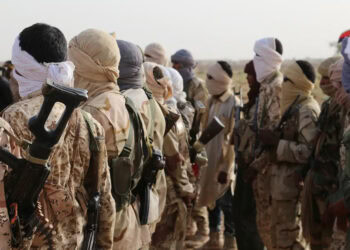
Tuaregs fighters of the Coordination of Movements of the Azawad (CMA) gather near Kidal, Mali, Sept. 28, 2016. (AFP)
Column

Mali War Update: Kidal Clashes, Jihadist Alliances, and Nationwide Attacks Explained

April 26, 2026
Representative image
Special Report

Family Alleges Doctor Left Scissors Inside Woman, Days of Agony End in Death

April 26, 2026
Column

How Ghana is championing Pan-Africanism

April 23, 2026
Next Post

As hunger spreads in Somalia, babies begin to die

Grieving families now want answers

Senegal hospital fire: Eleven newborn babies die in Tivaouane

Discussion about this post

US ‘Shameless Exploitation’ in Proposed Zambian Health Aid Deal Exposed

Renewed Hope for Nollywood Backs Tinubu’s Creative Economy Agenda

Pastor Idowu Okeze’s Empowerment in Igbuzo Described as Organic, Not Political

Ghana becomes latest African country to reject US health deal

Woman jailed in Somalia for peaceful protest ‘stripped, kicked and beaten’

After losing influence in West Africa, France seeks a regional reset

  • US ‘Shameless Exploitation’ in Proposed Zambian Health Aid Deal Exposed

    543 shares
    Share 217 Tweet 136
  • Renewed Hope for Nollywood Backs Tinubu’s Creative Economy Agenda

    542 shares
    Share 217 Tweet 136
  • Pastor Idowu Okeze’s Empowerment in Igbuzo Described as Organic, Not Political

    541 shares
    Share 216 Tweet 135
  • Ghana becomes latest African country to reject US health deal

    541 shares
    Share 216 Tweet 135
  • Woman jailed in Somalia for peaceful protest ‘stripped, kicked and beaten’

    541 shares
    Share 216 Tweet 135
  • Trending
  • Comments
  • Latest

US ‘Shameless Exploitation’ in Proposed Zambian Health Aid Deal Exposed

May 10, 2026

Renewed Hope for Nollywood Backs Tinubu’s Creative Economy Agenda

May 10, 2026

Pastor Idowu Okeze’s Empowerment in Igbuzo Described as Organic, Not Political

May 10, 2026

Ghana becomes latest African country to reject US health deal

May 10, 2026

US ‘Shameless Exploitation’ in Proposed Zambian Health Aid Deal Exposed

May 10, 2026

After losing influence in West Africa, France seeks a regional reset

May 10, 2026

Algeria to Become Arab World’s 4th Largest Economy by 2026, IMF Data Shows

May 10, 2026

Mixed reactions trail Niger’s ban on French broadcasters

May 10, 2026

ABOUT US

www.oneafricamagazine.com

TIMEAFRICA MAGAZINE is an African Magazine with a culture of excellence; a magazine without peer. Nearly a third of its readers hold advanced degrees and include novelists, … READ MORE >>

SECTIONS

  • Aviation
  • Column
  • Crime
  • Europe
  • Featured
  • Gallery
  • Health
  • Interviews
  • Israel-Hamas
  • Lifestyle
  • Magazine
  • Middle-East
  • News
  • Politics
  • Press Release
  • Russia-Ukraine
  • Science
  • Special Report
  • Sports
  • TV/Radio
  • UAE
  • UK
  • US
  • World News

Useful Links

  • AllAfrica
  • Channel Africa
  • El Khabar
  • The Guardian
  • Cairo Live
  • Le Republicain
  • Magazine: 9771144975608
  • Subscribe to TIMEAFRICA MAGAZINE biweekly news magazine

    Enjoy handpicked stories from around African continent,
    delivered anywhere in the world

    Subscribe

    • About One Africa Magazine
    • Privacy Policy
    • Contact Us
    • WHO’SWHO AWARDS

    © Copyright TimeAfrica Magazine Limited 2026 - All rights reserved.

    No Result
    View All Result
    • WHO’SWHO AWARDS
    • Politics
    • Column
    • Interviews
    • Gallery
    • Lifestyle
    • Special Report
    • Sports
    • TV/Radio
    • Aviation
    • Health
    • Science
    • World News

    © Copyright TimeAfrica Magazine Limited 2026 - All rights reserved.

    This website uses cookies. By continuing to use this website you are giving consent to cookies being used. Visit our Privacy and Cookie Policy.