


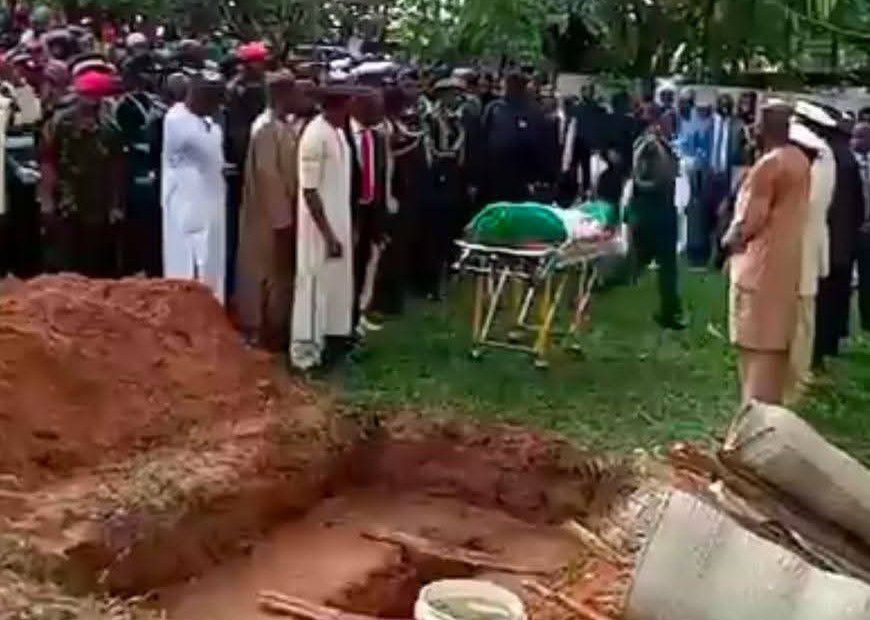
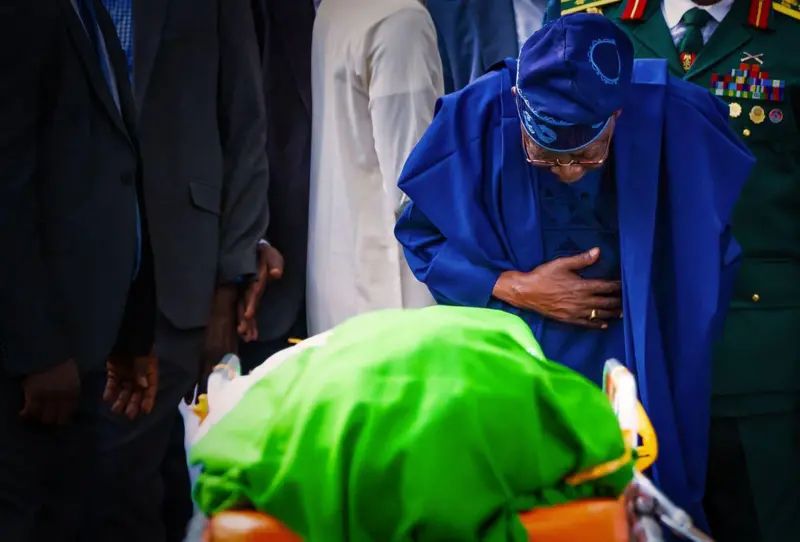
Buhari died Sunday in London, where he had been receiving medical treatment.
He first took power in Africa’s most populous nation in 1983, after a military coup, running an authoritarian regime until fellow soldiers ousted him less than 20 months later.
When he was elected in 2015 on his fourth attempt, he became the first opposition candidate to win a presidential election there.
Buhari rode into power in that election on a wave of goodwill after promising to rid Nigeria of chronic corruption and a deadly security crisis.
He led the country until 2023, during a period marked by Boko Haram’s extremist violence in the northeast and a plunging economy.
Current President Bola Tinubu in a statement described Buhari as “a patriot, a soldier, a statesman … to the very core.” Tinubu dispatched the vice president to bring Buhari’s body home from London.
Others across Nigeria remembered Buhari as a president who left the country of more than 200 million people — divided between a largely Muslim north and Christian south — more at odds than before.
For many, Buhari will be linked with memories of the 2020 youth protests against a police unit accused by rights groups and others of extrajudicial killings, torture and extortion — and the deadly shootings of demonstrators by soldiers.
Coming from Nigeria’s north, the lanky, austere Buhari had vowed to end extremist killings and clean up rampant corruption in one of Africa’s largest economies and oil producers.
By the end of his eight-year tenure, however, goodwill toward him had faded into discontent.
Insecurity had only grown, and corruption was more widespread.
Nigeria also fell into a recession amid slumping global oil prices and attacks by militants in the sprawling oil-rich Niger Delta region.
The currency faltered as Buhari pursued unorthodox monetary policies to defend its fixed price to the dollar, and a massive foreign currency shortage worsened.
Inflation was in the double digits.
Civil society accused him of authoritarian tendencies after protesters were killed during a protest against police brutality and over his decision to restrict access to social media, as young people vented their frustrations against economic and security problems.
Buhari’s attempts at managing the problems were complicated by prolonged medical stays abroad.
His absences, with few details, created anxiety among Nigerians and some calls for him to be replaced.
There also was anger over his seeking taxpayer-funded health care abroad while millions suffered from poor health facilities at home.
Buhari died Sunday in London, where he had been receiving medical treatment.
He first took power in Africa’s most populous nation in 1983, after a military coup, running an authoritarian regime until fellow soldiers ousted him less than 20 months later.
When he was elected in 2015 on his fourth attempt, he became the first opposition candidate to win a presidential election there.
Buhari rode into power in that election on a wave of goodwill after promising to rid Nigeria of chronic corruption and a deadly security crisis.
He led the country until 2023, during a period marked by Boko Haram’s extremist violence in the northeast and a plunging economy.
Current President Bola Tinubu in a statement described Buhari as “a patriot, a soldier, a statesman … to the very core.” Tinubu dispatched the vice president to bring Buhari’s body home from London.
Others across Nigeria remembered Buhari as a president who left the country of more than 200 million people — divided between a largely Muslim north and Christian south — more at odds than before.
For many, Buhari will be linked with memories of the 2020 youth protests against a police unit accused by rights groups and others of extrajudicial killings, torture and extortion — and the deadly shootings of demonstrators by soldiers.
Coming from Nigeria’s north, the lanky, austere Buhari had vowed to end extremist killings and clean up rampant corruption in one of Africa’s largest economies and oil producers.
By the end of his eight-year tenure, however, goodwill toward him had faded into discontent.
Insecurity had only grown, and corruption was more widespread.
Nigeria also fell into a recession amid slumping global oil prices and attacks by militants in the sprawling oil-rich Niger Delta region.
The currency faltered as Buhari pursued unorthodox monetary policies to defend its fixed price to the dollar, and a massive foreign currency shortage worsened.
Inflation was in the double digits.
Civil society accused him of authoritarian tendencies after protesters were killed during a protest against police brutality and over his decision to restrict access to social media, as young people vented their frustrations against economic and security problems.
Buhari’s attempts at managing the problems were complicated by prolonged medical stays abroad.
His absences, with few details, created anxiety among Nigerians and some calls for him to be replaced.
There also was anger over his seeking taxpayer-funded health care abroad while millions suffered from poor health facilities at home.
Buhari died Sunday in London, where he had been receiving medical treatment.
He first took power in Africa’s most populous nation in 1983, after a military coup, running an authoritarian regime until fellow soldiers ousted him less than 20 months later.
When he was elected in 2015 on his fourth attempt, he became the first opposition candidate to win a presidential election there.
Buhari rode into power in that election on a wave of goodwill after promising to rid Nigeria of chronic corruption and a deadly security crisis.
He led the country until 2023, during a period marked by Boko Haram’s extremist violence in the northeast and a plunging economy.
Current President Bola Tinubu in a statement described Buhari as “a patriot, a soldier, a statesman … to the very core.” Tinubu dispatched the vice president to bring Buhari’s body home from London.
Others across Nigeria remembered Buhari as a president who left the country of more than 200 million people — divided between a largely Muslim north and Christian south — more at odds than before.
For many, Buhari will be linked with memories of the 2020 youth protests against a police unit accused by rights groups and others of extrajudicial killings, torture and extortion — and the deadly shootings of demonstrators by soldiers.
Coming from Nigeria’s north, the lanky, austere Buhari had vowed to end extremist killings and clean up rampant corruption in one of Africa’s largest economies and oil producers.
By the end of his eight-year tenure, however, goodwill toward him had faded into discontent.
Insecurity had only grown, and corruption was more widespread.
Nigeria also fell into a recession amid slumping global oil prices and attacks by militants in the sprawling oil-rich Niger Delta region.
The currency faltered as Buhari pursued unorthodox monetary policies to defend its fixed price to the dollar, and a massive foreign currency shortage worsened.
Inflation was in the double digits.
Civil society accused him of authoritarian tendencies after protesters were killed during a protest against police brutality and over his decision to restrict access to social media, as young people vented their frustrations against economic and security problems.
Buhari’s attempts at managing the problems were complicated by prolonged medical stays abroad.
His absences, with few details, created anxiety among Nigerians and some calls for him to be replaced.
There also was anger over his seeking taxpayer-funded health care abroad while millions suffered from poor health facilities at home.
Buhari died Sunday in London, where he had been receiving medical treatment.
He first took power in Africa’s most populous nation in 1983, after a military coup, running an authoritarian regime until fellow soldiers ousted him less than 20 months later.
When he was elected in 2015 on his fourth attempt, he became the first opposition candidate to win a presidential election there.
Buhari rode into power in that election on a wave of goodwill after promising to rid Nigeria of chronic corruption and a deadly security crisis.
He led the country until 2023, during a period marked by Boko Haram’s extremist violence in the northeast and a plunging economy.
Current President Bola Tinubu in a statement described Buhari as “a patriot, a soldier, a statesman … to the very core.” Tinubu dispatched the vice president to bring Buhari’s body home from London.
Others across Nigeria remembered Buhari as a president who left the country of more than 200 million people — divided between a largely Muslim north and Christian south — more at odds than before.
For many, Buhari will be linked with memories of the 2020 youth protests against a police unit accused by rights groups and others of extrajudicial killings, torture and extortion — and the deadly shootings of demonstrators by soldiers.
Coming from Nigeria’s north, the lanky, austere Buhari had vowed to end extremist killings and clean up rampant corruption in one of Africa’s largest economies and oil producers.
By the end of his eight-year tenure, however, goodwill toward him had faded into discontent.
Insecurity had only grown, and corruption was more widespread.
Nigeria also fell into a recession amid slumping global oil prices and attacks by militants in the sprawling oil-rich Niger Delta region.
The currency faltered as Buhari pursued unorthodox monetary policies to defend its fixed price to the dollar, and a massive foreign currency shortage worsened.
Inflation was in the double digits.
Civil society accused him of authoritarian tendencies after protesters were killed during a protest against police brutality and over his decision to restrict access to social media, as young people vented their frustrations against economic and security problems.
Buhari’s attempts at managing the problems were complicated by prolonged medical stays abroad.
His absences, with few details, created anxiety among Nigerians and some calls for him to be replaced.
There also was anger over his seeking taxpayer-funded health care abroad while millions suffered from poor health facilities at home.
Buhari died Sunday in London, where he had been receiving medical treatment.
He first took power in Africa’s most populous nation in 1983, after a military coup, running an authoritarian regime until fellow soldiers ousted him less than 20 months later.
When he was elected in 2015 on his fourth attempt, he became the first opposition candidate to win a presidential election there.
Buhari rode into power in that election on a wave of goodwill after promising to rid Nigeria of chronic corruption and a deadly security crisis.
He led the country until 2023, during a period marked by Boko Haram’s extremist violence in the northeast and a plunging economy.
Current President Bola Tinubu in a statement described Buhari as “a patriot, a soldier, a statesman … to the very core.” Tinubu dispatched the vice president to bring Buhari’s body home from London.
Others across Nigeria remembered Buhari as a president who left the country of more than 200 million people — divided between a largely Muslim north and Christian south — more at odds than before.
For many, Buhari will be linked with memories of the 2020 youth protests against a police unit accused by rights groups and others of extrajudicial killings, torture and extortion — and the deadly shootings of demonstrators by soldiers.
Coming from Nigeria’s north, the lanky, austere Buhari had vowed to end extremist killings and clean up rampant corruption in one of Africa’s largest economies and oil producers.
By the end of his eight-year tenure, however, goodwill toward him had faded into discontent.
Insecurity had only grown, and corruption was more widespread.
Nigeria also fell into a recession amid slumping global oil prices and attacks by militants in the sprawling oil-rich Niger Delta region.
The currency faltered as Buhari pursued unorthodox monetary policies to defend its fixed price to the dollar, and a massive foreign currency shortage worsened.
Inflation was in the double digits.
Civil society accused him of authoritarian tendencies after protesters were killed during a protest against police brutality and over his decision to restrict access to social media, as young people vented their frustrations against economic and security problems.
Buhari’s attempts at managing the problems were complicated by prolonged medical stays abroad.
His absences, with few details, created anxiety among Nigerians and some calls for him to be replaced.
There also was anger over his seeking taxpayer-funded health care abroad while millions suffered from poor health facilities at home.
Buhari died Sunday in London, where he had been receiving medical treatment.
He first took power in Africa’s most populous nation in 1983, after a military coup, running an authoritarian regime until fellow soldiers ousted him less than 20 months later.
When he was elected in 2015 on his fourth attempt, he became the first opposition candidate to win a presidential election there.
Buhari rode into power in that election on a wave of goodwill after promising to rid Nigeria of chronic corruption and a deadly security crisis.
He led the country until 2023, during a period marked by Boko Haram’s extremist violence in the northeast and a plunging economy.
Current President Bola Tinubu in a statement described Buhari as “a patriot, a soldier, a statesman … to the very core.” Tinubu dispatched the vice president to bring Buhari’s body home from London.
Others across Nigeria remembered Buhari as a president who left the country of more than 200 million people — divided between a largely Muslim north and Christian south — more at odds than before.
For many, Buhari will be linked with memories of the 2020 youth protests against a police unit accused by rights groups and others of extrajudicial killings, torture and extortion — and the deadly shootings of demonstrators by soldiers.
Coming from Nigeria’s north, the lanky, austere Buhari had vowed to end extremist killings and clean up rampant corruption in one of Africa’s largest economies and oil producers.
By the end of his eight-year tenure, however, goodwill toward him had faded into discontent.
Insecurity had only grown, and corruption was more widespread.
Nigeria also fell into a recession amid slumping global oil prices and attacks by militants in the sprawling oil-rich Niger Delta region.
The currency faltered as Buhari pursued unorthodox monetary policies to defend its fixed price to the dollar, and a massive foreign currency shortage worsened.
Inflation was in the double digits.
Civil society accused him of authoritarian tendencies after protesters were killed during a protest against police brutality and over his decision to restrict access to social media, as young people vented their frustrations against economic and security problems.
Buhari’s attempts at managing the problems were complicated by prolonged medical stays abroad.
His absences, with few details, created anxiety among Nigerians and some calls for him to be replaced.
There also was anger over his seeking taxpayer-funded health care abroad while millions suffered from poor health facilities at home.
Buhari died Sunday in London, where he had been receiving medical treatment.
He first took power in Africa’s most populous nation in 1983, after a military coup, running an authoritarian regime until fellow soldiers ousted him less than 20 months later.
When he was elected in 2015 on his fourth attempt, he became the first opposition candidate to win a presidential election there.
Buhari rode into power in that election on a wave of goodwill after promising to rid Nigeria of chronic corruption and a deadly security crisis.
He led the country until 2023, during a period marked by Boko Haram’s extremist violence in the northeast and a plunging economy.
Current President Bola Tinubu in a statement described Buhari as “a patriot, a soldier, a statesman … to the very core.” Tinubu dispatched the vice president to bring Buhari’s body home from London.
Others across Nigeria remembered Buhari as a president who left the country of more than 200 million people — divided between a largely Muslim north and Christian south — more at odds than before.
For many, Buhari will be linked with memories of the 2020 youth protests against a police unit accused by rights groups and others of extrajudicial killings, torture and extortion — and the deadly shootings of demonstrators by soldiers.
Coming from Nigeria’s north, the lanky, austere Buhari had vowed to end extremist killings and clean up rampant corruption in one of Africa’s largest economies and oil producers.
By the end of his eight-year tenure, however, goodwill toward him had faded into discontent.
Insecurity had only grown, and corruption was more widespread.
Nigeria also fell into a recession amid slumping global oil prices and attacks by militants in the sprawling oil-rich Niger Delta region.
The currency faltered as Buhari pursued unorthodox monetary policies to defend its fixed price to the dollar, and a massive foreign currency shortage worsened.
Inflation was in the double digits.
Civil society accused him of authoritarian tendencies after protesters were killed during a protest against police brutality and over his decision to restrict access to social media, as young people vented their frustrations against economic and security problems.
Buhari’s attempts at managing the problems were complicated by prolonged medical stays abroad.
His absences, with few details, created anxiety among Nigerians and some calls for him to be replaced.
There also was anger over his seeking taxpayer-funded health care abroad while millions suffered from poor health facilities at home.
Buhari died Sunday in London, where he had been receiving medical treatment.
He first took power in Africa’s most populous nation in 1983, after a military coup, running an authoritarian regime until fellow soldiers ousted him less than 20 months later.
When he was elected in 2015 on his fourth attempt, he became the first opposition candidate to win a presidential election there.
Buhari rode into power in that election on a wave of goodwill after promising to rid Nigeria of chronic corruption and a deadly security crisis.
He led the country until 2023, during a period marked by Boko Haram’s extremist violence in the northeast and a plunging economy.
Current President Bola Tinubu in a statement described Buhari as “a patriot, a soldier, a statesman … to the very core.” Tinubu dispatched the vice president to bring Buhari’s body home from London.
Others across Nigeria remembered Buhari as a president who left the country of more than 200 million people — divided between a largely Muslim north and Christian south — more at odds than before.
For many, Buhari will be linked with memories of the 2020 youth protests against a police unit accused by rights groups and others of extrajudicial killings, torture and extortion — and the deadly shootings of demonstrators by soldiers.
Coming from Nigeria’s north, the lanky, austere Buhari had vowed to end extremist killings and clean up rampant corruption in one of Africa’s largest economies and oil producers.
By the end of his eight-year tenure, however, goodwill toward him had faded into discontent.
Insecurity had only grown, and corruption was more widespread.
Nigeria also fell into a recession amid slumping global oil prices and attacks by militants in the sprawling oil-rich Niger Delta region.
The currency faltered as Buhari pursued unorthodox monetary policies to defend its fixed price to the dollar, and a massive foreign currency shortage worsened.
Inflation was in the double digits.
Civil society accused him of authoritarian tendencies after protesters were killed during a protest against police brutality and over his decision to restrict access to social media, as young people vented their frustrations against economic and security problems.
Buhari’s attempts at managing the problems were complicated by prolonged medical stays abroad.
His absences, with few details, created anxiety among Nigerians and some calls for him to be replaced.
There also was anger over his seeking taxpayer-funded health care abroad while millions suffered from poor health facilities at home.







Discussion about this post