


Mali, a nation already battered by insurgency and political upheaval, is now paralyzed by a fuel blockade imposed by jihadists who have turned ordinary roads into death traps. Gasoline has become a weapon, mobility a gamble, and every convoy of tankers a potential funeral pyre. For the first time, General Assimi Goïta, head of Mali’s military junta, spoke of the horror unfolding across his country: “During the escort of the fuel tanker convoy, people are dying; there are ambushes on the roads and tankers are catching fire with people inside them, who are burning to death.”
The blockade, orchestrated by Jama’at Nusrat al-Islam wal-Muslimin (JNIM), a group linked to al-Qaeda, is a stark declaration of power. In early September, militants banned fuel imports from neighboring countries, striking at the arteries of Mali’s fragile economy. Hundreds of fuel trucks now lie stranded at borders or smoldering in the aftermath of attacks. Each explosion sends a message not only to the government but to every Malian trying to live a normal life.
The capital, Bamako, has become a city under siege. Endless queues snake around gas stations, and residents endure nights in line, hoping for a few liters of fuel to power cars, generators, and livelihoods. Electricity flickers and dies as power plants run dry. Public transportation grinds to a halt, commerce falters, and schools remain closed. Even embassies have warned citizens to leave. Life has become a test of endurance and courage, and the winners are often the few who can outwait the chaos.
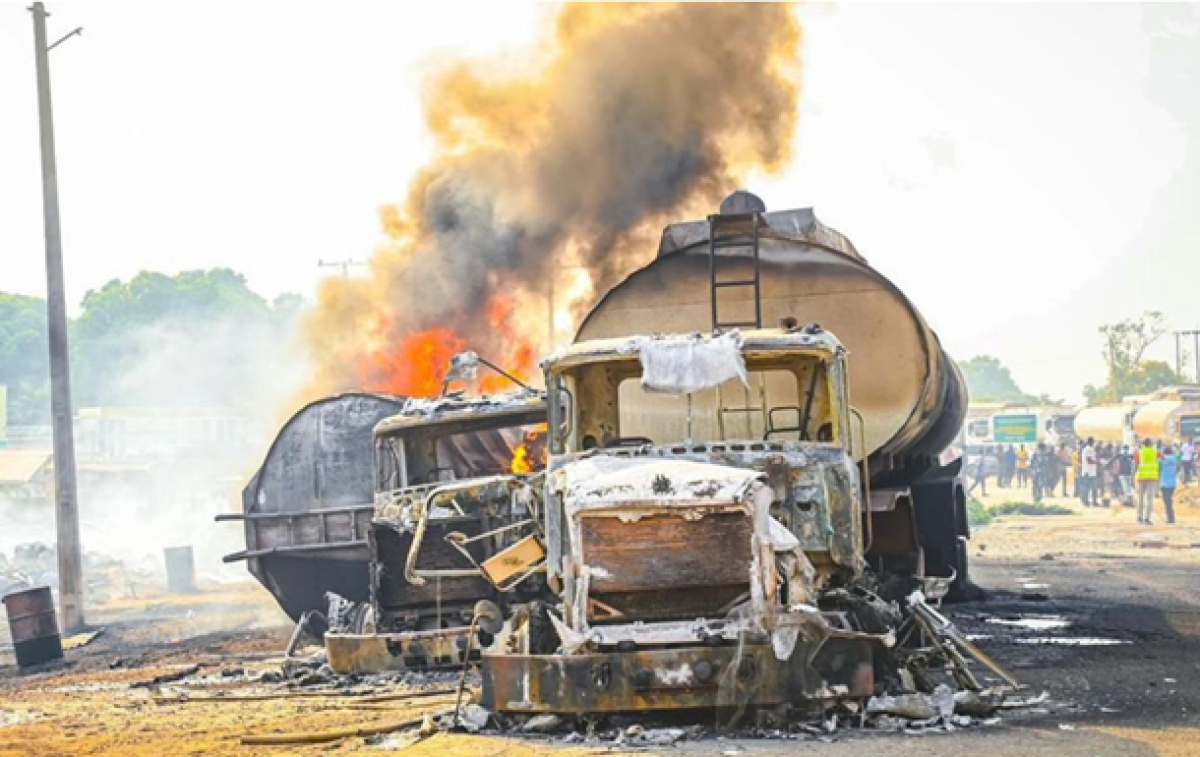
The junta’s attempts to escort fuel trucks from border crossings to the capital have been heroic yet perilous. Some convoys make it through, but others are ambushed, burned, and abandoned. The military has struck back with airstrikes against JNIM hideouts, but the jihadists’ mastery of terrain, fear, and terror tactics keeps the state constantly on the defensive. Goïta’s government has urged Malians to reduce travel to conserve fuel—a plea that underscores how little control the state now has over its own country.
JNIM’s strategy is cunning and brutal. By cutting off fuel, they not only threaten civilian life but also undermine the military’s capacity to move and operate, challenging the junta’s authority. Every tanker that fails to reach Bamako erodes public confidence in the state. By turning essential commodities into weapons, the jihadists demonstrate that real power no longer rests in state offices or military headquarters—it lies with those who control access to life itself.
The consequences are catastrophic. Prices for fuel have skyrocketed, transport and food costs are soaring, and rural areas are isolated from urban centers. Mali’s already fragile economy teeters on the edge of collapse. For ordinary citizens, every decision—from sending a child to school to buying groceries—is weighed against scarcity and danger. Survival has become a battlefield.
This crisis exposes the fragility of the Malian state. The junta, which promised stability when it seized power, now struggles to maintain basic services, protect its citizens, and assert authority over its own roads. What was once a political takeover to fight insurgents has become a struggle to ensure that tanks can roll safely from one city to another, that hospitals can receive fuel, and that homes can remain lit at night.
JNIM’s actions are not isolated incidents; they are part of a wider strategy to assert dominance in the Sahel, a vast and volatile region stretching from North Africa to West Africa. By demonstrating that even the capital city can be paralyzed by a blockade, the group sends a warning to neighboring states, signaling that they too could be vulnerable to economic disruption, attacks on supply chains, and civilian chaos.
The human cost is staggering. Families risk their lives to queue for fuel, truck drivers die in ambushes, and communities endure rolling blackouts and stalled economies. The jihadists’ control over the flow of fuel transforms ordinary citizens into pawns in a high-stakes war. In Bamako, desperation is palpable. People walk for miles, queue for days, and endure humiliation and hardship—all in a country where roads once symbolized connection, commerce, and freedom.
The junta’s response has been valiant but insufficient. Emergency deals with external suppliers promise temporary relief, yet they do not secure the roads or protect convoys from ambush. Military escorts continue to be attacked, and airstrikes, while deadly, cannot guarantee that tankers will reach the capital. Negotiation, local engagement, and the diversification of energy sources are discussed in corridors of power, but on the streets of Bamako, civilians see little evidence of change.
Mali’s crisis is a warning to the wider region. In a land where insurgency spreads like wildfire and governance is fragile, the control of essential resources has become a battlefield in itself. The blockade illustrates that modern warfare in Africa is not only fought with bullets and bombs but with scarcity, fear, and disruption. Whoever controls the flow of fuel controls life, movement, and survival.

General Goïta’s acknowledgment of the situation is a rare admission of vulnerability. Yet words alone will not prevent more deaths, more fires, or the collapse of order. The junta must navigate the impossible: restoring civilian confidence, safeguarding military mobility, and securing the very lifelines of the nation. Every delay risks further chaos, and every convoy on the road is a battle in itself.
As the sun sets over Bamako, the city waits in silence, lights flickering, generators whining, and people hoping for a tanker that may never arrive. The streets of Mali’s capital have become a stark testament to the intersection of terror, governance failure, and human endurance. The crisis is a brutal reminder that in Africa today, conflict is as much about who controls fuel and commerce as it is about ideology or territory.
Mali stands at a crossroads. If the junta can restore supply lines, enforce security, and regain legitimacy, the country may weather the storm. If not, it risks not only economic collapse but the erosion of state authority itself, leaving a vacuum that jihadists are ready to fill. In the shadow of burning tankers, the nation’s fragile heartbeat is visible: uncertain, unsteady, and dangerously exposed.









Discussion about this post