

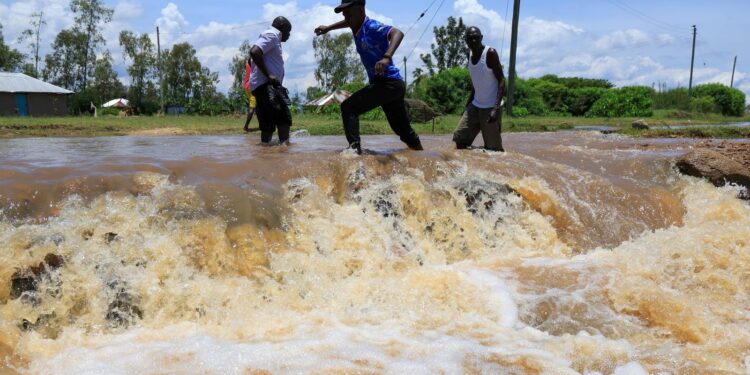
Severe flooding across Kenya has killed at least 88 people and displaced more than 34,000, the government has confirmed, as heavy rains cause two rivers to burst their banks and wreak havoc on communities. At least 21 counties have been affected since the start of March, raising urgent concerns over public safety, infrastructure damage, and growing humanitarian needs.
The capital, Nairobi, remains heavily affected, with low-lying neighbourhoods submerged and roads blocked by rushing waters. Residents have been forced to evacuate to temporary shelters, including schools, churches, and government offices. Transport and public services have been disrupted, and hospitals in flood-prone areas have had to suspend non-emergency operations.
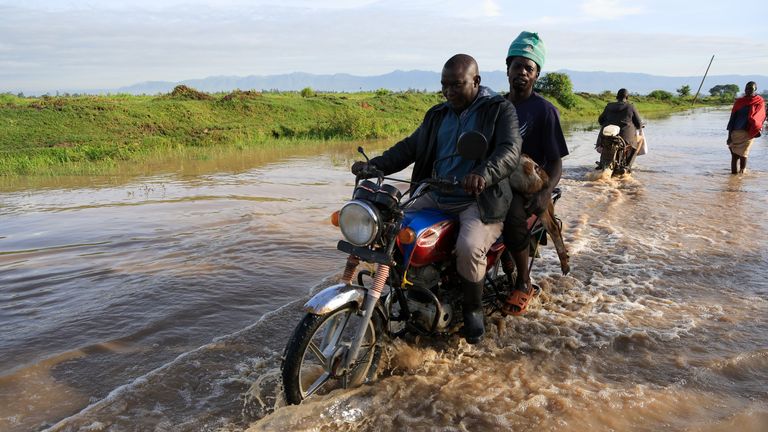
The floods intensified on Monday when the Nyando River in western Kenya overflowed, submerging sections of the Ahero Bridge along the Kericho-Awasi-Kisumu road. Authorities have urged motorists to avoid the route and use alternative roads. “This advisory is especially critical during the hours of darkness, when it may be difficult to accurately determine the depth and strength of the flowing water,” a government statement said.
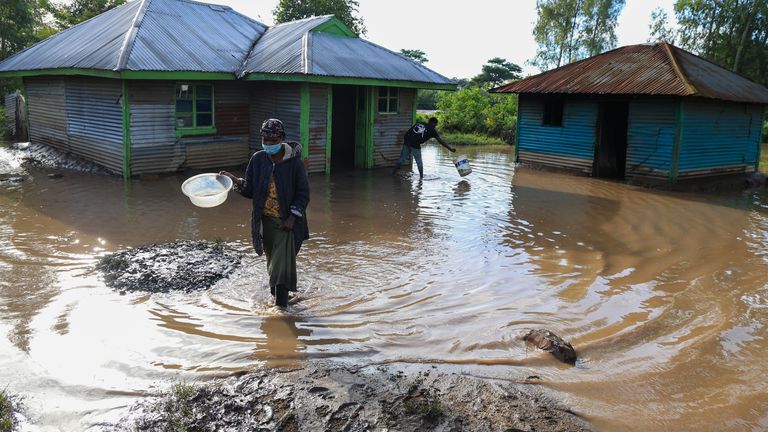
Rescue efforts led by the Kenya Red Cross Society have been stepped up in the worst-hit areas. In the Nyando region, teams evacuated over 200 people and more than 200 livestock, and at least two families were rescued from immediate danger. Authorities are also evacuating more than 900 students from the Ahero Girls National School as floodwaters continue to rise. At least 265 households in the area have been affected, according to the Ministry of Interior and National Administration. Six unaccompanied children were among those rescued and are now under official care.
Flooding is not limited to western Kenya. In Tana River County, the River Tana burst its banks, inundating farms in Mbalambala and surrounding areas, including Asako village. Authorities have warned that the floods threaten food production, with crops submerged and livestock at risk. In Uasin Gishu County, a multi-agency team is assessing the impact of rising water levels along the Sosiani River in Lower Elgon View, where residential and hospitality facilities have also been affected.
Nairobi County Governor has launched urgent operations to clear blocked drainage systems, but residents say the flooding is worsened by the city’s rapid expansion. Many informal settlements and poorly planned urban areas lack proper drainage, leaving them highly vulnerable during heavy rains. “The city is growing too fast, and drainage systems cannot cope with the heavy rain,” said a resident of Kibera. “Every time it rains, we are at risk of losing our homes and belongings.”
The government has warned that the floods may continue in the coming weeks as meteorologists forecast more heavy rains. Emergency services and humanitarian agencies are appealing for additional support to provide food, clean water, and shelter for those affected. Health officials have also cautioned about the risk of waterborne diseases such as cholera and typhoid, particularly in temporary shelters.
In rural areas, farmers report significant losses of crops and livestock, threatening food security in already vulnerable communities. Local leaders have called for long-term measures, including improved urban planning, flood management, and climate adaptation strategies, to prevent future disasters.
















Discussion about this post