

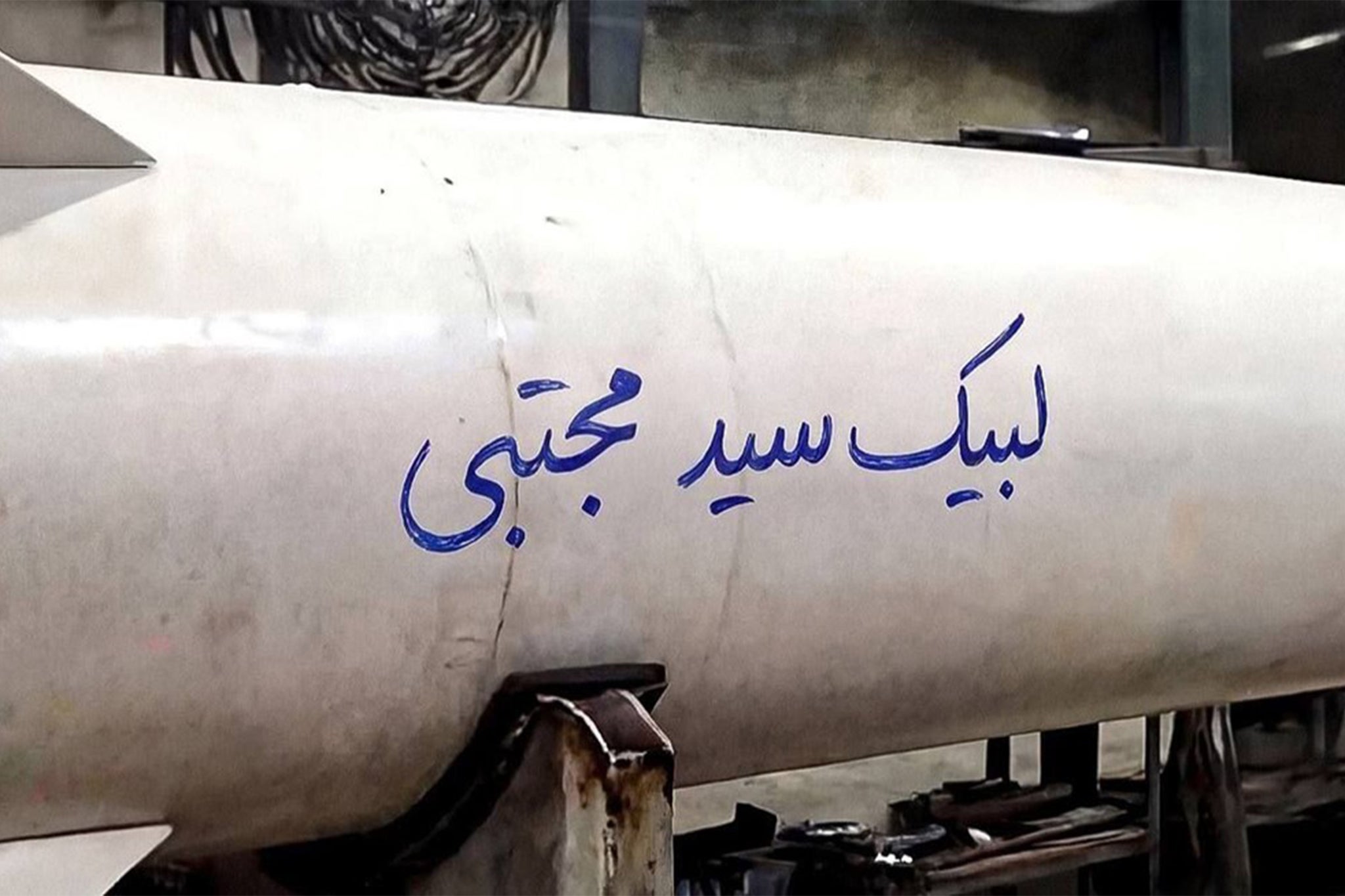
Iran has entered a new and volatile chapter after the appointment of its new supreme leader, Mojtaba Khamenei, who wasted little time demonstrating his authority with a provocative gesture directed at Israel. Just hours after assuming the most powerful position in the Islamic Republic, the 56-year-old cleric reportedly signed his name on a missile aimed at Israel, symbolically linking his leadership with Iran’s continuing confrontation with its regional adversary.
Images circulated by Iran’s state broadcaster Islamic Republic of Iran Broadcasting (IRIB) on its Telegram channel showing a projectile bearing the handwritten message: “At your service, Sayyid Mojtaba.” The message appeared to signal loyalty from Iran’s military forces to their newly appointed leader and emphasized the country’s readiness to strike back against its enemies. The post quickly spread across social media and international news outlets, intensifying fears that tensions between Iran and Israel could escalate further in the coming days.
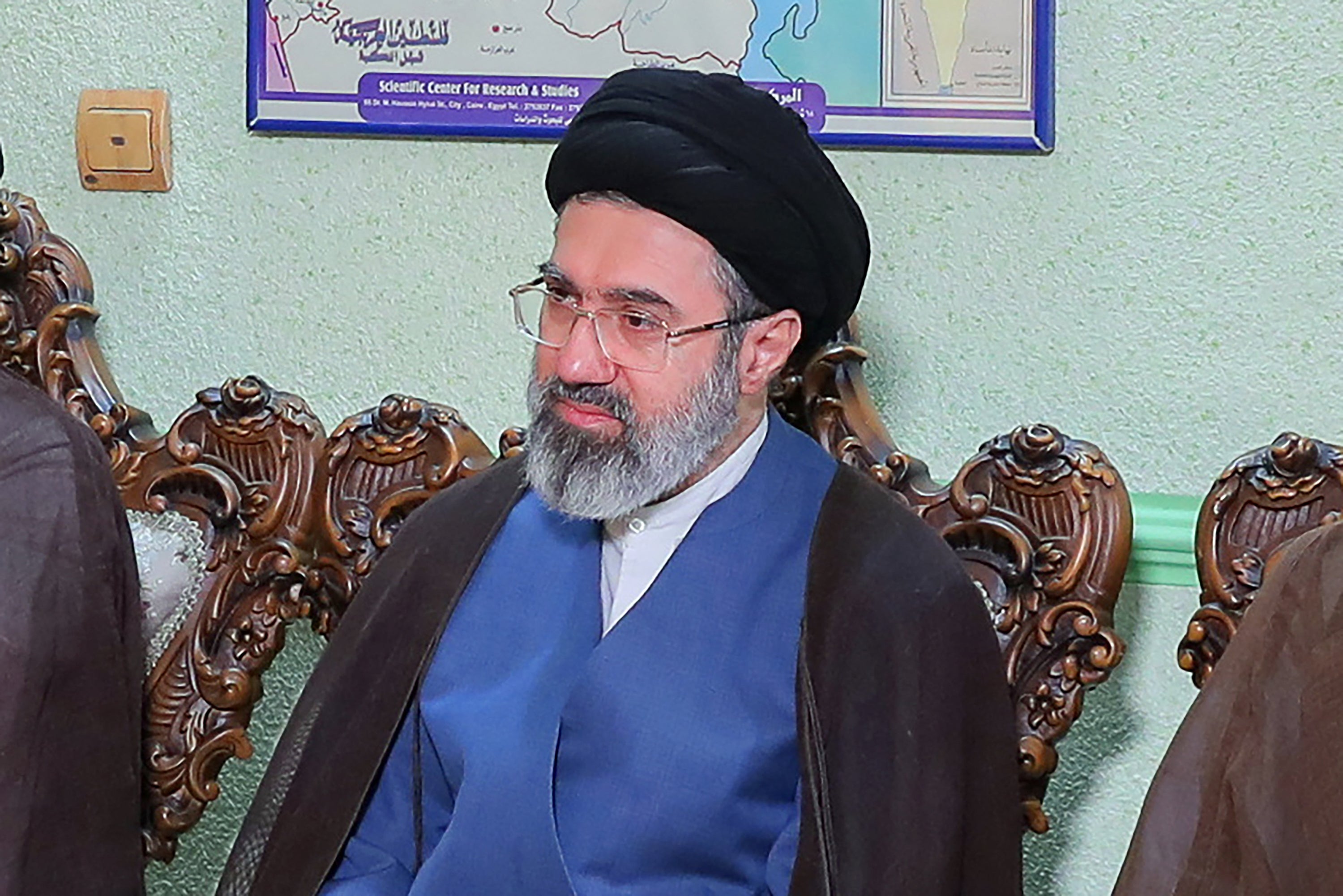
Mojtaba Khamenei’s appointment followed the dramatic death of his father, Ali Khamenei, who had served as Iran’s supreme leader for more than three decades. Ali Khamenei was reportedly killed in an Israeli airstrike on February 28, an event that shocked the region and dramatically escalated hostilities between Iran and Israel. While Israel has not officially confirmed the strike that killed him, Iranian authorities blamed Israeli forces and vowed that retaliation would follow.
Within days of the elder Khamenei’s death, Iran’s powerful political and military institutions moved swiftly to consolidate leadership. The Assembly of Experts, the clerical body responsible for appointing the supreme leader, formally selected Mojtaba Khamenei over the weekend. Soon after, Iran’s elite military force, the Islamic Revolutionary Guard Corps (IRGC), publicly pledged its allegiance to the new leader, reinforcing his authority over the country’s armed forces and security apparatus.
The quick transition was intended to project stability within Iran’s complex political system. Under the country’s theocratic constitution, the supreme leader wields ultimate authority over the military, judiciary, and state broadcasting, and holds the final say on foreign policy and the nation’s nuclear programme. The position also carries enormous symbolic power, serving as the highest religious authority in the Islamic Republic.
However, Mojtaba Khamenei’s rise has been controversial both inside and outside Iran. Critics have long accused the leadership of attempting to create a political dynasty by passing power from father to son—an arrangement many argue contradicts the revolutionary principles that established the Islamic Republic in 1979.
International reactions to his appointment have been swift and sharp. The president of the United States, Donald Trump, openly criticized the selection, saying Washington should have been consulted on Iran’s next leader. Trump warned that Mojtaba’s tenure could be short-lived if the United States does not recognize the legitimacy of the appointment.
“This leader is not going to last long,” Trump said in remarks to reporters, reiterating that he considers Mojtaba Khamenei an “unacceptable” candidate. The comments reflect the deep hostility between Washington and Tehran, which has intensified amid the ongoing military confrontation in the region.
Israel has also issued warnings about Iran’s leadership transition. Israeli officials reportedly signaled that whoever replaced Ali Khamenei could become a target if Iran continued launching attacks against Israel. In recent weeks, Israeli forces have dramatically increased strikes on Iranian infrastructure, particularly targeting oil refineries, fuel depots, and energy facilities.
Satellite imagery and local reports suggest that these attacks have caused extensive damage in parts of the Iranian capital, Tehran, where thick black smoke has reportedly blanketed the skyline following explosions at major fuel storage sites. The destruction of these facilities has not only intensified the military conflict but also raised environmental concerns.
According to Iran’s Iranian Red Crescent Society, some areas experienced unusual rainfall following the strikes that may have been contaminated by chemicals released from burning oil depots. Residents in affected areas reported dark, oily droplets falling from the sky, which authorities described as potentially acidic rain caused by airborne pollutants mixing with precipitation.
The Red Crescent warned that the contaminated rainfall could pose health risks, including headaches, respiratory problems, and skin irritation. Officials advised residents to avoid direct contact with the rain and to wash surfaces where the residue had accumulated.
Amid the intensifying conflict, Iran has threatened to retaliate against energy infrastructure across the region. However, Iranian officials have also stated that they intend to avoid targeting neighboring Gulf states, seeking to limit the war’s spread beyond the main combatants.
The escalating conflict has already resulted in significant casualties. Iran’s ambassador to the United Nations reported that at least 1,332 Iranian civilians have been killed since the latest wave of attacks began, with thousands more injured. Hospitals across several cities are reportedly overwhelmed as they struggle to treat victims of airstrikes and infrastructure damage.
The United States has also suffered losses. According to the United States Armed Forces, a seventh American service member has died from injuries sustained during Iran’s initial counterattack earlier in the conflict. The announcement came shortly after President Trump presided over the solemn return of the remains of six other American personnel killed during the fighting.
Beyond the battlefield, the war has triggered economic shockwaves across global markets. Oil and gas prices surged dramatically as traders reacted to fears of supply disruptions in the Middle East, one of the world’s most critical energy-producing regions. Benchmark crude prices climbed above $100 per barrel, raising concerns about inflation and energy shortages in multiple countries.
Inside Iran, Mojtaba Khamenei’s leadership is also facing skepticism from segments of the population. Many Iranians remember his alleged role during the protests that erupted after the death of Mahsa Amini in 2022. Amini died while in police custody after being arrested for allegedly violating the country’s strict dress code rules, sparking widespread demonstrations against the government.
During those protests, activists frequently accused Mojtaba of wielding significant behind-the-scenes influence over Iran’s security forces, which were widely criticized for their harsh crackdown on demonstrators. Human rights groups reported mass arrests, violent dispersal of protests, and heavy censorship of media coverage.
Despite these controversies, Mojtaba Khamenei is believed to have strong backing from Iran’s security establishment, particularly the Revolutionary Guard. Analysts say this support could help him consolidate power quickly, especially during a period of national crisis and military confrontation.
As the region watches closely, the symbolic image of a missile signed by the new supreme leader has become a stark representation of the tense moment Iran now faces. With hostilities continuing and diplomatic channels largely frozen, many observers fear that the appointment of Mojtaba Khamenei—and his defiant message aimed at Israel—could mark the beginning of an even more dangerous phase in the ongoing conflict.








Discussion about this post