
Sunday, May 10, 2026
  • Who’sWho Africa AWARDS
  • About TimeAfrica Magazine
  • Contact Us
  • Home
  • Magazine
  • WHO’SWHO AWARDS
  • News
  • World News
    • US
    • UAE
    • Europe
    • UK
    • Israel-Hamas
    • Russia-Ukraine
  • Politics
  • Crime
  • Lifestyle
  • Sports
  • Column
  • Interviews
  • Special Report
No Result
View All Result
  • Home
  • Magazine
  • WHO’SWHO AWARDS
  • News
  • World News
    • US
    • UAE
    • Europe
    • UK
    • Israel-Hamas
    • Russia-Ukraine
  • Politics
  • Crime
  • Lifestyle
  • Sports
  • Column
  • Interviews
  • Special Report
No Result
View All Result
No Result
View All Result
  • Home
  • WHO’SWHO AWARDS
  • News
  • Magazine
  • World News

Home » Featured » Goodwill gestures and de-Nazification: Decoding Putin’s Ukraine War lexicon

Goodwill gestures and de-Nazification: Decoding Putin’s Ukraine War lexicon

July 23, 2022
in Featured, World News
0
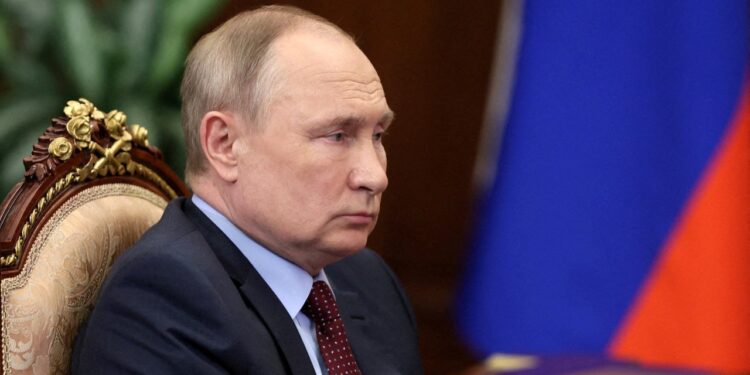
President Vladimir Putin of Russia

President Vladimir Putin of Russia

Share on FacebookShare on Twitter

By Peter Dickinson

Ever since Russian troops first crossed the Ukrainian border on February 24, the Kremlin has employed characteristically euphemistic language in order to downplay the criminal nature of the unfolding invasion. This has led to the creation of an entire alternative reality where Russian troops are noble liberators waging a chivalrous campaign against dastardly Ukrainian Nazis who bomb themselves and stage fake atrocities by massacring their own civilian population.

While the official Russian version of events is self-evidently absurd, an understanding of the true meaning behind Moscow’s preferred terminology is essential for international audiences looking to make sense of the often bizarre statements coming out of the Kremlin. From “goodwill gestures” to “de-Nazification” and “reclaiming Russian lands,” here are some of the key phrases from the lexicon of Putin’s Ukraine War decoded into plain English.

Special Military Operation: When is a war not a war? When it is a Special Military Operation. This would appear to have been Putin’s logic when he announced his “Special Military Operation” against Ukraine in the early hours of February 24. Despite waging the largest and most widely reported European war since the days of Hitler and Stalin, the Russian dictator remains so paranoid over the negative connotations of the “w” word that he has banned its use entirely in the Russian media.

De-Nazification: Putin has stated that the main goal of his “Special Military Operation” in Ukraine is the “de-Nazification” of the country. This attempt to justify the invasion by portraying it as a crusade against far-right extremism mirrors historic Kremlin efforts to discredit the Ukrainian independence movement by equating it with fascism. Putin’s “de-Nazification” claims are emotionally appealing to Russian audiences haunted by the horrors of WWII but they are also deeply misleading. Today’s Ukraine is actually an emerging democracy with a Jewish president and a far-right fringe that struggled to secure 2% of the vote in the country’s last national election.

ReadAlso

Zelensky turns to Africa to solve Ukraine’s energy crisis

Report: More than 1,000 Kenyans lured to fight for Russia in Ukraine war

In reality, the often savage actions of Russian troops in Ukraine have confirmed that the Kremlin views anything identifiably Ukrainian as “Nazi” and makes no distinction between the two. Putin’s proclaimed “de-Nazification” actually means “de-Ukrainianization,” as this prominent wartime article from Russian state news agency RIA Novosti makes abundantly clear. As far as most Ukrainians are concerned, the only Nazis in the country are the Russian soldiers waging a genocidal war on behalf of an unhinged dictator.

Military Objects: Russia’s invasion of Ukraine has been accompanied by a massive aerial campaign of bombings and missile strikes across the country. Meanwhile, Putin’s slowly advancing troops are heavily reliant on indiscriminate and overwhelming artillery attacks that have left thousands dead and reduced dozens of Ukrainian towns and cities to rubble.

ADVERTISEMENT

While the whole world can see that much of Ukraine now lies in ruins, the Kremlin remains extremely sensitive to accusations of war crimes and continues to insist that Russian forces only ever target military objects. Based on the experience of the past four months, Russia’s understanding of “military objects” apparently includes Mariupol Drama Theater, Kramatorsk Railway Station and Kremenchuk Shopping Mall along with hundreds of schools, hospitals and residential buildings throughout Ukraine. With international war crimes investigations already underway, Russia’s claims regarding “military objects” will likely be tested in court.

Goodwill Gesture: Russia expected a quick and victorious war in Ukraine, but things have not gone according to the Kremlin plan. Rather than capturing Kyiv within a few days as anticipated, Russian forces have encountered robust resistance and suffered a series of painful battlefield losses. In a desperate attempt to disguise these defeats and protect Russian dignity, the Kremlin has taken to officially describing its retreats as “goodwill gestures.”

The first “goodwill gesture” came in late March when Russia retreated entirely from northern Ukraine after suffering defeat in the Battle for Kyiv. Following Russia’s most recent retreat from strategically vital Black Sea outpost Snake Island on June 30, the Kremlin similarly declared that it was withdrawing as a “goodwill gesture” to Ukraine. Ukrainians will be hoping for many more such “goodwill gestures” in the weeks ahead as they seek to dislodge Russian forces from the south and east of their country.

Reclaiming Russian Lands: In the months leading up to the Russian invasion, Putin pretended to be primarily concerned with NATO expansion into the former USSR. He has since abandoned this pretense and declared himself the heir to Peter the Great. Speaking in early June, Putin compared the current war to the eighteenth century conquests of the celebrated czar and stated that like Peter, he was now also engaged in the historic endeavor of “reclaiming Russian lands.”

Putin has never made any secret of the fact that he views the territory of modern Ukraine as historically Russian land. For years, he has denied Ukraine’s right to exist while claiming that all Ukrainians are in fact Russians (“one people”). The real question is which other sovereign nations might also fit Putin’s definition. He recently set off alarm bells by commenting that the entire former Soviet Union was historically Russian territory.

Nor is it clear if Putin’s appetite for reclaiming Russian lands is limited to the 14 non-Russian post-Soviet states. Imperial Russia once also ruled Finland and Poland, while the Soviet Empire after WWII stretched deep into Central Europe and included East Germany. One thing is clear: unless he is stopped in Ukraine, Putin’s imperial ambitions are certain to expand.

Peter Dickinson is Editor of the Atlantic Council’s UkraineAlert Service.


Related

Tags: RussiaUkraine
ADVERTISEMENT
Previous Post

Canada accused of betraying Ukraine and helping Russia break sanctions

Next Post

Will Tunisia, Algeria relations recover through land border reopening?

You MayAlso Like

Featured

US ‘Shameless Exploitation’ in Proposed Zambian Health Aid Deal Exposed

May 10, 2026
World News

Middle East War to Spark Biggest Energy Price Surge in Four Years — World Bank

May 2, 2026
Column

Who will be the next UN chief?

April 26, 2026
Tuaregs fighters of the Coordination of Movements of the Azawad (CMA) gather near Kidal, Mali, Sept. 28, 2016. (AFP)
Column

Mali War Update: Kidal Clashes, Jihadist Alliances, and Nationwide Attacks Explained

April 26, 2026
Secret Service agents quickly respond to protect President Donald Trump during the White House Correspondents Dinner, Saturday, April 25, 2026, in Washington. (AP Photo/Mark Schiefelbein)
US

Another Assassination or What? President Trump Whisked Out of White House After Shots Fired

April 26, 2026
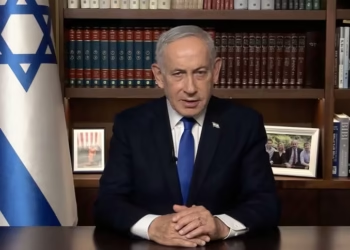
Israeli Prime Minister Benjamin Netanyahu speaks during a video statement on Thursday, April 16. GPO
Middle-East

Netanyahu reveals he quietly underwent treatment for prostate cancer

April 26, 2026
Next Post
Tunisia's President Kais Saied (C-R) receives Algeria's President Abdelmajid Tebboune (C-L) as the latter arrives at Tunis-Carthage International Airport, Tunis, Tunisia, Dec. 15, 2021. - Fethi Belaid/AFP via Getty Images

Will Tunisia, Algeria relations recover through land border reopening?

Nnamdi Kanu

United Nations orders Nigeria to release Nnamdi Kanu immediately, unconditionally

Discussion about this post

Pastor Idowu Okeze’s Empowerment in Igbuzo Described as Organic, Not Political

Ghana becomes latest African country to reject US health deal

US ‘Shameless Exploitation’ in Proposed Zambian Health Aid Deal Exposed

Woman jailed in Somalia for peaceful protest ‘stripped, kicked and beaten’

Renewed Hope for Nollywood Backs Tinubu’s Creative Economy Agenda

After losing influence in West Africa, France seeks a regional reset

  • Pastor Idowu Okeze’s Empowerment in Igbuzo Described as Organic, Not Political

    541 shares
    Share 216 Tweet 135
  • Ghana becomes latest African country to reject US health deal

    541 shares
    Share 216 Tweet 135
  • US ‘Shameless Exploitation’ in Proposed Zambian Health Aid Deal Exposed

    541 shares
    Share 216 Tweet 135
  • Woman jailed in Somalia for peaceful protest ‘stripped, kicked and beaten’

    541 shares
    Share 216 Tweet 135
  • Renewed Hope for Nollywood Backs Tinubu’s Creative Economy Agenda

    541 shares
    Share 216 Tweet 135
  • Trending
  • Comments
  • Latest

Pastor Idowu Okeze’s Empowerment in Igbuzo Described as Organic, Not Political

May 10, 2026

Ghana becomes latest African country to reject US health deal

May 10, 2026

US ‘Shameless Exploitation’ in Proposed Zambian Health Aid Deal Exposed

May 10, 2026

Woman jailed in Somalia for peaceful protest ‘stripped, kicked and beaten’

May 10, 2026

US ‘Shameless Exploitation’ in Proposed Zambian Health Aid Deal Exposed

May 10, 2026

After losing influence in West Africa, France seeks a regional reset

May 10, 2026

Algeria to Become Arab World’s 4th Largest Economy by 2026, IMF Data Shows

May 10, 2026

Mixed reactions trail Niger’s ban on French broadcasters

May 10, 2026

ABOUT US

TIMEAFRICA MAGAZINE is an African Magazine with a culture of excellence; a magazine without peer. Nearly a third of its readers hold advanced degrees and include novelists, … READ MORE >>

SECTIONS

  • Aviation
  • Column
  • Crime
  • Europe
  • Featured
  • Gallery
  • Health
  • Interviews
  • Israel-Hamas
  • Lifestyle
  • Magazine
  • Middle-East
  • News
  • Politics
  • Press Release
  • Russia-Ukraine
  • Science
  • Special Report
  • Sports
  • TV/Radio
  • UAE
  • UK
  • US
  • World News

Useful Links

  • AllAfrica
  • Channel Africa
  • El Khabar
  • The Guardian
  • Cairo Live
  • Le Republicain
  • Magazine: 9771144975608
  • Subscribe to TIMEAFRICA MAGAZINE biweekly news magazine

    Enjoy handpicked stories from around African continent,
    delivered anywhere in the world

    Subscribe

    • About TimeAfrica Magazine
    • Privacy Policy
    • Contact Us
    • WHO’SWHO AWARDS

    © Copyright TimeAfrica Magazine Limited 2026 - All rights reserved.

    No Result
    View All Result
    • WHO’SWHO AWARDS
    • Politics
    • Column
    • Interviews
    • Gallery
    • Lifestyle
    • Special Report
    • Sports
    • TV/Radio
    • Aviation
    • Health
    • Science
    • World News

    © Copyright TimeAfrica Magazine Limited 2026 - All rights reserved.

    This website uses cookies. By continuing to use this website you are giving consent to cookies being used. Visit our Privacy and Cookie Policy.