
Sunday, May 10, 2026
  • Who’sWho Africa AWARDS
  • About One Africa Magazine
  • Contact Us
www.oneafricamagazine.com
  • Home
  • Magazine
  • News
  • Interviews
  • Sports
  • World News
    • US
    • South America
    • Asia
    • Europe
    • Middle East
    • Australia and Antarctica
  • Crime
  • Politics
  • Lifestyle
  • Column
  • Special Report
  • WHO’SWHO AWARDS
No Result
View All Result
www.oneafricamagazine.com
  • Home
  • Magazine
  • News
  • Interviews
  • Sports
  • World News
    • US
    • South America
    • Asia
    • Europe
    • Middle East
    • Australia and Antarctica
  • Crime
  • Politics
  • Lifestyle
  • Column
  • Special Report
  • WHO’SWHO AWARDS
No Result
View All Result
www.oneafricamagazine.com
No Result
View All Result
  • Home
  • WHO’SWHO AWARDS
  • News
  • Magazine
  • World News

Home » Health » Experts say a twice-yearly injection that offers 100% protection against HIV is ‘stunning’

Experts say a twice-yearly injection that offers 100% protection against HIV is ‘stunning’

July 24, 2024
in Health
0
Share on FacebookShare on Twitter

By Maria Cheng and Gerald Imray

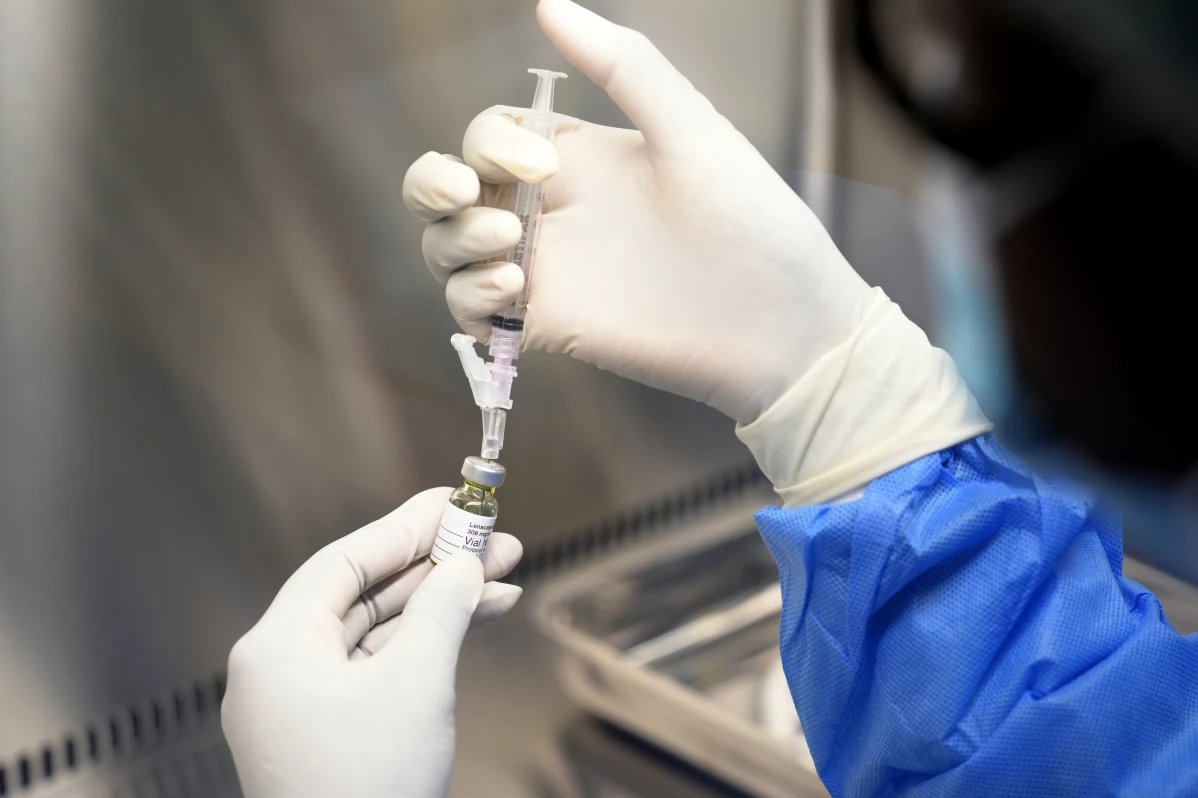
Cape Town, SOUTH AFRICA — Twice-yearly shots used to treat AIDS were 100% effective in preventing new infections in women, according to study results published Wednesday.

There were no infections in the young women and girls that got the shots in a study of about 5,000 in South Africa and Uganda, researchers reported. In a group given daily prevention pills, roughly 2% ended up catching HIV from infected sex partners.

“To see this level of protection is stunning,” said Salim Abdool Karim of the injections. He is director of an AIDS research center in Durban, South Africa, who was not part of the research.

ReadAlso

World close to ending AIDS pandemic but must keep funding ‘miracle’ drugs, UN chief warns

‘Miracle’ HIV drug to be sold at knock-down price in over 100 countries

The shots made by U.S. drugmaker Gilead and sold as Sunlenca are approved in the U.S., Canada, Europe and elsewhere, but only as a treatment for HIV. The company said it is waiting for results of testing in men before seeking permission to use it to protect against infection.

The results in women were published Wednesday in the New England Journal of Medicine and discussed at an AIDS conference in Munich. Gilead paid for the study and some of the researchers are company employees. Because of the surprisingly encouraging results, the study was stopped early and all participants were offered the shots, also known as lenacapavir.

ADVERTISEMENT

While there are other ways to prevent HIV infection, like condoms or daily pills, consistent use has been a problem in Africa. In the new study, only about 30% of participants given Gilead’s Truvada or Descovy prevention pills actually took them — and that figure dropped over time.

The prospect of a twice-a-year shot is “quite revolutionary news” for our patients, said Thandeka Nkosi, who helped run the Gilead research at the Desmond Tutu Health Foundation in Masiphumelele, South Africa. “It gives participants a choice and it just eliminates the whole stigma around taking pills” to prevent HIV.

Experts working to stop the spread of AIDS are excited about the Sunlenca shots but are concerned Gilead hasn’t yet agreed on an affordable price for those who need them the most. The company said it would pursue a “voluntary licensing program,” suggesting that only a select number of generic producers would be allowed to make them.

“Gilead has a tool that could change the trajectory of the HIV epidemic,” said Winnie Byanyima, executive director of the Geneva-based U.N. AIDS agency.

She said her organization urged Gilead to share Sunlenca’s patent with a U.N.-backed program that negotiates broad contracts allowing generic drugmakers to make cheap versions of drugs for poorer countries worldwide. As an HIV treatment, the drug costs more than $40,000 a year in the U.S., although what individuals pay varies.

Dr. Helen Bygrave of Doctors Without Borders said in a statement that the injections could “reverse the epidemic if it is made available in the countries with the highest rate of new infections.” She urged Gilead to publish a price for Sunlenca that would be affordable for all countries.

In a statement last month, Gilead said it was too early to say how much Sunlenca would cost for prevention in poorer countries. Dr. Jared Baeten, Gilead’s senior vice president of clinical development, said the company was already talking to generics manufacturers and understood how “deeply important it is that we move at speed.”

Another HIV prevention shot, Apretude, which is given every two months, is approved in some countries, including in Africa. It sells for about $180 per patient per year, which is still too pricey for most developing countries.

Byanyima said the people who need long-lasting protection the most include women and girls who are victims of domestic violence and gay men in countries where same-sex relationships are criminalized. According to UNAIDS, 46% of new HIV infections globally in 2022 were in women and girls, who were three times more likely to get HIV than males in Africa.

Byanyima compared the news about Sunlenca to the discovery decades ago of AIDS drugs that could turn HIV infection from a death sentence into a chronic illness. Back then, South African President Nelson Mandela suspended patents to allow wider access to the drugs; the price later dropped from about $10,000 per patient per year to about $50.

Olwethu Kemele, a health worker at the Desmond Tutu Health Foundation, predicted the shots could boost the number of people coming in for HIV prevention and slow the virus’ spread. She said young women often hide the pills to avoid questions from boyfriends and family members. “It makes it hard for the girls to continue,” she said.

In a report on the state of the global epidemic released this week, UNAIDS said that fewer people were infected with HIV in 2023 than at any point since the late 1980s. Globally, HIV infects about 1.3 million people every year and kills more than 600,000, mainly in Africa. While significant progress has been made in Africa, HIV infections are rising in Eastern Europe, Latin America and the Middle East.

In other research presented at the AIDS conference, Andrew Hill of the University of Liverpool and colleagues estimated that once production of Sunlenca is expanded to treat 10 million people, the price should fall to about $40 per treatment. He said it was critical that health authorities get access to Sunlenca as soon as possible.

“This is about as close as you can get to an HIV vaccine,” he said.

___
The Associated Press
Related

Tags: AIDSHIVSunlenca
ADVERTISEMENT
Previous Post

Most Wanted Nigerian Drug Baron Arrested In Lagos

Next Post

What Barack Obama really thinks of Kamala Harris and why his silence

You MayAlso Like

Health

World Asthma Day 2026: CIDO Foundation Provides Free Asthma Care in Delta State

May 6, 2026
Health

Africa’s Biggest Science Festival 2026 Brings 27 Nations Together in Abidjan

April 23, 2026
Health

Early signs of Parkinson’s disease is shown in the gut, study finds

April 20, 2026
A man suffering from monkeypox waits for treatment at Kamituga General Hospital in South Kivu (Congo), on September 4, 2024.   - 
Copyright © africanews
AP Photo/Moses Sawasawa
Health

Congo declares end of two‑year Mpox outbreak that killed over 2,000

April 3, 2026
Health

What is eye stroke? The rare side effect linked to weight loss injections

March 21, 2026
Health

Nigeria Lassa Fever Cases Fall but Death Rate Rises in 2026 Outbreak

March 17, 2026
Next Post

What Barack Obama really thinks of Kamala Harris and why his silence

Why wave of extremism and crime may be West Africa’s ticking bomb

Why wave of extremism and crime may be West Africa’s ticking bomb

Discussion about this post

US ‘Shameless Exploitation’ in Proposed Zambian Health Aid Deal Exposed

Pastor Idowu Okeze’s Empowerment in Igbuzo Described as Organic, Not Political

Renewed Hope for Nollywood Backs Tinubu’s Creative Economy Agenda

Ghana becomes latest African country to reject US health deal

Woman jailed in Somalia for peaceful protest ‘stripped, kicked and beaten’

After losing influence in West Africa, France seeks a regional reset

  • US ‘Shameless Exploitation’ in Proposed Zambian Health Aid Deal Exposed

    542 shares
    Share 217 Tweet 136
  • Pastor Idowu Okeze’s Empowerment in Igbuzo Described as Organic, Not Political

    541 shares
    Share 216 Tweet 135
  • Renewed Hope for Nollywood Backs Tinubu’s Creative Economy Agenda

    541 shares
    Share 216 Tweet 135
  • Ghana becomes latest African country to reject US health deal

    541 shares
    Share 216 Tweet 135
  • Woman jailed in Somalia for peaceful protest ‘stripped, kicked and beaten’

    541 shares
    Share 216 Tweet 135
  • Trending
  • Comments
  • Latest

US ‘Shameless Exploitation’ in Proposed Zambian Health Aid Deal Exposed

May 10, 2026

Pastor Idowu Okeze’s Empowerment in Igbuzo Described as Organic, Not Political

May 10, 2026

Renewed Hope for Nollywood Backs Tinubu’s Creative Economy Agenda

May 10, 2026

Ghana becomes latest African country to reject US health deal

May 10, 2026

US ‘Shameless Exploitation’ in Proposed Zambian Health Aid Deal Exposed

May 10, 2026

After losing influence in West Africa, France seeks a regional reset

May 10, 2026

Algeria to Become Arab World’s 4th Largest Economy by 2026, IMF Data Shows

May 10, 2026

Mixed reactions trail Niger’s ban on French broadcasters

May 10, 2026

ABOUT US

www.oneafricamagazine.com

TIMEAFRICA MAGAZINE is an African Magazine with a culture of excellence; a magazine without peer. Nearly a third of its readers hold advanced degrees and include novelists, … READ MORE >>

SECTIONS

  • Aviation
  • Column
  • Crime
  • Europe
  • Featured
  • Gallery
  • Health
  • Interviews
  • Israel-Hamas
  • Lifestyle
  • Magazine
  • Middle-East
  • News
  • Politics
  • Press Release
  • Russia-Ukraine
  • Science
  • Special Report
  • Sports
  • TV/Radio
  • UAE
  • UK
  • US
  • World News

Useful Links

  • AllAfrica
  • Channel Africa
  • El Khabar
  • The Guardian
  • Cairo Live
  • Le Republicain
  • Magazine: 9771144975608
  • Subscribe to TIMEAFRICA MAGAZINE biweekly news magazine

    Enjoy handpicked stories from around African continent,
    delivered anywhere in the world

    Subscribe

    • About One Africa Magazine
    • Privacy Policy
    • Contact Us
    • WHO’SWHO AWARDS

    © Copyright TimeAfrica Magazine Limited 2026 - All rights reserved.

    No Result
    View All Result
    • WHO’SWHO AWARDS
    • Politics
    • Column
    • Interviews
    • Gallery
    • Lifestyle
    • Special Report
    • Sports
    • TV/Radio
    • Aviation
    • Health
    • Science
    • World News

    © Copyright TimeAfrica Magazine Limited 2026 - All rights reserved.

    This website uses cookies. By continuing to use this website you are giving consent to cookies being used. Visit our Privacy and Cookie Policy.