

Addis Ababa, ETHIOPIA — Ethiopia is one of the African countries that will benefit from Afrexim Bank’s USD one billion package to recoup any losses incurred as a result of the implementation of the African Continental Free Trade Agreement (AfCFTA).
The fund, which is available for African countries ready to launch the agreement, is managed by the Afrexim Bank, which was given the mandate by the AfCFTA secretariat.
“We established an AfCFTA Adjustment Fund, which has a USD one billion capitalization and more to be raised through Afreximbank, to enable all AfCFTA State Parties to benefit from the AfCFTA,” Wamkele Mene, Secretary-General of the AfCFTA Secretariat, said.
The Fund for Export Development in Africa (FEDA), headquartered in Kigali, Rwanda, is the manager of the Fund, which has a target size of USD 8–10 billion, of which Afreximbank has committed one billion to catalyze activities.
FEDA’s mandate is to provide capital to advance intra-African trade, export development, and African industrialization. It recently announced that it had received internal approvals to purchase a strategic minority stake in Geregu Power Plc, one of Nigeria’s leading power generation companies with a capacity of more than 430 megawatts.
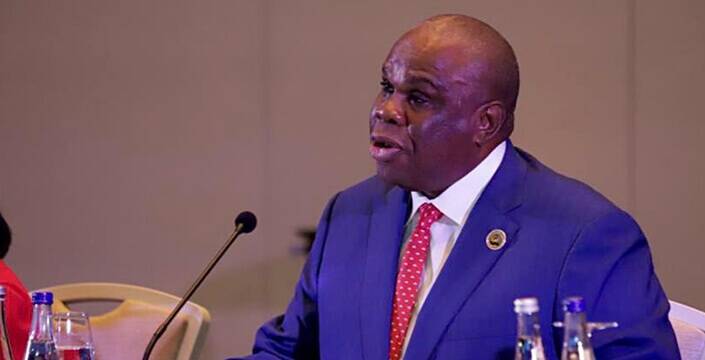
“The Bank has established the AfCFTA Adjustment Fund, working with the AfCFTA Secretariat and under the mandate of the African Union, with the goal, among others, of supporting AfCFTA State Parties to adjust in an orderly manner to the AfCFTA-induced tariff removals and to support companies to compete in the new trading regime,” Benedict Oramah (Prof.), president of Afrexim, said.
Given Africa’s current population of 1.2 billion people, which is expected to grow to 2.5 billion by 2050, the AfCFTA will be the largest free trade area since the formation of the World Trade Organization.
It is anticipated that it will lift at least 30 million people out of extreme poverty and another 68 million out of moderate poverty. It aims to increase intra-African trade by more than 80 percent by gradually lowering tariffs on 90 percent of goods and services. The AfCFTA will increase Africa’s income by USD 450 billion by 2035 and increase intra-African exports by more than 81 percent, according to the World Bank.
The African Union (AU) heads of state and government met last week in Addis Ababa for the 36th Ordinary Session at the AU headquarters in Addis Ababa, Ethiopia, under the theme “Acceleration of AfCFTA Implementation.”
So far, only eight African countries have traded goods under the AfCFTA’s preferential rules, including Ghana, Egypt, Tanzania, Rwanda, Kenya, Mauritius, Cameroon, and Tunisia.
Ethiopia is the 19th country to deposit ratification instruments, but it has made no progress in implementing the agreement due to concerns about being flooded by products from more developed African countries such as Kenya and Nigeria.
Earlier this month, Trade and Regional Integration Minister Gebremeskel Challa warned Members of Parliament (MPs) that full implementation of the AfCFTA in Ethiopia will have a negative impact on government revenues and the private sector.
“The tariff on 90 percent of our trade items will be zero in the next ten years. This means that our revenue from import tariffs and excise tax, among other things, will be zero. Items will be imported tax-free into Ethiopia, and this will have an impact on our revenue,” Gebremeskel said.
“The second effect affects our economy. Our economy has been closed off to foreign competition. However, if we open the market, it will be flooded with Kenyan products, among other things. This is good for our consumers, but it is bad for our country,” he added.
Addis Ababa, ETHIOPIA — Ethiopia is one of the African countries that will benefit from Afrexim Bank’s USD one billion package to recoup any losses incurred as a result of the implementation of the African Continental Free Trade Agreement (AfCFTA).
The fund, which is available for African countries ready to launch the agreement, is managed by the Afrexim Bank, which was given the mandate by the AfCFTA secretariat.
“We established an AfCFTA Adjustment Fund, which has a USD one billion capitalization and more to be raised through Afreximbank, to enable all AfCFTA State Parties to benefit from the AfCFTA,” Wamkele Mene, Secretary-General of the AfCFTA Secretariat, said.
The Fund for Export Development in Africa (FEDA), headquartered in Kigali, Rwanda, is the manager of the Fund, which has a target size of USD 8–10 billion, of which Afreximbank has committed one billion to catalyze activities.
FEDA’s mandate is to provide capital to advance intra-African trade, export development, and African industrialization. It recently announced that it had received internal approvals to purchase a strategic minority stake in Geregu Power Plc, one of Nigeria’s leading power generation companies with a capacity of more than 430 megawatts.
“The Bank has established the AfCFTA Adjustment Fund, working with the AfCFTA Secretariat and under the mandate of the African Union, with the goal, among others, of supporting AfCFTA State Parties to adjust in an orderly manner to the AfCFTA-induced tariff removals and to support companies to compete in the new trading regime,” Benedict Oramah (Prof.), president of Afrexim, said.
Given Africa’s current population of 1.2 billion people, which is expected to grow to 2.5 billion by 2050, the AfCFTA will be the largest free trade area since the formation of the World Trade Organization.
It is anticipated that it will lift at least 30 million people out of extreme poverty and another 68 million out of moderate poverty. It aims to increase intra-African trade by more than 80 percent by gradually lowering tariffs on 90 percent of goods and services. The AfCFTA will increase Africa’s income by USD 450 billion by 2035 and increase intra-African exports by more than 81 percent, according to the World Bank.
The African Union (AU) heads of state and government met last week in Addis Ababa for the 36th Ordinary Session at the AU headquarters in Addis Ababa, Ethiopia, under the theme “Acceleration of AfCFTA Implementation.”
So far, only eight African countries have traded goods under the AfCFTA’s preferential rules, including Ghana, Egypt, Tanzania, Rwanda, Kenya, Mauritius, Cameroon, and Tunisia.
Ethiopia is the 19th country to deposit ratification instruments, but it has made no progress in implementing the agreement due to concerns about being flooded by products from more developed African countries such as Kenya and Nigeria.
Earlier this month, Trade and Regional Integration Minister Gebremeskel Challa warned Members of Parliament (MPs) that full implementation of the AfCFTA in Ethiopia will have a negative impact on government revenues and the private sector.
“The tariff on 90 percent of our trade items will be zero in the next ten years. This means that our revenue from import tariffs and excise tax, among other things, will be zero. Items will be imported tax-free into Ethiopia, and this will have an impact on our revenue,” Gebremeskel said.
“The second effect affects our economy. Our economy has been closed off to foreign competition. However, if we open the market, it will be flooded with Kenyan products, among other things. This is good for our consumers, but it is bad for our country,” he added.
Addis Ababa, ETHIOPIA — Ethiopia is one of the African countries that will benefit from Afrexim Bank’s USD one billion package to recoup any losses incurred as a result of the implementation of the African Continental Free Trade Agreement (AfCFTA).
The fund, which is available for African countries ready to launch the agreement, is managed by the Afrexim Bank, which was given the mandate by the AfCFTA secretariat.
“We established an AfCFTA Adjustment Fund, which has a USD one billion capitalization and more to be raised through Afreximbank, to enable all AfCFTA State Parties to benefit from the AfCFTA,” Wamkele Mene, Secretary-General of the AfCFTA Secretariat, said.
The Fund for Export Development in Africa (FEDA), headquartered in Kigali, Rwanda, is the manager of the Fund, which has a target size of USD 8–10 billion, of which Afreximbank has committed one billion to catalyze activities.
FEDA’s mandate is to provide capital to advance intra-African trade, export development, and African industrialization. It recently announced that it had received internal approvals to purchase a strategic minority stake in Geregu Power Plc, one of Nigeria’s leading power generation companies with a capacity of more than 430 megawatts.
“The Bank has established the AfCFTA Adjustment Fund, working with the AfCFTA Secretariat and under the mandate of the African Union, with the goal, among others, of supporting AfCFTA State Parties to adjust in an orderly manner to the AfCFTA-induced tariff removals and to support companies to compete in the new trading regime,” Benedict Oramah (Prof.), president of Afrexim, said.
Given Africa’s current population of 1.2 billion people, which is expected to grow to 2.5 billion by 2050, the AfCFTA will be the largest free trade area since the formation of the World Trade Organization.
It is anticipated that it will lift at least 30 million people out of extreme poverty and another 68 million out of moderate poverty. It aims to increase intra-African trade by more than 80 percent by gradually lowering tariffs on 90 percent of goods and services. The AfCFTA will increase Africa’s income by USD 450 billion by 2035 and increase intra-African exports by more than 81 percent, according to the World Bank.
The African Union (AU) heads of state and government met last week in Addis Ababa for the 36th Ordinary Session at the AU headquarters in Addis Ababa, Ethiopia, under the theme “Acceleration of AfCFTA Implementation.”
So far, only eight African countries have traded goods under the AfCFTA’s preferential rules, including Ghana, Egypt, Tanzania, Rwanda, Kenya, Mauritius, Cameroon, and Tunisia.
Ethiopia is the 19th country to deposit ratification instruments, but it has made no progress in implementing the agreement due to concerns about being flooded by products from more developed African countries such as Kenya and Nigeria.
Earlier this month, Trade and Regional Integration Minister Gebremeskel Challa warned Members of Parliament (MPs) that full implementation of the AfCFTA in Ethiopia will have a negative impact on government revenues and the private sector.
“The tariff on 90 percent of our trade items will be zero in the next ten years. This means that our revenue from import tariffs and excise tax, among other things, will be zero. Items will be imported tax-free into Ethiopia, and this will have an impact on our revenue,” Gebremeskel said.
“The second effect affects our economy. Our economy has been closed off to foreign competition. However, if we open the market, it will be flooded with Kenyan products, among other things. This is good for our consumers, but it is bad for our country,” he added.
Addis Ababa, ETHIOPIA — Ethiopia is one of the African countries that will benefit from Afrexim Bank’s USD one billion package to recoup any losses incurred as a result of the implementation of the African Continental Free Trade Agreement (AfCFTA).
The fund, which is available for African countries ready to launch the agreement, is managed by the Afrexim Bank, which was given the mandate by the AfCFTA secretariat.
“We established an AfCFTA Adjustment Fund, which has a USD one billion capitalization and more to be raised through Afreximbank, to enable all AfCFTA State Parties to benefit from the AfCFTA,” Wamkele Mene, Secretary-General of the AfCFTA Secretariat, said.
The Fund for Export Development in Africa (FEDA), headquartered in Kigali, Rwanda, is the manager of the Fund, which has a target size of USD 8–10 billion, of which Afreximbank has committed one billion to catalyze activities.
FEDA’s mandate is to provide capital to advance intra-African trade, export development, and African industrialization. It recently announced that it had received internal approvals to purchase a strategic minority stake in Geregu Power Plc, one of Nigeria’s leading power generation companies with a capacity of more than 430 megawatts.
“The Bank has established the AfCFTA Adjustment Fund, working with the AfCFTA Secretariat and under the mandate of the African Union, with the goal, among others, of supporting AfCFTA State Parties to adjust in an orderly manner to the AfCFTA-induced tariff removals and to support companies to compete in the new trading regime,” Benedict Oramah (Prof.), president of Afrexim, said.
Given Africa’s current population of 1.2 billion people, which is expected to grow to 2.5 billion by 2050, the AfCFTA will be the largest free trade area since the formation of the World Trade Organization.
It is anticipated that it will lift at least 30 million people out of extreme poverty and another 68 million out of moderate poverty. It aims to increase intra-African trade by more than 80 percent by gradually lowering tariffs on 90 percent of goods and services. The AfCFTA will increase Africa’s income by USD 450 billion by 2035 and increase intra-African exports by more than 81 percent, according to the World Bank.
The African Union (AU) heads of state and government met last week in Addis Ababa for the 36th Ordinary Session at the AU headquarters in Addis Ababa, Ethiopia, under the theme “Acceleration of AfCFTA Implementation.”
So far, only eight African countries have traded goods under the AfCFTA’s preferential rules, including Ghana, Egypt, Tanzania, Rwanda, Kenya, Mauritius, Cameroon, and Tunisia.
Ethiopia is the 19th country to deposit ratification instruments, but it has made no progress in implementing the agreement due to concerns about being flooded by products from more developed African countries such as Kenya and Nigeria.
Earlier this month, Trade and Regional Integration Minister Gebremeskel Challa warned Members of Parliament (MPs) that full implementation of the AfCFTA in Ethiopia will have a negative impact on government revenues and the private sector.
“The tariff on 90 percent of our trade items will be zero in the next ten years. This means that our revenue from import tariffs and excise tax, among other things, will be zero. Items will be imported tax-free into Ethiopia, and this will have an impact on our revenue,” Gebremeskel said.
“The second effect affects our economy. Our economy has been closed off to foreign competition. However, if we open the market, it will be flooded with Kenyan products, among other things. This is good for our consumers, but it is bad for our country,” he added.
Addis Ababa, ETHIOPIA — Ethiopia is one of the African countries that will benefit from Afrexim Bank’s USD one billion package to recoup any losses incurred as a result of the implementation of the African Continental Free Trade Agreement (AfCFTA).
The fund, which is available for African countries ready to launch the agreement, is managed by the Afrexim Bank, which was given the mandate by the AfCFTA secretariat.
“We established an AfCFTA Adjustment Fund, which has a USD one billion capitalization and more to be raised through Afreximbank, to enable all AfCFTA State Parties to benefit from the AfCFTA,” Wamkele Mene, Secretary-General of the AfCFTA Secretariat, said.
The Fund for Export Development in Africa (FEDA), headquartered in Kigali, Rwanda, is the manager of the Fund, which has a target size of USD 8–10 billion, of which Afreximbank has committed one billion to catalyze activities.
FEDA’s mandate is to provide capital to advance intra-African trade, export development, and African industrialization. It recently announced that it had received internal approvals to purchase a strategic minority stake in Geregu Power Plc, one of Nigeria’s leading power generation companies with a capacity of more than 430 megawatts.
“The Bank has established the AfCFTA Adjustment Fund, working with the AfCFTA Secretariat and under the mandate of the African Union, with the goal, among others, of supporting AfCFTA State Parties to adjust in an orderly manner to the AfCFTA-induced tariff removals and to support companies to compete in the new trading regime,” Benedict Oramah (Prof.), president of Afrexim, said.
Given Africa’s current population of 1.2 billion people, which is expected to grow to 2.5 billion by 2050, the AfCFTA will be the largest free trade area since the formation of the World Trade Organization.
It is anticipated that it will lift at least 30 million people out of extreme poverty and another 68 million out of moderate poverty. It aims to increase intra-African trade by more than 80 percent by gradually lowering tariffs on 90 percent of goods and services. The AfCFTA will increase Africa’s income by USD 450 billion by 2035 and increase intra-African exports by more than 81 percent, according to the World Bank.
The African Union (AU) heads of state and government met last week in Addis Ababa for the 36th Ordinary Session at the AU headquarters in Addis Ababa, Ethiopia, under the theme “Acceleration of AfCFTA Implementation.”
So far, only eight African countries have traded goods under the AfCFTA’s preferential rules, including Ghana, Egypt, Tanzania, Rwanda, Kenya, Mauritius, Cameroon, and Tunisia.
Ethiopia is the 19th country to deposit ratification instruments, but it has made no progress in implementing the agreement due to concerns about being flooded by products from more developed African countries such as Kenya and Nigeria.
Earlier this month, Trade and Regional Integration Minister Gebremeskel Challa warned Members of Parliament (MPs) that full implementation of the AfCFTA in Ethiopia will have a negative impact on government revenues and the private sector.
“The tariff on 90 percent of our trade items will be zero in the next ten years. This means that our revenue from import tariffs and excise tax, among other things, will be zero. Items will be imported tax-free into Ethiopia, and this will have an impact on our revenue,” Gebremeskel said.
“The second effect affects our economy. Our economy has been closed off to foreign competition. However, if we open the market, it will be flooded with Kenyan products, among other things. This is good for our consumers, but it is bad for our country,” he added.
Addis Ababa, ETHIOPIA — Ethiopia is one of the African countries that will benefit from Afrexim Bank’s USD one billion package to recoup any losses incurred as a result of the implementation of the African Continental Free Trade Agreement (AfCFTA).
The fund, which is available for African countries ready to launch the agreement, is managed by the Afrexim Bank, which was given the mandate by the AfCFTA secretariat.
“We established an AfCFTA Adjustment Fund, which has a USD one billion capitalization and more to be raised through Afreximbank, to enable all AfCFTA State Parties to benefit from the AfCFTA,” Wamkele Mene, Secretary-General of the AfCFTA Secretariat, said.
The Fund for Export Development in Africa (FEDA), headquartered in Kigali, Rwanda, is the manager of the Fund, which has a target size of USD 8–10 billion, of which Afreximbank has committed one billion to catalyze activities.
FEDA’s mandate is to provide capital to advance intra-African trade, export development, and African industrialization. It recently announced that it had received internal approvals to purchase a strategic minority stake in Geregu Power Plc, one of Nigeria’s leading power generation companies with a capacity of more than 430 megawatts.
“The Bank has established the AfCFTA Adjustment Fund, working with the AfCFTA Secretariat and under the mandate of the African Union, with the goal, among others, of supporting AfCFTA State Parties to adjust in an orderly manner to the AfCFTA-induced tariff removals and to support companies to compete in the new trading regime,” Benedict Oramah (Prof.), president of Afrexim, said.
Given Africa’s current population of 1.2 billion people, which is expected to grow to 2.5 billion by 2050, the AfCFTA will be the largest free trade area since the formation of the World Trade Organization.
It is anticipated that it will lift at least 30 million people out of extreme poverty and another 68 million out of moderate poverty. It aims to increase intra-African trade by more than 80 percent by gradually lowering tariffs on 90 percent of goods and services. The AfCFTA will increase Africa’s income by USD 450 billion by 2035 and increase intra-African exports by more than 81 percent, according to the World Bank.
The African Union (AU) heads of state and government met last week in Addis Ababa for the 36th Ordinary Session at the AU headquarters in Addis Ababa, Ethiopia, under the theme “Acceleration of AfCFTA Implementation.”
So far, only eight African countries have traded goods under the AfCFTA’s preferential rules, including Ghana, Egypt, Tanzania, Rwanda, Kenya, Mauritius, Cameroon, and Tunisia.
Ethiopia is the 19th country to deposit ratification instruments, but it has made no progress in implementing the agreement due to concerns about being flooded by products from more developed African countries such as Kenya and Nigeria.
Earlier this month, Trade and Regional Integration Minister Gebremeskel Challa warned Members of Parliament (MPs) that full implementation of the AfCFTA in Ethiopia will have a negative impact on government revenues and the private sector.
“The tariff on 90 percent of our trade items will be zero in the next ten years. This means that our revenue from import tariffs and excise tax, among other things, will be zero. Items will be imported tax-free into Ethiopia, and this will have an impact on our revenue,” Gebremeskel said.
“The second effect affects our economy. Our economy has been closed off to foreign competition. However, if we open the market, it will be flooded with Kenyan products, among other things. This is good for our consumers, but it is bad for our country,” he added.
Addis Ababa, ETHIOPIA — Ethiopia is one of the African countries that will benefit from Afrexim Bank’s USD one billion package to recoup any losses incurred as a result of the implementation of the African Continental Free Trade Agreement (AfCFTA).
The fund, which is available for African countries ready to launch the agreement, is managed by the Afrexim Bank, which was given the mandate by the AfCFTA secretariat.
“We established an AfCFTA Adjustment Fund, which has a USD one billion capitalization and more to be raised through Afreximbank, to enable all AfCFTA State Parties to benefit from the AfCFTA,” Wamkele Mene, Secretary-General of the AfCFTA Secretariat, said.
The Fund for Export Development in Africa (FEDA), headquartered in Kigali, Rwanda, is the manager of the Fund, which has a target size of USD 8–10 billion, of which Afreximbank has committed one billion to catalyze activities.
FEDA’s mandate is to provide capital to advance intra-African trade, export development, and African industrialization. It recently announced that it had received internal approvals to purchase a strategic minority stake in Geregu Power Plc, one of Nigeria’s leading power generation companies with a capacity of more than 430 megawatts.
“The Bank has established the AfCFTA Adjustment Fund, working with the AfCFTA Secretariat and under the mandate of the African Union, with the goal, among others, of supporting AfCFTA State Parties to adjust in an orderly manner to the AfCFTA-induced tariff removals and to support companies to compete in the new trading regime,” Benedict Oramah (Prof.), president of Afrexim, said.
Given Africa’s current population of 1.2 billion people, which is expected to grow to 2.5 billion by 2050, the AfCFTA will be the largest free trade area since the formation of the World Trade Organization.
It is anticipated that it will lift at least 30 million people out of extreme poverty and another 68 million out of moderate poverty. It aims to increase intra-African trade by more than 80 percent by gradually lowering tariffs on 90 percent of goods and services. The AfCFTA will increase Africa’s income by USD 450 billion by 2035 and increase intra-African exports by more than 81 percent, according to the World Bank.
The African Union (AU) heads of state and government met last week in Addis Ababa for the 36th Ordinary Session at the AU headquarters in Addis Ababa, Ethiopia, under the theme “Acceleration of AfCFTA Implementation.”
So far, only eight African countries have traded goods under the AfCFTA’s preferential rules, including Ghana, Egypt, Tanzania, Rwanda, Kenya, Mauritius, Cameroon, and Tunisia.
Ethiopia is the 19th country to deposit ratification instruments, but it has made no progress in implementing the agreement due to concerns about being flooded by products from more developed African countries such as Kenya and Nigeria.
Earlier this month, Trade and Regional Integration Minister Gebremeskel Challa warned Members of Parliament (MPs) that full implementation of the AfCFTA in Ethiopia will have a negative impact on government revenues and the private sector.
“The tariff on 90 percent of our trade items will be zero in the next ten years. This means that our revenue from import tariffs and excise tax, among other things, will be zero. Items will be imported tax-free into Ethiopia, and this will have an impact on our revenue,” Gebremeskel said.
“The second effect affects our economy. Our economy has been closed off to foreign competition. However, if we open the market, it will be flooded with Kenyan products, among other things. This is good for our consumers, but it is bad for our country,” he added.
Addis Ababa, ETHIOPIA — Ethiopia is one of the African countries that will benefit from Afrexim Bank’s USD one billion package to recoup any losses incurred as a result of the implementation of the African Continental Free Trade Agreement (AfCFTA).
The fund, which is available for African countries ready to launch the agreement, is managed by the Afrexim Bank, which was given the mandate by the AfCFTA secretariat.
“We established an AfCFTA Adjustment Fund, which has a USD one billion capitalization and more to be raised through Afreximbank, to enable all AfCFTA State Parties to benefit from the AfCFTA,” Wamkele Mene, Secretary-General of the AfCFTA Secretariat, said.
The Fund for Export Development in Africa (FEDA), headquartered in Kigali, Rwanda, is the manager of the Fund, which has a target size of USD 8–10 billion, of which Afreximbank has committed one billion to catalyze activities.
FEDA’s mandate is to provide capital to advance intra-African trade, export development, and African industrialization. It recently announced that it had received internal approvals to purchase a strategic minority stake in Geregu Power Plc, one of Nigeria’s leading power generation companies with a capacity of more than 430 megawatts.
“The Bank has established the AfCFTA Adjustment Fund, working with the AfCFTA Secretariat and under the mandate of the African Union, with the goal, among others, of supporting AfCFTA State Parties to adjust in an orderly manner to the AfCFTA-induced tariff removals and to support companies to compete in the new trading regime,” Benedict Oramah (Prof.), president of Afrexim, said.
Given Africa’s current population of 1.2 billion people, which is expected to grow to 2.5 billion by 2050, the AfCFTA will be the largest free trade area since the formation of the World Trade Organization.
It is anticipated that it will lift at least 30 million people out of extreme poverty and another 68 million out of moderate poverty. It aims to increase intra-African trade by more than 80 percent by gradually lowering tariffs on 90 percent of goods and services. The AfCFTA will increase Africa’s income by USD 450 billion by 2035 and increase intra-African exports by more than 81 percent, according to the World Bank.
The African Union (AU) heads of state and government met last week in Addis Ababa for the 36th Ordinary Session at the AU headquarters in Addis Ababa, Ethiopia, under the theme “Acceleration of AfCFTA Implementation.”
So far, only eight African countries have traded goods under the AfCFTA’s preferential rules, including Ghana, Egypt, Tanzania, Rwanda, Kenya, Mauritius, Cameroon, and Tunisia.
Ethiopia is the 19th country to deposit ratification instruments, but it has made no progress in implementing the agreement due to concerns about being flooded by products from more developed African countries such as Kenya and Nigeria.
Earlier this month, Trade and Regional Integration Minister Gebremeskel Challa warned Members of Parliament (MPs) that full implementation of the AfCFTA in Ethiopia will have a negative impact on government revenues and the private sector.
“The tariff on 90 percent of our trade items will be zero in the next ten years. This means that our revenue from import tariffs and excise tax, among other things, will be zero. Items will be imported tax-free into Ethiopia, and this will have an impact on our revenue,” Gebremeskel said.
“The second effect affects our economy. Our economy has been closed off to foreign competition. However, if we open the market, it will be flooded with Kenyan products, among other things. This is good for our consumers, but it is bad for our country,” he added.












Discussion about this post