
Saturday, May 9, 2026
  • Who’sWho Africa AWARDS
  • About TimeAfrica Magazine
  • Contact Us
Time Africa Magazine
  • Home
  • Magazine
  • WHO’SWHO AWARDS
  • News
  • World News
    • US
    • UAE
    • Europe
    • UK
    • Israel-Hamas
    • Russia-Ukraine
  • Politics
  • Crime
  • Lifestyle
  • Sports
  • Column
  • Interviews
  • Special Report
No Result
View All Result
Time Africa Magazine
  • Home
  • Magazine
  • WHO’SWHO AWARDS
  • News
  • World News
    • US
    • UAE
    • Europe
    • UK
    • Israel-Hamas
    • Russia-Ukraine
  • Politics
  • Crime
  • Lifestyle
  • Sports
  • Column
  • Interviews
  • Special Report
No Result
View All Result
Time Africa Magazine
No Result
View All Result
  • Home
  • WHO’SWHO AWARDS
  • News
  • Magazine
  • World News

Home » Health » Cellphones and Cancer: A New Study Puts Fears to Rest

Cellphones and Cancer: A New Study Puts Fears to Rest

WHO says, "there is no substantial evidence linking cellphone use to an increased risk of cancer"

September 3, 2024
in Health
0
Share on FacebookShare on Twitter

In a sweeping review that spans nearly three decades, the World Health Organization has delivered a reassuring verdict on the safety of cellphones. According to an extensive analysis of 63 studies conducted across 22 countries from 1994 to 2022, there is no substantial evidence linking cellphone use to an increased risk of cancer.

The comprehensive investigation explored six types of cancer, including three types of brain cancer, as well as cancers of the pituitary and salivary glands, and leukemia. The findings are clear: cellphone use does not appear to elevate the risk of these cancers. This conclusion marks a significant milestone in the ongoing debate over the health effects of radio wave exposure.

“Worries about the health effects of new technology are common and tend to increase when a new technology is adopted widely or adopted quickly,” Keith Petrie, a professor in the Department of Psychological Medicine at University of Auckland, New Zealand, said in a statement.
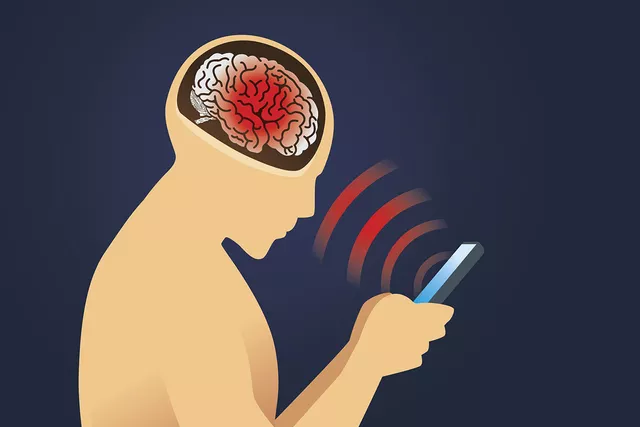
As cellphone use has surged globally, so have concerns about potential health impacts. However, the study, led by the Australian Radiation Protection and Nuclear Safety Agency, found no significant increase in brain cancer rates over the years.

ReadAlso

Weight-loss jab could be made for $3 a month, study finds

Nigeria is a dangerous place to be a child – we must fix the system that repeatedly fails them

“These studies showed no major increases,” Mark Elwood, honorary professor of cancer epidemiology at the University of Auckland and one of the study’ co-authors, said in a statement.

Elwood’s team also reviewed data related to radio and TV transmitters, finding no link to higher cancer risks in both adults and children.

ADVERTISEMENT

“Similarly, we found no increased risks of leukemia or brain cancers in children in relationship to radio or TV transmitters or cellphone base stations,” he said.

The rise of 5G technology has sparked new debates about its safety. While comprehensive studies on 5G are still forthcoming, initial findings suggest that the technology is unlikely to pose significant health risks. Elwood pointed out that research on similar high-frequency technologies, such as radar, has not shown an increased cancer risk, providing some preliminary reassurance about 5G.

“There are no major studies yet of 5G networks, but there are studies of radar, which has similar high frequencies; these do not show an increased risk,” he said.

Experts outside the study have praised its findings. Alberto Nájera, a professor of physics at the University of Castilla-La Mancha, commended the study’s thorough approach and robust conclusions.

“The authors have been meticulous in assessing and adjusting for potential confounders,” Nájera said.

“The authors have been meticulous in assessing and adjusting for potential confounders in the individual studies reviewed,” Nájera, who is also the scientific director of the Scientific Advisory Committee on Radio Frequencies and Health of the Official College of Telecommunications Engineers, said in a statement.

“The main implications of this study are that, according to the best available evidence to date, exposure to radio-frequency electromagnetic fields, such as those produced by mobile phones or telephone antennas, does not appear to significantly increase the risk of developing cancer,” he said.

Despite the reassuring results, the study’s authors stress the importance of continued monitoring. With new technologies like 5G emerging, ongoing epidemiological surveillance will be essential.

“We are monitoring new studies published since our main cutoff, December 2022. There have been several, including the first report on cancer from the COSMOS international cohort study, with over 250,000 participants. These studies are in general consistent with our conclusions,” Elwood added.

These findings also align with previous research from the Australian Radiation Protection and Nuclear Safety Agency that there has been no significant rise in the incidence of brain cancers since the introduction and expansion of wireless technology.

However, Nájera added: “As always in science, the authors recommend continuing with epidemiological surveillance, especially in relation to new technologies such as 5G, as the evidence is still limited and some uncertainties persist; for instance, regarding long-term exposures and in more susceptible population subgroups.”

The Australian Radiation Protection and Nuclear Safety Agency will continue to study the effects of these devices, and 5G networks, as well as expanding their research efforts to explore the relationships with other types of cancer.
Related

Tags: 5GCancerCellphonesHealth
ADVERTISEMENT
Previous Post

NNPC Admits to Mounting Debt Amidst Fuel Crisis

Next Post

Pope Francis Begins Asia Tour in Indonesia Amid Health Concerns

You MayAlso Like

Health

World Asthma Day 2026: CIDO Foundation Provides Free Asthma Care in Delta State

May 6, 2026
Health

Africa’s Biggest Science Festival 2026 Brings 27 Nations Together in Abidjan

April 23, 2026
Health

Early signs of Parkinson’s disease is shown in the gut, study finds

April 20, 2026
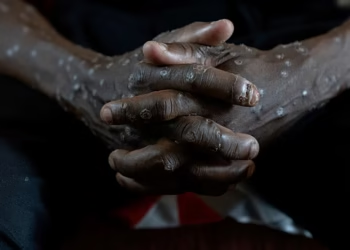
A man suffering from monkeypox waits for treatment at Kamituga General Hospital in South Kivu (Congo), on September 4, 2024.   - 
Copyright © africanews
AP Photo/Moses Sawasawa
Health

Congo declares end of two‑year Mpox outbreak that killed over 2,000

April 3, 2026
Health

What is eye stroke? The rare side effect linked to weight loss injections

March 21, 2026
Health

Nigeria Lassa Fever Cases Fall but Death Rate Rises in 2026 Outbreak

March 17, 2026
Next Post
Pope Francis is welcomed by Indonesia's Minister for Religious Affairs Yaqut Cholil Qoumas, center, soon after landing at Jakarta's International airport Soekarno Hatta, Tuesday, Sept. 3, 2024. Gregorio Borgia/AP

Pope Francis Begins Asia Tour in Indonesia Amid Health Concerns

Nigeria Police Service Commission Abolishes Irregular Promotions

Discussion about this post

World Asthma Day 2026: CIDO Foundation Provides Free Asthma Care in Delta State

How Senator Ned Nwoko Changed My Life Through His Scholarship

  • World Asthma Day 2026: CIDO Foundation Provides Free Asthma Care in Delta State

    542 shares
    Share 217 Tweet 136
  • How Senator Ned Nwoko Changed My Life Through His Scholarship

    545 shares
    Share 218 Tweet 136
  • Trending
  • Comments
  • Latest

World Asthma Day 2026: CIDO Foundation Provides Free Asthma Care in Delta State

May 6, 2026

How Senator Ned Nwoko Changed My Life Through His Scholarship

May 6, 2026

US World Cup 2026 hotel bookings lag as demand falls short of expectations

May 6, 2026

How Senator Ned Nwoko Changed My Life Through His Scholarship

May 6, 2026

World Asthma Day 2026: CIDO Foundation Provides Free Asthma Care in Delta State

May 6, 2026

Peter Obi Explains Exit from ADC

May 3, 2026

ABOUT US

Time Africa Magazine

TIMEAFRICA MAGAZINE is an African Magazine with a culture of excellence; a magazine without peer. Nearly a third of its readers hold advanced degrees and include novelists, … READ MORE >>

SECTIONS

  • Aviation
  • Column
  • Crime
  • Europe
  • Featured
  • Gallery
  • Health
  • Interviews
  • Israel-Hamas
  • Lifestyle
  • Magazine
  • Middle-East
  • News
  • Politics
  • Press Release
  • Russia-Ukraine
  • Science
  • Special Report
  • Sports
  • TV/Radio
  • UAE
  • UK
  • US
  • World News

Useful Links

  • AllAfrica
  • Channel Africa
  • El Khabar
  • The Guardian
  • Cairo Live
  • Le Republicain
  • Magazine: 9771144975608
  • Subscribe to TIMEAFRICA MAGAZINE biweekly news magazine

    Enjoy handpicked stories from around African continent,
    delivered anywhere in the world

    Subscribe

    • About TimeAfrica Magazine
    • Privacy Policy
    • Contact Us
    • WHO’SWHO AWARDS

    © Copyright TimeAfrica Magazine Limited 2026 - All rights reserved.

    No Result
    View All Result
    • WHO’SWHO AWARDS
    • Politics
    • Column
    • Interviews
    • Gallery
    • Lifestyle
    • Special Report
    • Sports
    • TV/Radio
    • Aviation
    • Health
    • Science
    • World News

    © Copyright TimeAfrica Magazine Limited 2026 - All rights reserved.

    This website uses cookies. By continuing to use this website you are giving consent to cookies being used. Visit our Privacy and Cookie Policy.