


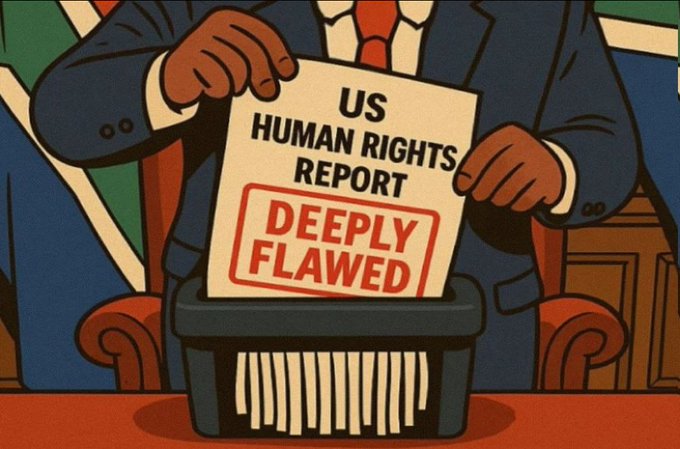
The department also criticized the U.S. for issuing judgments on other countries while itself refusing supervision by international mechanisms like the U.N. Human Rights Council. It noted America’s own unresolved human rights challenges, including racial inequality and systemic violence.
International relations analyst Zimkhita Nene echoed that point, saying the critique exposed a glaring inconsistency:
“This is a double standard by major proportions. South Africa’s constitution meets international standards and goes further by including socioeconomic rights to address historical injustice. In America, you have movements such as Black Lives Matter and Say Their Names, which highlight institutionalized violence specifically targeting people of color.”
Relations between Pretoria and Washington have remained strained, particularly since South Africa filed a case against Israel at the International Court of Justice over alleged violations of the Genocide Convention in Gaza. Tensions worsened under Donald Trump’s presidency, when the U.S. cut aid to South Africa and expelled its ambassador following criticisms of American policy.
Foreign Minister Ronald Lamola recently warned that repeated U.S. interference in South Africa’s domestic affairs had pushed bilateral relations “to a low.”
State by the Ministry of International Relations reads:
“The Ministry of International Relations and Cooperation registers its profound disappointment with the recent report on human rights in South Africa published by the U.S. State Department. We find the report to be an inaccurate and deeply flawed account that fails to reflect the reality of our constitutional democracy.
“The report’s reliance on a-contextual information and discredited accounts is highly concerning. It cites an incident involving the deaths of farm workers and, despite the matter being actively adjudicated by our independent judiciary, misleadingly presents it as an extrajudicial killing. This is not only premature but a fundamental distortion of the facts, as the individuals are formally arraigned before a court of law. Similarly, incidents of police using force are mentioned without acknowledging the robust processes in place, where institutions designed to protect our democracy are actively investigating whether due process was followed and if such force was warranted.
“South Africa operates a transparent system where information is freely available from our law enforcement agencies and Chapter 9 institutions, which are constitutionally mandated to protect and advance human rights. It is ironic that a report from a nation that has exited by the UN Human Rights Council and therefore no longer sees itself accountable in a multilateral peer review system would seek to produce one side fact free reports without any due process or engagement. This is particularly striking given the significant and documented concerns about human rights within the United States, including the treatment of refugees and breaches in due process by its own agencies, such as ICE.
“In stark contrast to the U.S. report, we note the recent assessment from the United Nations Human Rights Office in Geneva. The UN has described South Africa’s Land Expropriation Act, signed into law by President Cyril Ramaphosa, as a “critical step in addressing the country’s racially imbalanced land ownership.” This recognition from the UN’s primary human rights body underscores the integrity of our legislative processes aimed at rectifying historical injustices in a constitutional and human-rights-based manner.
“To provide a complete and accurate picture, we are compiling a set of documents, which we will release for public perusal during the course of the week.
“A cursory reading of reports from the South African Human Rights Commission and the UN Human Rights Council, as well as articles from reputable news agencies like the AFP serve to correct the distortions and set the record straight on South Africa’s unwavering commitment to human rights.”
The department also criticized the U.S. for issuing judgments on other countries while itself refusing supervision by international mechanisms like the U.N. Human Rights Council. It noted America’s own unresolved human rights challenges, including racial inequality and systemic violence.
International relations analyst Zimkhita Nene echoed that point, saying the critique exposed a glaring inconsistency:
“This is a double standard by major proportions. South Africa’s constitution meets international standards and goes further by including socioeconomic rights to address historical injustice. In America, you have movements such as Black Lives Matter and Say Their Names, which highlight institutionalized violence specifically targeting people of color.”
Relations between Pretoria and Washington have remained strained, particularly since South Africa filed a case against Israel at the International Court of Justice over alleged violations of the Genocide Convention in Gaza. Tensions worsened under Donald Trump’s presidency, when the U.S. cut aid to South Africa and expelled its ambassador following criticisms of American policy.
Foreign Minister Ronald Lamola recently warned that repeated U.S. interference in South Africa’s domestic affairs had pushed bilateral relations “to a low.”
State by the Ministry of International Relations reads:
“The Ministry of International Relations and Cooperation registers its profound disappointment with the recent report on human rights in South Africa published by the U.S. State Department. We find the report to be an inaccurate and deeply flawed account that fails to reflect the reality of our constitutional democracy.
“The report’s reliance on a-contextual information and discredited accounts is highly concerning. It cites an incident involving the deaths of farm workers and, despite the matter being actively adjudicated by our independent judiciary, misleadingly presents it as an extrajudicial killing. This is not only premature but a fundamental distortion of the facts, as the individuals are formally arraigned before a court of law. Similarly, incidents of police using force are mentioned without acknowledging the robust processes in place, where institutions designed to protect our democracy are actively investigating whether due process was followed and if such force was warranted.
“South Africa operates a transparent system where information is freely available from our law enforcement agencies and Chapter 9 institutions, which are constitutionally mandated to protect and advance human rights. It is ironic that a report from a nation that has exited by the UN Human Rights Council and therefore no longer sees itself accountable in a multilateral peer review system would seek to produce one side fact free reports without any due process or engagement. This is particularly striking given the significant and documented concerns about human rights within the United States, including the treatment of refugees and breaches in due process by its own agencies, such as ICE.
“In stark contrast to the U.S. report, we note the recent assessment from the United Nations Human Rights Office in Geneva. The UN has described South Africa’s Land Expropriation Act, signed into law by President Cyril Ramaphosa, as a “critical step in addressing the country’s racially imbalanced land ownership.” This recognition from the UN’s primary human rights body underscores the integrity of our legislative processes aimed at rectifying historical injustices in a constitutional and human-rights-based manner.
“To provide a complete and accurate picture, we are compiling a set of documents, which we will release for public perusal during the course of the week.
“A cursory reading of reports from the South African Human Rights Commission and the UN Human Rights Council, as well as articles from reputable news agencies like the AFP serve to correct the distortions and set the record straight on South Africa’s unwavering commitment to human rights.”
The department also criticized the U.S. for issuing judgments on other countries while itself refusing supervision by international mechanisms like the U.N. Human Rights Council. It noted America’s own unresolved human rights challenges, including racial inequality and systemic violence.
International relations analyst Zimkhita Nene echoed that point, saying the critique exposed a glaring inconsistency:
“This is a double standard by major proportions. South Africa’s constitution meets international standards and goes further by including socioeconomic rights to address historical injustice. In America, you have movements such as Black Lives Matter and Say Their Names, which highlight institutionalized violence specifically targeting people of color.”
Relations between Pretoria and Washington have remained strained, particularly since South Africa filed a case against Israel at the International Court of Justice over alleged violations of the Genocide Convention in Gaza. Tensions worsened under Donald Trump’s presidency, when the U.S. cut aid to South Africa and expelled its ambassador following criticisms of American policy.
Foreign Minister Ronald Lamola recently warned that repeated U.S. interference in South Africa’s domestic affairs had pushed bilateral relations “to a low.”
State by the Ministry of International Relations reads:
“The Ministry of International Relations and Cooperation registers its profound disappointment with the recent report on human rights in South Africa published by the U.S. State Department. We find the report to be an inaccurate and deeply flawed account that fails to reflect the reality of our constitutional democracy.
“The report’s reliance on a-contextual information and discredited accounts is highly concerning. It cites an incident involving the deaths of farm workers and, despite the matter being actively adjudicated by our independent judiciary, misleadingly presents it as an extrajudicial killing. This is not only premature but a fundamental distortion of the facts, as the individuals are formally arraigned before a court of law. Similarly, incidents of police using force are mentioned without acknowledging the robust processes in place, where institutions designed to protect our democracy are actively investigating whether due process was followed and if such force was warranted.
“South Africa operates a transparent system where information is freely available from our law enforcement agencies and Chapter 9 institutions, which are constitutionally mandated to protect and advance human rights. It is ironic that a report from a nation that has exited by the UN Human Rights Council and therefore no longer sees itself accountable in a multilateral peer review system would seek to produce one side fact free reports without any due process or engagement. This is particularly striking given the significant and documented concerns about human rights within the United States, including the treatment of refugees and breaches in due process by its own agencies, such as ICE.
“In stark contrast to the U.S. report, we note the recent assessment from the United Nations Human Rights Office in Geneva. The UN has described South Africa’s Land Expropriation Act, signed into law by President Cyril Ramaphosa, as a “critical step in addressing the country’s racially imbalanced land ownership.” This recognition from the UN’s primary human rights body underscores the integrity of our legislative processes aimed at rectifying historical injustices in a constitutional and human-rights-based manner.
“To provide a complete and accurate picture, we are compiling a set of documents, which we will release for public perusal during the course of the week.
“A cursory reading of reports from the South African Human Rights Commission and the UN Human Rights Council, as well as articles from reputable news agencies like the AFP serve to correct the distortions and set the record straight on South Africa’s unwavering commitment to human rights.”
The department also criticized the U.S. for issuing judgments on other countries while itself refusing supervision by international mechanisms like the U.N. Human Rights Council. It noted America’s own unresolved human rights challenges, including racial inequality and systemic violence.
International relations analyst Zimkhita Nene echoed that point, saying the critique exposed a glaring inconsistency:
“This is a double standard by major proportions. South Africa’s constitution meets international standards and goes further by including socioeconomic rights to address historical injustice. In America, you have movements such as Black Lives Matter and Say Their Names, which highlight institutionalized violence specifically targeting people of color.”
Relations between Pretoria and Washington have remained strained, particularly since South Africa filed a case against Israel at the International Court of Justice over alleged violations of the Genocide Convention in Gaza. Tensions worsened under Donald Trump’s presidency, when the U.S. cut aid to South Africa and expelled its ambassador following criticisms of American policy.
Foreign Minister Ronald Lamola recently warned that repeated U.S. interference in South Africa’s domestic affairs had pushed bilateral relations “to a low.”
State by the Ministry of International Relations reads:
“The Ministry of International Relations and Cooperation registers its profound disappointment with the recent report on human rights in South Africa published by the U.S. State Department. We find the report to be an inaccurate and deeply flawed account that fails to reflect the reality of our constitutional democracy.
“The report’s reliance on a-contextual information and discredited accounts is highly concerning. It cites an incident involving the deaths of farm workers and, despite the matter being actively adjudicated by our independent judiciary, misleadingly presents it as an extrajudicial killing. This is not only premature but a fundamental distortion of the facts, as the individuals are formally arraigned before a court of law. Similarly, incidents of police using force are mentioned without acknowledging the robust processes in place, where institutions designed to protect our democracy are actively investigating whether due process was followed and if such force was warranted.
“South Africa operates a transparent system where information is freely available from our law enforcement agencies and Chapter 9 institutions, which are constitutionally mandated to protect and advance human rights. It is ironic that a report from a nation that has exited by the UN Human Rights Council and therefore no longer sees itself accountable in a multilateral peer review system would seek to produce one side fact free reports without any due process or engagement. This is particularly striking given the significant and documented concerns about human rights within the United States, including the treatment of refugees and breaches in due process by its own agencies, such as ICE.
“In stark contrast to the U.S. report, we note the recent assessment from the United Nations Human Rights Office in Geneva. The UN has described South Africa’s Land Expropriation Act, signed into law by President Cyril Ramaphosa, as a “critical step in addressing the country’s racially imbalanced land ownership.” This recognition from the UN’s primary human rights body underscores the integrity of our legislative processes aimed at rectifying historical injustices in a constitutional and human-rights-based manner.
“To provide a complete and accurate picture, we are compiling a set of documents, which we will release for public perusal during the course of the week.
“A cursory reading of reports from the South African Human Rights Commission and the UN Human Rights Council, as well as articles from reputable news agencies like the AFP serve to correct the distortions and set the record straight on South Africa’s unwavering commitment to human rights.”
The department also criticized the U.S. for issuing judgments on other countries while itself refusing supervision by international mechanisms like the U.N. Human Rights Council. It noted America’s own unresolved human rights challenges, including racial inequality and systemic violence.
International relations analyst Zimkhita Nene echoed that point, saying the critique exposed a glaring inconsistency:
“This is a double standard by major proportions. South Africa’s constitution meets international standards and goes further by including socioeconomic rights to address historical injustice. In America, you have movements such as Black Lives Matter and Say Their Names, which highlight institutionalized violence specifically targeting people of color.”
Relations between Pretoria and Washington have remained strained, particularly since South Africa filed a case against Israel at the International Court of Justice over alleged violations of the Genocide Convention in Gaza. Tensions worsened under Donald Trump’s presidency, when the U.S. cut aid to South Africa and expelled its ambassador following criticisms of American policy.
Foreign Minister Ronald Lamola recently warned that repeated U.S. interference in South Africa’s domestic affairs had pushed bilateral relations “to a low.”
State by the Ministry of International Relations reads:
“The Ministry of International Relations and Cooperation registers its profound disappointment with the recent report on human rights in South Africa published by the U.S. State Department. We find the report to be an inaccurate and deeply flawed account that fails to reflect the reality of our constitutional democracy.
“The report’s reliance on a-contextual information and discredited accounts is highly concerning. It cites an incident involving the deaths of farm workers and, despite the matter being actively adjudicated by our independent judiciary, misleadingly presents it as an extrajudicial killing. This is not only premature but a fundamental distortion of the facts, as the individuals are formally arraigned before a court of law. Similarly, incidents of police using force are mentioned without acknowledging the robust processes in place, where institutions designed to protect our democracy are actively investigating whether due process was followed and if such force was warranted.
“South Africa operates a transparent system where information is freely available from our law enforcement agencies and Chapter 9 institutions, which are constitutionally mandated to protect and advance human rights. It is ironic that a report from a nation that has exited by the UN Human Rights Council and therefore no longer sees itself accountable in a multilateral peer review system would seek to produce one side fact free reports without any due process or engagement. This is particularly striking given the significant and documented concerns about human rights within the United States, including the treatment of refugees and breaches in due process by its own agencies, such as ICE.
“In stark contrast to the U.S. report, we note the recent assessment from the United Nations Human Rights Office in Geneva. The UN has described South Africa’s Land Expropriation Act, signed into law by President Cyril Ramaphosa, as a “critical step in addressing the country’s racially imbalanced land ownership.” This recognition from the UN’s primary human rights body underscores the integrity of our legislative processes aimed at rectifying historical injustices in a constitutional and human-rights-based manner.
“To provide a complete and accurate picture, we are compiling a set of documents, which we will release for public perusal during the course of the week.
“A cursory reading of reports from the South African Human Rights Commission and the UN Human Rights Council, as well as articles from reputable news agencies like the AFP serve to correct the distortions and set the record straight on South Africa’s unwavering commitment to human rights.”
The department also criticized the U.S. for issuing judgments on other countries while itself refusing supervision by international mechanisms like the U.N. Human Rights Council. It noted America’s own unresolved human rights challenges, including racial inequality and systemic violence.
International relations analyst Zimkhita Nene echoed that point, saying the critique exposed a glaring inconsistency:
“This is a double standard by major proportions. South Africa’s constitution meets international standards and goes further by including socioeconomic rights to address historical injustice. In America, you have movements such as Black Lives Matter and Say Their Names, which highlight institutionalized violence specifically targeting people of color.”
Relations between Pretoria and Washington have remained strained, particularly since South Africa filed a case against Israel at the International Court of Justice over alleged violations of the Genocide Convention in Gaza. Tensions worsened under Donald Trump’s presidency, when the U.S. cut aid to South Africa and expelled its ambassador following criticisms of American policy.
Foreign Minister Ronald Lamola recently warned that repeated U.S. interference in South Africa’s domestic affairs had pushed bilateral relations “to a low.”
State by the Ministry of International Relations reads:
“The Ministry of International Relations and Cooperation registers its profound disappointment with the recent report on human rights in South Africa published by the U.S. State Department. We find the report to be an inaccurate and deeply flawed account that fails to reflect the reality of our constitutional democracy.
“The report’s reliance on a-contextual information and discredited accounts is highly concerning. It cites an incident involving the deaths of farm workers and, despite the matter being actively adjudicated by our independent judiciary, misleadingly presents it as an extrajudicial killing. This is not only premature but a fundamental distortion of the facts, as the individuals are formally arraigned before a court of law. Similarly, incidents of police using force are mentioned without acknowledging the robust processes in place, where institutions designed to protect our democracy are actively investigating whether due process was followed and if such force was warranted.
“South Africa operates a transparent system where information is freely available from our law enforcement agencies and Chapter 9 institutions, which are constitutionally mandated to protect and advance human rights. It is ironic that a report from a nation that has exited by the UN Human Rights Council and therefore no longer sees itself accountable in a multilateral peer review system would seek to produce one side fact free reports without any due process or engagement. This is particularly striking given the significant and documented concerns about human rights within the United States, including the treatment of refugees and breaches in due process by its own agencies, such as ICE.
“In stark contrast to the U.S. report, we note the recent assessment from the United Nations Human Rights Office in Geneva. The UN has described South Africa’s Land Expropriation Act, signed into law by President Cyril Ramaphosa, as a “critical step in addressing the country’s racially imbalanced land ownership.” This recognition from the UN’s primary human rights body underscores the integrity of our legislative processes aimed at rectifying historical injustices in a constitutional and human-rights-based manner.
“To provide a complete and accurate picture, we are compiling a set of documents, which we will release for public perusal during the course of the week.
“A cursory reading of reports from the South African Human Rights Commission and the UN Human Rights Council, as well as articles from reputable news agencies like the AFP serve to correct the distortions and set the record straight on South Africa’s unwavering commitment to human rights.”
The department also criticized the U.S. for issuing judgments on other countries while itself refusing supervision by international mechanisms like the U.N. Human Rights Council. It noted America’s own unresolved human rights challenges, including racial inequality and systemic violence.
International relations analyst Zimkhita Nene echoed that point, saying the critique exposed a glaring inconsistency:
“This is a double standard by major proportions. South Africa’s constitution meets international standards and goes further by including socioeconomic rights to address historical injustice. In America, you have movements such as Black Lives Matter and Say Their Names, which highlight institutionalized violence specifically targeting people of color.”
Relations between Pretoria and Washington have remained strained, particularly since South Africa filed a case against Israel at the International Court of Justice over alleged violations of the Genocide Convention in Gaza. Tensions worsened under Donald Trump’s presidency, when the U.S. cut aid to South Africa and expelled its ambassador following criticisms of American policy.
Foreign Minister Ronald Lamola recently warned that repeated U.S. interference in South Africa’s domestic affairs had pushed bilateral relations “to a low.”
State by the Ministry of International Relations reads:
“The Ministry of International Relations and Cooperation registers its profound disappointment with the recent report on human rights in South Africa published by the U.S. State Department. We find the report to be an inaccurate and deeply flawed account that fails to reflect the reality of our constitutional democracy.
“The report’s reliance on a-contextual information and discredited accounts is highly concerning. It cites an incident involving the deaths of farm workers and, despite the matter being actively adjudicated by our independent judiciary, misleadingly presents it as an extrajudicial killing. This is not only premature but a fundamental distortion of the facts, as the individuals are formally arraigned before a court of law. Similarly, incidents of police using force are mentioned without acknowledging the robust processes in place, where institutions designed to protect our democracy are actively investigating whether due process was followed and if such force was warranted.
“South Africa operates a transparent system where information is freely available from our law enforcement agencies and Chapter 9 institutions, which are constitutionally mandated to protect and advance human rights. It is ironic that a report from a nation that has exited by the UN Human Rights Council and therefore no longer sees itself accountable in a multilateral peer review system would seek to produce one side fact free reports without any due process or engagement. This is particularly striking given the significant and documented concerns about human rights within the United States, including the treatment of refugees and breaches in due process by its own agencies, such as ICE.
“In stark contrast to the U.S. report, we note the recent assessment from the United Nations Human Rights Office in Geneva. The UN has described South Africa’s Land Expropriation Act, signed into law by President Cyril Ramaphosa, as a “critical step in addressing the country’s racially imbalanced land ownership.” This recognition from the UN’s primary human rights body underscores the integrity of our legislative processes aimed at rectifying historical injustices in a constitutional and human-rights-based manner.
“To provide a complete and accurate picture, we are compiling a set of documents, which we will release for public perusal during the course of the week.
“A cursory reading of reports from the South African Human Rights Commission and the UN Human Rights Council, as well as articles from reputable news agencies like the AFP serve to correct the distortions and set the record straight on South Africa’s unwavering commitment to human rights.”
The department also criticized the U.S. for issuing judgments on other countries while itself refusing supervision by international mechanisms like the U.N. Human Rights Council. It noted America’s own unresolved human rights challenges, including racial inequality and systemic violence.
International relations analyst Zimkhita Nene echoed that point, saying the critique exposed a glaring inconsistency:
“This is a double standard by major proportions. South Africa’s constitution meets international standards and goes further by including socioeconomic rights to address historical injustice. In America, you have movements such as Black Lives Matter and Say Their Names, which highlight institutionalized violence specifically targeting people of color.”
Relations between Pretoria and Washington have remained strained, particularly since South Africa filed a case against Israel at the International Court of Justice over alleged violations of the Genocide Convention in Gaza. Tensions worsened under Donald Trump’s presidency, when the U.S. cut aid to South Africa and expelled its ambassador following criticisms of American policy.
Foreign Minister Ronald Lamola recently warned that repeated U.S. interference in South Africa’s domestic affairs had pushed bilateral relations “to a low.”
State by the Ministry of International Relations reads:
“The Ministry of International Relations and Cooperation registers its profound disappointment with the recent report on human rights in South Africa published by the U.S. State Department. We find the report to be an inaccurate and deeply flawed account that fails to reflect the reality of our constitutional democracy.
“The report’s reliance on a-contextual information and discredited accounts is highly concerning. It cites an incident involving the deaths of farm workers and, despite the matter being actively adjudicated by our independent judiciary, misleadingly presents it as an extrajudicial killing. This is not only premature but a fundamental distortion of the facts, as the individuals are formally arraigned before a court of law. Similarly, incidents of police using force are mentioned without acknowledging the robust processes in place, where institutions designed to protect our democracy are actively investigating whether due process was followed and if such force was warranted.
“South Africa operates a transparent system where information is freely available from our law enforcement agencies and Chapter 9 institutions, which are constitutionally mandated to protect and advance human rights. It is ironic that a report from a nation that has exited by the UN Human Rights Council and therefore no longer sees itself accountable in a multilateral peer review system would seek to produce one side fact free reports without any due process or engagement. This is particularly striking given the significant and documented concerns about human rights within the United States, including the treatment of refugees and breaches in due process by its own agencies, such as ICE.
“In stark contrast to the U.S. report, we note the recent assessment from the United Nations Human Rights Office in Geneva. The UN has described South Africa’s Land Expropriation Act, signed into law by President Cyril Ramaphosa, as a “critical step in addressing the country’s racially imbalanced land ownership.” This recognition from the UN’s primary human rights body underscores the integrity of our legislative processes aimed at rectifying historical injustices in a constitutional and human-rights-based manner.
“To provide a complete and accurate picture, we are compiling a set of documents, which we will release for public perusal during the course of the week.
“A cursory reading of reports from the South African Human Rights Commission and the UN Human Rights Council, as well as articles from reputable news agencies like the AFP serve to correct the distortions and set the record straight on South Africa’s unwavering commitment to human rights.”








Discussion about this post