
Sunday, May 10, 2026
  • Who’sWho Africa AWARDS
  • About TimeAfrica Magazine
  • Contact Us
  • Home
  • Magazine
  • WHO’SWHO AWARDS
  • News
  • World News
    • US
    • UAE
    • Europe
    • UK
    • Israel-Hamas
    • Russia-Ukraine
  • Politics
  • Crime
  • Lifestyle
  • Sports
  • Column
  • Interviews
  • Special Report
No Result
View All Result
  • Home
  • Magazine
  • WHO’SWHO AWARDS
  • News
  • World News
    • US
    • UAE
    • Europe
    • UK
    • Israel-Hamas
    • Russia-Ukraine
  • Politics
  • Crime
  • Lifestyle
  • Sports
  • Column
  • Interviews
  • Special Report
No Result
View All Result
No Result
View All Result
  • Home
  • WHO’SWHO AWARDS
  • News
  • Magazine
  • World News

Home » Special Report » Gambia keeps ban on female genital cutting after fears it would be repealed

Gambia keeps ban on female genital cutting after fears it would be repealed

July 19, 2024
in Special Report
0
Share on FacebookShare on Twitter

Banjul, GAMBIA — Gambia will maintain its ban on female genital cutting following a historic decision by the National Assembly on Monday that marked a victory for women’s rights advocates in this West African nation.

Following nearly a year of heated debate, the majority of Gambia’s lawmakers rejected every clause of a controversial bill that would have repealed the ban on female genital cutting, which is also known as female genital mutilation (FGM). The speaker of Gambia’s National Assembly said the rejection of a bill at this stage — ahead of the final vote, which had been scheduled for July 24 — was unprecedented.

Lawmakers’ rejection of the bill followed months of intense activism led by Gambian women, who faced threats and harassment as they led campaigns to explain the negative effects of cutting on their lives and that of their families. In March, the vast majority of lawmakers had voted to advance the bill, sparking widespread fear that Gambia could be the first nation in the world to roll back such a protection.

“I am relieved but sad that we had to be taken through this torment,” said Fatou Baldeh, a Gambian activist and survivor who has received international attention for her advocacy against the practice. “I am so proud of Gambian women for not giving up. We refused to let go.”

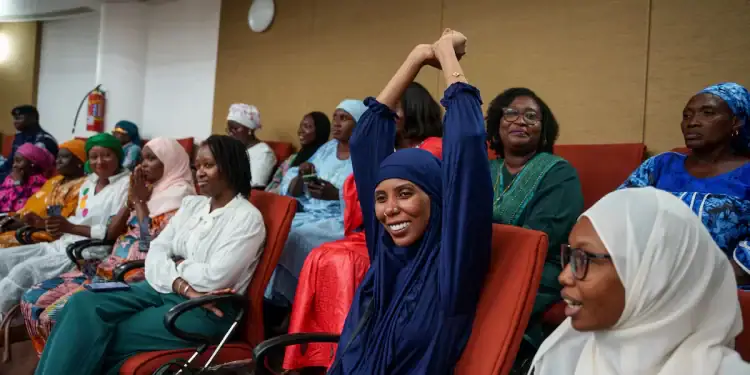
Standing outside parliament as women hugged and danced and music blasted, Sirreh Saho, 29, said she was so excited she could barely process the news, which they had “fought so much for” over the course of months. She and her older sister, Fatou Saho, have been fighting for justice for Fatou’s daughter, who was cut without her permission — and against the law.

ReadAlso

‘I wanted a designer vagina since I was 14 – now I live in chronic pain’

Dozens missing after boat carrying more than 200 migrants capsized off Gambia

“The only thing that is left is to enforce the law,” Sirreh Saho said. “As long as the law is not enforced, then it’s just black writing on a white paper.”

In Gambia, a nation of about 2.5 million, the United Nations estimates that about 75 percent of women ages 15 to 49 have been subject to cutting, which can involve removing part of the clitoris and labia minora and, in the most extreme cases, a sealing of the vaginal opening. Globally, more than 200 million women and girls are estimated to be survivors of female genital cutting, most of whom live in sub-Saharan Africa.

ADVERTISEMENT

Proponents of the practice said it is linked to tradition and religion in this majority-Muslim nation, claiming it was taught by the prophet Muhammad. (Other Muslim leaders have said it is not required by Islam, and it is not practiced in many Muslim-majority countries.)

Gambia’s law, which was put in place in 2015, comes with a potential prison sentence of up to three years, or a fine of about $740. But there have only been three convictions under the law — and it was those convictions that sparked the current debate, with Abdoulie Fatty, a prominent imam, paying the fines of the women convicted and launching the campaign to overturn the ban.

Sitting in parliament Monday with other religious leaders, Fatty watched the proceedings stone-faced. He said they planned to target lawmakers who rejected the bill in upcoming elections, declaring them “not real Muslims.” And he vowed that cutting — which he calls “female circumcision” — would continue.

“We are imams,” he said, noting that more than 95 percent of people in Gambia are Muslim. “They listen to us.”

Medical experts say the procedures, which do not have medical benefits, can cause a range of short- and long-term harms, including infections, severe pain, scarring, infertility and loss of pleasure.

“We can breathe now,” said Jaha Dukureh, a Gambian activist whose little sister died as a result of a botched procedure and who found out on her wedding night, at 15, that she had been sealed as a baby. “We stood on the right side of history. And regardless of the threats we faced, we stood our ground.”

Lawmakers said that turning points involved an announcement last month by President Adama Barrow — whose office had before then been silent on the matter — that he supported maintaining the ban and a trip by members of the health committee to Egypt, where they heard from lawmakers, civil society members and religious scholars about why Egypt had criminalized the practice.

“We are all religious,” said Amadou Camara, who chairs a joint health and gender committee that recommended in a report earlier this month that cutting should remain outlawed. “But at some point you have to use your good sense and your mind.”

Camara and other lawmakers who supported maintaining the ban said at an event Friday that they have received numerous threats for their positions.

Abdoulie Ceesay, the deputy majority leader, said that lawmakers know that some Gambians feel “we denied them their right” and that there will have to be continued education campaigns about the practice.

Aminata Ceesay, an investigating officer with Gambia’s National Human Rights Commission who has been working in communities in recent months on issues related to cutting, said that too many women have accepted the side effects as “normal.”

“With education, they realize that these things are not normal,” she said in an interview. “It has never been easy, even among the educated, for people to talk about their experiences as survivors … but I think things are changing now.”

• By Rachel Chason

Rachel Chason is The Washington Post’s West Africa bureau chief

Related

Tags: Female Genital MutilationGambia
ADVERTISEMENT
Previous Post

Former South African President Zuma faces expulsion from ANC after joining rival party

Next Post

President Biden To Drop His Re-Election Bid In A New Wave Of Pressure

You MayAlso Like

Special Report

US ‘Shameless Exploitation’ Over Proposed Zambian Health Aid Deal Exposed

May 10, 2026
Lavinia and Michelle discovered they are half-sisters (BBC)
Special Report

How twin sisters born minutes apart discovered they had different fathers

May 2, 2026
Representative image
Special Report

Family Alleges Doctor Left Scissors Inside Woman, Days of Agony End in Death

April 26, 2026
Special Report

Tshiamiso Trust amendment could block compensation for thousands of sick and dying miners, warns Justice for Miners

April 22, 2026
Special Report

IMF Warns of Mounting Economic Pressures for Sub-Saharan Africa Amid Global Instability

April 14, 2026
Special Report

Meet The Founder Who Came To Nigeria By Chance, Saw Tomatoes Going To Waste, And Built Africa’s Most Ambitious Agribusinesses

April 12, 2026
Next Post

President Biden To Drop His Re-Election Bid In A New Wave Of Pressure

Tunisia’s opposition says politically motivated arrests and gag orders are chilling election efforts

Discussion about this post

Pastor Idowu Okeze’s Empowerment in Igbuzo Described as Organic, Not Political

Woman jailed in Somalia for peaceful protest ‘stripped, kicked and beaten’

Renewed Hope for Nollywood Backs Tinubu’s Creative Economy Agenda

Veteran Nollywood Actress, Stella Ikwuegbu Dies

Ghana becomes latest African country to reject US health deal

St. Augustine College Triumphs at Obi Nwaokocha Okeze Foundation’s Igbuzo Inter-School Debate Championship

  • Pastor Idowu Okeze’s Empowerment in Igbuzo Described as Organic, Not Political

    541 shares
    Share 216 Tweet 135
  • Woman jailed in Somalia for peaceful protest ‘stripped, kicked and beaten’

    541 shares
    Share 216 Tweet 135
  • Renewed Hope for Nollywood Backs Tinubu’s Creative Economy Agenda

    540 shares
    Share 216 Tweet 135
  • Veteran Nollywood Actress, Stella Ikwuegbu Dies

    543 shares
    Share 217 Tweet 136
  • Ghana becomes latest African country to reject US health deal

    540 shares
    Share 216 Tweet 135
  • Trending
  • Comments
  • Latest

Pastor Idowu Okeze’s Empowerment in Igbuzo Described as Organic, Not Political

May 10, 2026

Woman jailed in Somalia for peaceful protest ‘stripped, kicked and beaten’

May 10, 2026

Renewed Hope for Nollywood Backs Tinubu’s Creative Economy Agenda

May 10, 2026

Veteran Nollywood Actress, Stella Ikwuegbu Dies

June 17, 2024

US ‘Shameless Exploitation’ Over Proposed Zambian Health Aid Deal Exposed

May 10, 2026

After losing influence in West Africa, France seeks a regional reset

May 10, 2026

Algeria to Become Arab World’s 4th Largest Economy by 2026, IMF Data Shows

May 10, 2026

Mixed reactions trail Niger’s ban on French broadcasters

May 10, 2026

ABOUT US

TIMEAFRICA MAGAZINE is an African Magazine with a culture of excellence; a magazine without peer. Nearly a third of its readers hold advanced degrees and include novelists, … READ MORE >>

SECTIONS

  • Aviation
  • Column
  • Crime
  • Europe
  • Featured
  • Gallery
  • Health
  • Interviews
  • Israel-Hamas
  • Lifestyle
  • Magazine
  • Middle-East
  • News
  • Politics
  • Press Release
  • Russia-Ukraine
  • Science
  • Special Report
  • Sports
  • TV/Radio
  • UAE
  • UK
  • US
  • World News

Useful Links

  • AllAfrica
  • Channel Africa
  • El Khabar
  • The Guardian
  • Cairo Live
  • Le Republicain
  • Magazine: 9771144975608
  • Subscribe to TIMEAFRICA MAGAZINE biweekly news magazine

    Enjoy handpicked stories from around African continent,
    delivered anywhere in the world

    Subscribe

    • About TimeAfrica Magazine
    • Privacy Policy
    • Contact Us
    • WHO’SWHO AWARDS

    © Copyright TimeAfrica Magazine Limited 2026 - All rights reserved.

    No Result
    View All Result
    • WHO’SWHO AWARDS
    • Politics
    • Column
    • Interviews
    • Gallery
    • Lifestyle
    • Special Report
    • Sports
    • TV/Radio
    • Aviation
    • Health
    • Science
    • World News

    © Copyright TimeAfrica Magazine Limited 2026 - All rights reserved.

    This website uses cookies. By continuing to use this website you are giving consent to cookies being used. Visit our Privacy and Cookie Policy.