


The recent report by the Nigeria Bureau of Statistics (NBS) that about 133 million Nigerians live in poverty is generating serious controversy, with the Federal and State governors now trading words.
Recall that in the early month of November, NBS disclosed that 133 million Nigerians were multi-dimensionally poor, saying that the figure represents 63 percent of the country’s population.
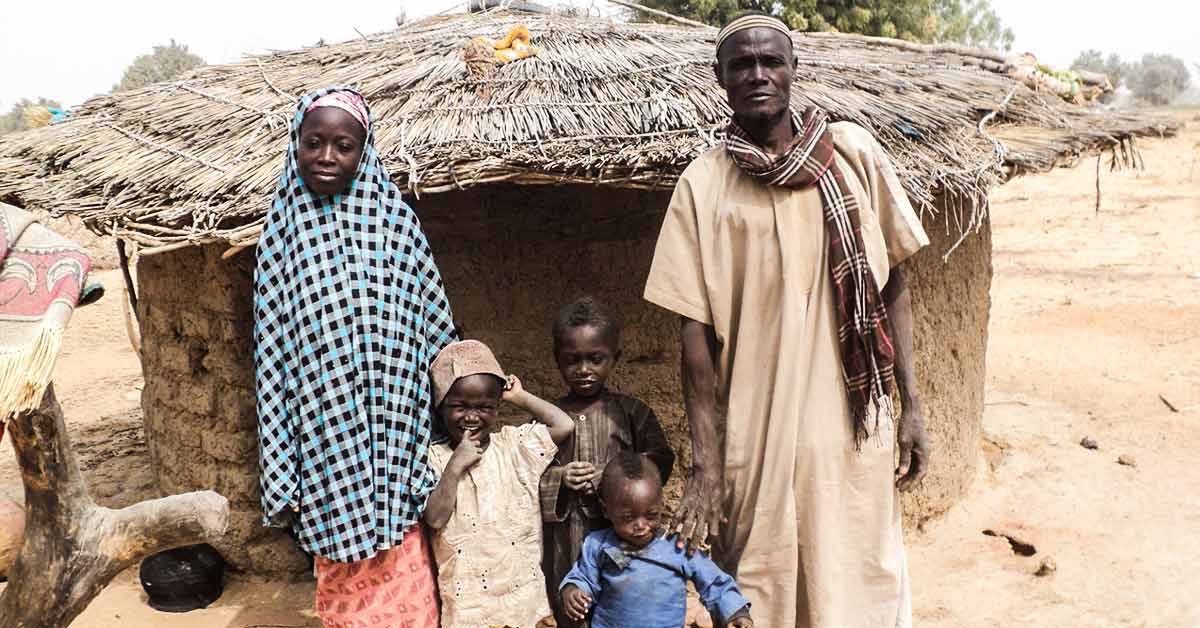
The report blamed the country’s rising poverty on poor access to education, living standards, health, employment and security.
It further indicated that 65% of the country’s poor people (86 million) live in the North, whereas 35% (nearly 47 million) live in the South.
In the wake of the NBS report, SERAP blamed Nigeria’s rising poverty on corruption and mismanagement in the spending of trillions of naira on social safety nets and poverty alleviation programmes, including the reported disbursement of over $700 million from the repatriated Abacha looted funds to these programmes.
Some economic experts also blamed the country’s leaders at the federal, State and local governments for throwing millions of Nigerians into abject poverty.
However, following a series of criticisms and condemnations that trailed the report, the federal government last Wednesday came out to say that State governors were responsible for the rising rate of poverty across the country.
Clement Agba, the honourable Minister of State for Budget and National Planning had, while briefing correspondents at the State House shortly after the weekly Federal Executive Council meeting in Abuja, attributed the poverty rate to governors’ misplaced priority.
Agba said the governors prioritised the construction of infrastructure, such as bridges and airports in cities, rather than improving the lives of the people in rural communities, adding that State governors chose to expend State resources on the capital cities.
“The governors are basically functioning in their State capitals. And a democracy that we preach about is delivering the greatest goods to the greatest number of people. And our demography shows that the greatest number of our people live in rural areas, but the governors are not working in the rural areas.
“I think from the Federal Government’s side, we are doing our best. But we need to say that rather than governors continuing to compete to take loans to build airports that are not necessary, where they have other airports so close to them, or governors now competing to build flyovers all over the place, we appeal that they should concentrate on building rural roads so that the farmer can at least get their products to the market,” he said.
Reacting to the federal government’s claim that they were responsible for the poverty among Nigerians, State Governors, under the umbrella of the Nigeria Governors’ Forum, stated that the Federal Government has the blame for the rising poverty level among Nigerians.
The NGF said the rising level of poverty in the country was a consequence of the biting effect of insecurity on commercial and agricultural activities.
NGF blamed FG for abandoning its duty of addressing the security challenges crippling economic activities in the country.
The NGF also alleged that the Federal Government’s inaction had allowed bandits, insurgents, and kidnappers to turn the country into a killing field.
“This dereliction of duty from the centre is the main reason why people have been unable to engage in regular agrarian activity and commerce. Today, rural areas are insecure, markets are unsafe, travel surety is improbable, and life for the common people generally is harsh and brutish.
“How can a defenceless rural population maintain a sustainable lifestyle of peace and harmony when their lives are cut prematurely, and they wallow permanently in danger? How does a minister whose government has been unable to ensure security, law, and order have the temerity to blame governors?” it said in a statement.
Speaking, a private financial management consultant, who would not want his name mentioned, said the blame should go to all the levels of government, including federal, State and local governments.
He lamented that the issue of poverty is a cumulative effect of bad policy choices by various levels of government in the country.
“First, the government at the centre seems to be directionless; there is no clear-cut economic blueprint it’s working with. Its policies are more of a cut-and-join approach. The problem started right from the time it took over power from the previous administration. How can one justify the delay in constituting the federal cabinets in 2015? Do you think it did not have negative effects?
“We are aware of the impact of COVID-19 and, recently, the war in Ukraine on the world economy, especially on the economies of developing countries, but it is not enough an excuse for the deep mess the nation has found itself in.
“The problem is even more compounded at the State level of government. The governors are notorious for gate-crashing at Abuja every month to collect monthly allocations; aside from that, the governors don’t have a plan on how to develop human capital within their areas of jurisdiction. One may say that it is a structural problem of our own type of federalism, but it is not a sufficient reason for bad governance.
“Even though everyone would readily want to lay blame on the federal government, how do you justify the strangulation of local governments under the supervision of State governors? We are all in the know of how the State governors treat local governments as if they are private estates.
“I think the causal factors of poverty in the country are complex, even though these factors are within the purview of the various levels of government, be it federal, State or local government. One may look at it from the angle of security, education, social infrastructures and the economy,” he said.
















Discussion about this post