


On March 30, 2026, KuGompo City—formerly East London—in Eastern Cape Province descended into unrest as protests against a controversial coronation. What began as an organised demonstration quickly spiraled into targeted attacks on foreign-owned businesses, leaving destruction, injuries, and a community on edge.
TIMEAFRICA’s investigation indicates that the violence was the culmination of tensions building for days. At the centre of the crisis is the March 24 coronation of a Nigerian community leader as “Igwe Ndigbo,” a title rooted in Igbo traditional authority. While such titles hold cultural significance within Nigeria, their recognition outside the country—particularly within South Africa’s regulated traditional leadership system—remains legally ambiguous.
Documents reviewed by TIMEAFRICA show that protest organisers had planned a march to KuGompo City Hall. Their memorandum, submitted to local authorities, described the coronation as a “violation of sovereignty” and an attempt to establish parallel governance structures. Community leaders who supported the protest argued that the installation bypassed established legal channels and disrespected recognised traditional authorities.
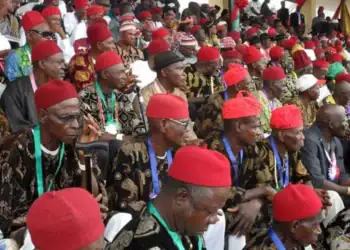
Initially, the protest unfolded peacefully. Hundreds of demonstrators marched through key routes in KuGompo City, chanting slogans and demanding immediate government intervention. But within hours of the memorandum’s submission, the tone shifted dramatically.

Eyewitnesses told TIMEAFRICA that smaller groups broke away from the main march and began targeting vehicles and storefronts believed to belong to foreign nationals. At least 12 vehicles were damaged, while several buildings were set ablaze. Verified video footage shows thick plumes of smoke rising above commercial areas, as crowds chanted anti-immigrant slogans.
Although protest leaders publicly condemned the violence, investigators are now examining whether rhetoric used in the lead-up to the march may have contributed to the escalation. Analysts note that similar patterns have emerged in past unrest, where legitimate political grievances become entangled with xenophobic sentiment.
Public Order Policing units were deployed as the situation deteriorated, supported by emergency response teams working to contain fires and assist the injured. While authorities succeeded in dispersing large crowds, sporadic incidents of looting and arson continued into the evening, underscoring the volatility of the situation.
Interviews conducted across affected neighbourhoods reveal that the anger extends beyond the coronation itself. Many residents expressed frustration over economic hardship, competition with migrant-owned businesses, and perceptions of weak regulatory enforcement. “People feel ignored,” one local trader said. “This coronation just brought everything to the surface.”
Legal experts, however, caution against misinterpreting the issue. South Africa’s constitutional framework protects cultural expression and association, but it also strictly regulates the formal recognition of traditional leaders. According to constitutional scholars, the title “Igwe Ndigbo” may hold cultural value within the Nigerian diaspora but does not automatically confer legal authority within South Africa.
The lack of clear communication from authorities has further fueled speculation and anger. As of now, officials have not issued a definitive statement clarifying the legality or status of the coronation. This vacuum, analysts say, has allowed misinformation and opportunism to thrive.
More concerning is the renewed pattern of violence directed at foreign nationals. TIMEAFRICA’s findings show that foreign-owned shops were disproportionately targeted during the unrest, echoing previous episodes of xenophobic violence in parts of South Africa. Experts warn that unless firmly addressed, such incidents risk becoming cyclical.
Some protesters have since escalated their rhetoric, calling for the deportation of individuals linked to the coronation and threatening further action if their demands are ignored. Security analysts warn that such language, if unchecked, could incite additional violence and deepen divisions within already fragile communities.
As KuGompo City remains under heightened security, community leaders are calling for calm and dialogue. Yet the situation remains precarious. Without swift legal clarity and meaningful engagement between authorities, traditional leaders, and affected communities, the unrest may signal a broader crisis.












Discussion about this post