Wednesday, May 13, 2026
  • Who’sWho Africa AWARDS
  • About One Africa Magazine
  • Contact Us
  • Home
  • Magazine
  • News
  • Interviews
  • Sports
  • World News
    • US
    • South America
    • Asia
    • Europe
    • Middle East
    • Australia and Antarctica
  • Crime
  • Politics
  • Lifestyle
  • Column
  • Special Report
  • WHO’SWHO AWARDS
No Result
View All Result
  • Home
  • Magazine
  • News
  • Interviews
  • Sports
  • World News
    • US
    • South America
    • Asia
    • Europe
    • Middle East
    • Australia and Antarctica
  • Crime
  • Politics
  • Lifestyle
  • Column
  • Special Report
  • WHO’SWHO AWARDS
No Result
View All Result
No Result
View All Result
  • Home
  • WHO’SWHO AWARDS
  • News
  • Magazine
  • World News

Home » News » Re-globalising the world

Re-globalising the world

April 8, 2023
in News
0
Share on FacebookShare on Twitter

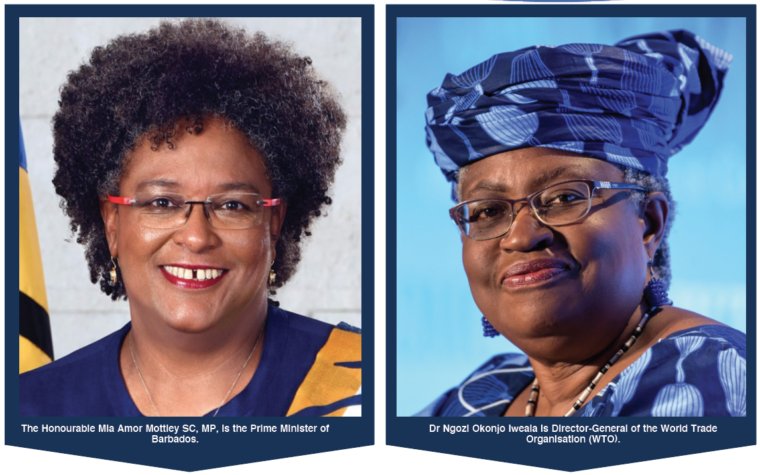
By Mia Amor Mottley and Ngozi Okonjo Iweala
Multitude of crises have placed the world on a path towards a profoundly unjust economic future. If we are going to protect the global commons and create a better existence for future generations, we need moral leadership, coupled with just strategies that provide for the most vulnerable.

The COVID-19 pandemic derailed economies everywhere, and in most developing countries, incomes remain well below pre-pandemic levels. Inflation, made worse by the war in Ukraine, is particularly painful in low-income and vulnerable countries where essentials like food and energy dominate household budgets. Higher interest rates are exacerbating debt distress across much of the developing world, squeezing public and private investment and paring back growth. To compound this, the climate crisis is hitting hardest those very countries that did the least to contribute to the problem, and which have the most limited means to cope.

Already, we are seeing the reversal of hard-won development gains. The World Bank estimates that the pandemic and the war in Ukraine have pushed 90 million more people into extreme poverty. The World Food Programme projects that almost 350 million people may be food insecure in 2023, almost double the number in 2020. In the wake of the pandemic, unemployment is higher, gender gaps are wider, and the share of young people in neither jobs nor education has risen, according to the International Labour Organisation.

None of this is inevitable. If we take the global implementation of the United Nations Sustainable Development Agenda as a barometer of progress, it is true we are on the verge of failing – particularly for countries with inherent vulnerabilities. However, governments, the private sector, and civil society can make the decisions today that lay a foundation for sustainable development for generations to come.

We need a global transformation strategy that works for all. One that addresses energy transition, the climate crisis and development finance, while putting people at its core. A just industrial and growth strategy must be part of this, in developed, developing, and least developed countries, small and large: a strategy that decouples economic growth from environmental degradation.

Here, international trade has a critical role to play in driving the better jobs, value addition, and greater resilience that countries are seeking.

Over the past 40 years, the global economic integration underpinned by the multilateral trading system helped to lift over one billion people out of poverty.

But even before the pandemic, it had become clear that many people in poor countries had not shared adequately in the gains from globalisation. Neither had many poor people in richer countries.

The weaknesses exposed in global supply chains by the war in Ukraine and the pandemic should be treated as an opportunity to reimagine globalisation and assist countries and communities left behind during recent decades to use trade as a means to meet their sustainable development aspirations.

At the crux of this, re-imagined globalisation is bringing many more countries into what would become deeper, de-concentrated networks for producing goods and services.

Companies have already been moving to add suppliers in places like Southeast Asia, India, and Mexico, whether to save on costs or to manage risks. Fast-growing demand for services delivered over the internet is creating opportunities around the world. Extending these re-alignments to encompass smaller and more vulnerable countries would enable them to use international markets, ideas, and capital to create better, more productive jobs. Drawing more small, and women-owned businesses into these production networks would deliver disproportionate socioeconomic benefits. Beyond the gains in terms of development and inclusion, more diversified supply chains would also be more resilient to localized shocks, like extreme weather events or disease outbreaks.

Open and predictable markets are a prerequisite for this re-globalisation process. But they are not sufficient. Access to finance on super long-term and low-cost terms is an indispensable part of building a more sustainable, more inclusive global economy. The Bridgetown Initiative, put forward by the government of Barbados, calls for a reassessment of the current global financial architecture to drive multilateral and private sector financial resources towards climate mitigation and resilience. The operationalization of the Initiative could play an important role in addressing the climate finance needs of developing countries and, indeed, the financing of the Sustainable Development Goals.

A strong and effective trading system would amplify the impact of necessary action on debt reform and green investment: exports earn foreign exchange, and access to larger markets increases potential returns on investment.

Every part of this agenda is a tall order, all the more so at a time of rising geopolitical tensions. But as governments demonstrated by striking several multilateral agreements at the WTO ministerial conference last June, cooperation on trade is still possible. These efforts must continue so that the multilateral trading system helps all economies seize the opportunities available to them, and cope with the vulnerabilities and challenges. Working together, we can use trade to build a fairer, more just, and more resilient economic future.

The Honourable Mia Amor Mottley SC, MP, is the Prime Minister of Barbados.

Dr Ngozi Okonjo Iweala is Director-General of the World Trade Organisation (WTO).
ReadAlso

Algeria to Become Arab World’s 4th Largest Economy by 2026, IMF Data Shows

South Africa Inflation Edges Up to 3.1% as Education and Housing Costs Climb

ADVERTISEMENT

Related

Tags: economyGlobalMia Amor MottleyNgozi Okonjo-Iweala
ADVERTISEMENT
Previous Post

World Bank report says Africa’s growth remains sluggish, dragged down by uncertainty in the global economy

Next Post

Horn of Africa: Climate-related health crisis worsens as disease outbreaks surge

You MayAlso Like

News

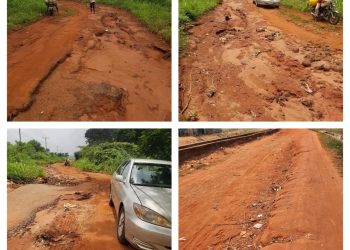
“We Can’t Move, We Can’t Trade”: Delta State Community Cut Off by Collapsed Roads, Erosion Disaster

May 12, 2026
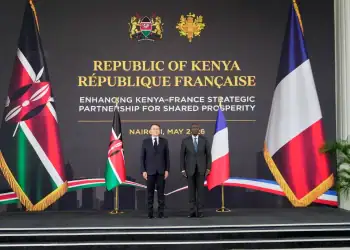
French President Emmanuel Macron, left, and Kenyan President William Ruto shake hands at State House in Nairobi, Kenya, Sunday, May 10, 2026. (AP Photo/Brian Inganga)
News

France Targets Anglophone Africa at Kenya Summit

May 11, 2026
FILE - A man carries wood on his bicycle as he rides past a cemetery in Beni, Congo, Tuesday, July 16, 2019. (AP Photo/Jerome Delay, file)
News

Islamic Militants Attack Congo Villages Near Uganda, Killing 40 People

May 10, 2026
News

After losing influence in West Africa, France seeks a regional reset

May 10, 2026
News

Algeria to Become Arab World’s 4th Largest Economy by 2026, IMF Data Shows

May 10, 2026
News

Mixed reactions trail Niger’s ban on French broadcasters

May 10, 2026
Next Post
People wait in the midday sun for the water troughs to fill with water at Hula Hula Springs in Marsabit County, Kenya. With the ongoing drought in Marsabit, the spring is the only available water source for the whole community.

Horn of Africa: Climate-related health crisis worsens as disease outbreaks surge

Peter Obi

Obi’s Travails: They tried to entrap him with women, dug into his finances, bank accounts

Discussion about this post

Tansian University: Setting The Record Straight. I Must Speak Again

How the Church’s Inaction Emboldened a Priest-Lawyer to Take Over Tansian University

One Month Before Kick-Off, Questions Mount Over 2026 FIFA World Cup as Concerns Grow Over Cost, Security and Logistics

Fr. Obiora Is Turning Tansian University into His Personal Fiefdom — Says Msgr. Akam’s Brother, Prof. G.U. Akam

The Fuehrer of Rivers

“Hands Off My Brother’s Legacy!” — Prof. Akam Slams Fr. Obiorah Over Alleged Meddling at Late Msgr. Akam’s Tansian University

  • Tansian University: Setting The Record Straight. I Must Speak Again

    599 shares
    Share 240 Tweet 150
  • How the Church’s Inaction Emboldened a Priest-Lawyer to Take Over Tansian University

    625 shares
    Share 250 Tweet 156
  • One Month Before Kick-Off, Questions Mount Over 2026 FIFA World Cup as Concerns Grow Over Cost, Security and Logistics

    543 shares
    Share 217 Tweet 136
  • Fr. Obiora Is Turning Tansian University into His Personal Fiefdom — Says Msgr. Akam’s Brother, Prof. G.U. Akam

    565 shares
    Share 226 Tweet 141
  • The Fuehrer of Rivers

    541 shares
    Share 216 Tweet 135
  • Trending
  • Comments
  • Latest

Tansian University: Setting The Record Straight. I Must Speak Again

May 12, 2026

How the Church’s Inaction Emboldened a Priest-Lawyer to Take Over Tansian University

September 7, 2025

One Month Before Kick-Off, Questions Mount Over 2026 FIFA World Cup as Concerns Grow Over Cost, Security and Logistics

May 11, 2026

Fr. Obiora Is Turning Tansian University into His Personal Fiefdom — Says Msgr. Akam’s Brother, Prof. G.U. Akam

December 22, 2025

Climate Change Is Fueling Africa’s Deadliest Malaria Surge

May 13, 2026
French President Emmanuel Macron speaks to FRANCE 24, RFI and TV5Monde at the close of the Africa Forward Summit.
(© FRANCE 24)

Kenya Summit: Five Key Takeaways From Macron’s Exclusive Interview

May 13, 2026

The Fuehrer of Rivers

May 12, 2026

Oborevwori and party realignment

May 12, 2026

ABOUT US

TIMEAFRICA MAGAZINE is an African Magazine with a culture of excellence; a magazine without peer. Nearly a third of its readers hold advanced degrees and include novelists, … READ MORE >>

SECTIONS

  • Aviation
  • Column
  • Crime
  • Europe
  • Featured
  • Gallery
  • Health
  • Interviews
  • Israel-Hamas
  • Lifestyle
  • Magazine
  • Middle-East
  • News
  • Politics
  • Press Release
  • Russia-Ukraine
  • Science
  • Special Report
  • Sports
  • TV/Radio
  • UAE
  • UK
  • US
  • World News

Useful Links

  • AllAfrica
  • Channel Africa
  • El Khabar
  • The Guardian
  • Cairo Live
  • Le Republicain
  • Magazine: 9771144975608
  • Subscribe to TIMEAFRICA MAGAZINE biweekly news magazine

    Enjoy handpicked stories from around African continent,
    delivered anywhere in the world

    Subscribe

    • About One Africa Magazine
    • Privacy Policy
    • Contact Us
    • WHO’SWHO AWARDS

    © Copyright TimeAfrica Magazine Limited 2026 - All rights reserved.

    No Result
    View All Result
    • WHO’SWHO AWARDS
    • Politics
    • Column
    • Interviews
    • Gallery
    • Lifestyle
    • Special Report
    • Sports
    • TV/Radio
    • Aviation
    • Health
    • Science
    • World News

    © Copyright TimeAfrica Magazine Limited 2026 - All rights reserved.

    This website uses cookies. By continuing to use this website you are giving consent to cookies being used. Visit our Privacy and Cookie Policy.