
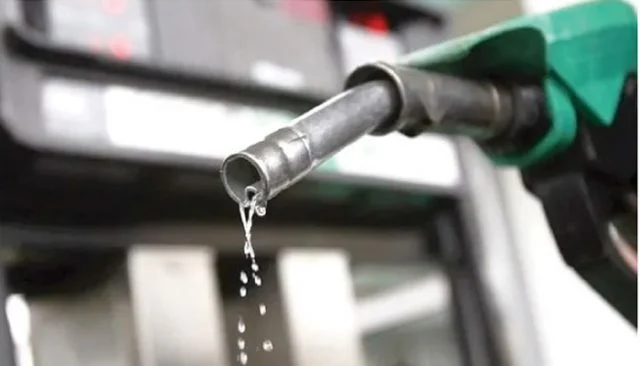
Iran has largely closed the Strait of Hormuz to America and its allies even as President Donald Trump has called for other countries to send warships to secure the passage. The move has shaken global energy markets and reminded governments and investors that there is no certainty that oil prices will fall soon.
The Strait of Hormuz is one of the most important shipping routes in the world. The narrow waterway connects the Persian Gulf to the Arabian Sea and is the main export route for oil produced in the Gulf region. Around a fifth of the world’s oil supply normally passes through this corridor each day. When traffic through the strait is disrupted, the effects are felt across the global economy.
In recent weeks tensions between Iran and the United States have increased sharply. Iran warned that ships linked to America and its allies should stay away from the strait. Tanker operators and shipping companies reacted quickly. Some vessels turned around, while others delayed their journeys as security risks rose and insurance costs increased.
Oil markets responded almost immediately. Prices rose sharply as traders feared that a major supply route could remain restricted for a long period. Even the threat of disruption can move energy markets because global demand for oil remains extremely high.
The crisis highlights a simple fact about the global energy system: it runs on a delicate balance between supply and demand. The world consumes more than 100 million barrels of oil every day. That oil must move constantly across oceans and pipelines to keep industries running, transport moving and homes supplied with energy.
When even a small part of that supply is threatened, prices can move quickly.
Before the latest tensions in the Gulf, many analysts believed oil prices might fall over the next few years. Production has been rising in several countries, including the United States, Brazil and Canada. At the same time, growth in global oil demand has started to slow.
Many governments are investing heavily in renewable energy. Wind and solar power have expanded quickly in Europe and parts of Asia. Electric vehicles are also becoming more common, especially in China and parts of Europe.
These changes have led some experts to argue that the world could eventually see a period of lower oil prices as demand growth slows while supply continues to rise.
However, the events around the Strait of Hormuz show why such predictions are never certain.
Oil production is heavily concentrated in regions that often face political tension or conflict. The Gulf states, including Saudi Arabia, Iraq, Kuwait and the United Arab Emirates, depend on the Strait of Hormuz to export much of their oil. When that route is under threat, the global market reacts immediately.
President Trump has urged other countries to help secure the waterway. He has called on major economies to send naval forces to protect shipping and ensure that tankers can move safely through the strait.
Some governments have shown interest in the idea, but many remain cautious. Military action in such a sensitive region could increase tensions further. Western leaders must weigh the need to protect international trade against the risk of escalating the conflict.
For the United Kingdom and its allies, the situation presents a difficult challenge. Britain has long supported freedom of navigation in international waters. But any naval mission in the Gulf would need careful planning to avoid provoking a wider confrontation.
Energy markets are highly sensitive to these political decisions. Traders closely follow statements from governments and military developments in the region. Even rumours of conflict can cause prices to rise as investors add a “risk premium” to oil.
The current crisis also shows how important shipping routes are in global trade. The Strait of Hormuz is not the only strategic chokepoint, but it is the most significant for oil exports.
Other routes, such as the Suez Canal and the Bab el-Mandeb Strait near the Red Sea, also carry large volumes of energy shipments. When any of these corridors face disruption, markets become nervous.
For oil-importing countries, rising prices can have serious economic effects. Higher energy costs increase the price of petrol and diesel, which in turn raises transport costs. This can push up the cost of food and other goods.
Inflation often follows when energy prices climb. Households face higher bills while businesses struggle with rising operating costs. Governments may also face pressure to provide financial support or cut fuel taxes.
At the same time, oil-producing countries can benefit from higher prices. Export revenues rise, which can help support national budgets. However, even producers worry about extreme price swings because they create uncertainty for investment and economic planning.
The long-term future of oil remains uncertain as the world slowly moves towards cleaner energy sources. Climate policies in Europe and North America aim to reduce dependence on fossil fuels. Investment in renewable energy has reached record levels in recent years.
Yet oil still plays a central role in the global economy. It fuels most of the world’s transport systems, from cars and trucks to aircraft and ships. It is also used to produce plastics, chemicals and many everyday products.
Because of this, global demand for oil is unlikely to disappear quickly. Even as renewable energy grows, the world will continue to rely on crude oil for many years.
This means geopolitical events will continue to influence prices.
The latest tensions in the Gulf underline how fragile the global energy system can be. A single chokepoint such as the Strait of Hormuz can affect supply for dozens of countries. When that route becomes uncertain, markets react with alarm.
For investors, governments and consumers, the message is clear. Predictions of cheaper oil may appear convincing during periods of stability, but they can quickly collapse when political tensions rise.
Energy markets are shaped not only by economics but also by diplomacy, security and strategic decisions made by governments.
Until the world fully reduces its dependence on oil, these risks will remain.
For now, the closure of a vital shipping route by Iran and the call from President Trump for naval protection serve as a powerful reminder that the global oil market remains vulnerable to sudden shocks.
And as long as key supply routes can be disrupted by political conflict, there are simply no guarantees that oil prices will drop soon.