


A tentative diplomatic opening has emerged in the escalating Middle East conflict, as mediators from Pakistan, Egypt, and Turkey have presented a draft proposal calling for a 45-day ceasefire between the United States and Iran.
The draft, delivered to both capitals, urges an immediate halt to hostilities and requests that Iran ease its control over the strategically vital Strait of Hormuz, a key shipping lane for global oil supplies. The 45-day period is intended to provide space for negotiations aimed at a permanent settlement.
Neither Washington nor Tehran has formally responded to the proposal. Analysts warn that the initiative faces an uphill battle amid rising tensions and recent threats from both sides.
The truce proposal follows a series of stark warnings from US President Donald Trump, who threatened to strike Tehran’s critical infrastructure if the Strait of Hormuz is not reopened. On Sunday, he escalated his rhetoric further with expletive-laden social media posts directed at Iran.
Iran, in turn, has vowed that conditions in the Strait “will never return to the way they were before the conflict,” particularly regarding the presence of US and Israeli vessels.
Despite the diplomatic effort, military operations continue unabated. US and Israeli forces have carried out air strikes targeting strategic sites in Iran, while Iranian state media reported on Monday that the leader of the country’s paramilitary Revolutionary Guard was killed in one such attack.
Civilians are bearing the brunt of the fighting. Reports from across Iran indicate that Monday saw additional fatalities due to the ongoing air strikes, highlighting a mounting humanitarian crisis.
Iran has also continued offensive operations, launching missile and drone attacks against neighbouring Gulf states and Israel. Over the weekend, a missile struck a residential building in Haifa, northern Israel, killing several civilians and causing significant damage.
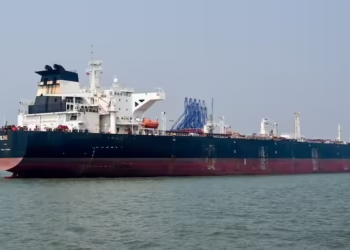
The Strait of Hormuz remains a flashpoint. Any disruption to shipping through this narrow waterway could have far-reaching consequences for global energy markets, intensifying the stakes of the conflict.
Diplomats from Pakistan, Egypt, and Turkey represent one of the few active channels for dialogue, leveraging their working relationships with both Washington and Tehran. Their proposal offers a rare chance for a pause in hostilities, though whether it will be accepted remains uncertain.
With both sides exchanging threats and continuing military strikes, the coming days will be crucial in determining whether diplomacy can hold or the region edges closer to wider war.









Discussion about this post