


By Adem K Abebe , Extraordinary Lecturer, University of Pretoria
On the evening of 15 February 2022, reports emerged that key police and military officials in Djibouti were put under house arrest, reportedly amid fears of a coup d’état. This was the latest in the string of successful and attempted coups in Africa – from Mali to Madagascar and Guinea to the Central African Republic (CAR).
The popularity of some of the coups, combined with the perceived inability of the African Union (AU) and the Economic Community of West African States (ECOWAS) to stem the tide of democratic reversals and insecurity, has generated a crisis that calls for a fundamental rethinking of the values, role, mandate, capacity and resources of these institutions.
The Djibouti incident came barely 10 days after an AU Heads of State and Government Summit meeting. In its final communique it lamented the “wave” of coups and pervasive insecurity across the continent.
Since its last in-person summit in early 2020 (they met virtually in 2021) there have been successful military coups in Mali (twice), Chad, Guinea, Burkina Faso, and Sudan, and attempted coups in Madagascar, CAR, Niger, Guinea Bissau, and possibly in Djibouti.
The continent also witnessed constitutional coups where incumbents manipulated the constitutional framework to extend their terms. This happened in Guinea and Cote d’Ivoire (2020). In Tunisia the incumbent president governs through decrees, without any institutional checks on his power.
Africa has also seen new and expanding conflicts. Ethiopia, Africa’s second most populous country, has been embroiled in a spiral of the largest and deadliest conflict in recent African memory. The AU appointed a special envoy for the Horn of Africa and engaged in ‘quiet diplomacy’, but this is yet to bear any fruit.
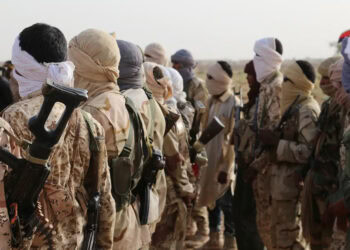
In the Sahel, the zone of insecurity – arising from insurgencies and Islamic jihadists – has expanded. It has entrapped and killed thousands, displaced millions, and caused tremendous suffering. In the process the legitimacy and capacity of nascent democratic regimes has been undermined.
And in northern Mozambique, a rebellion rooted in government neglect and sense of dispossession metamorphosed into an Islamist insurgency. Hundreds of thousands have been displaced and the country’s security forces have been overwhelmed.
Enduring instability in South Sudan, Libya and Somalia have made little progress. Here too the AU has largely been on the sidelines, despite its military presence in Somalia.
Each of these occurrences has a unique context. Nevertheless, they are broadly linked to a democratic deficit and governments’ inability to deliver either freedom or peace and development. These failure of nominally elected governments has denied leaders – as well as the democratic system – a vanguard popular constituency.
On top of this, the COVID-19 pandemic has decimated the economic gains of the last decade. This has left behind an avalanche of unemployed youth, and worsened the public debt burden of virtually all countries. In turn this has deprived incumbents of economic rents they could deploy to appease the public and co-opt and silence key civilian and military officials.
The structural conditions that have made the coups and insecurity in the various countries possible obtain in a large majority of African countries. Moreover, the successes and apparent popularity of some of the coups have set a precedent that may inspire copycats.
But, an impoverished, insecure and coup-prone Africa is not inevitable. In fact, the continent continues to witness the resilience of democracy in Malawi and Zambia, among other countries.
Addressing the ailments and setting on a path to peace, freedom and sustainable development requires two key things. Firstly, a mental paradigm shift. Secondly, bold moves to accelerate the continent’s economic, security and political integration.
From rejection to introspection
Both the AU and ECOWAS have rejected the military coups. The AU has suspended four countries in a year, the highest since its formation in 2002. For its part ECOWAS is operating without 20% of its membership. Three of its 15 member states suspended. In addition it’s imposed crippling sanctions on Mali following a second coup and failure to agree an acceptable transition timeline.
But the AU hasn’t been wholly consistent. For example, it didn’t suspend Chad after an effective military takeover in the country. Instead, it put preconditions for a relatively quick transition, national dialogue and exclusion of transition leaders from standing for election.
It has remained largely silent on Tunisia too despite anti-democratic developments there.
ECOWAS has been acting according to the books on military coups. Nevertheless it failed to publicly criticise the constitutional coups in Guinea and Cote d’Ivoire.
These inconsistencies have bred accusations of hypocrisy. Some have gone as far as accusing the two institutions of merely serving as protection for their club of incumbents.
If the AU and ECOWAS want to be taken seriously, they must look inwards and stand up for constitutional democracy, regardless of the perpetrators – whether incumbents or men in military fatigue.
And here, they have an opportunity to redeem themselves through some quick wins.
Current presidents of Senegal (Macky Sall) and Benin (Patrice Salon) are serving their second and last terms. Nevertheless, there are concerns that they are resorting to democratically questionable manoeuvres. And that they may even be considering a constitutional manoeuvre to stay in power.
The AU and ECOWAS should proactively engage these leaders and secure public commitments that they will step down after the end of their terms, and continue the nascent legacy of their countries in peaceful alternation of power.
From crisis to opportunity?
The sense of crisis must spur the AU and ECOWAS into action. The ECOWAS Heads of State and Government have tasked the ECOWAS Commission to expedite the process of reviewing the Protocol on Democracy and Good Governance. This is a chance to strengthen ECOWAS’ capacity to respond to incumbent constitutional and electoral manipulations. This could include re-tabling the region-wide two term limit on presidents that it abandoned in 2015.
The AU should similarly enhance its capabilities to check unconstitutional changes of government as well as the undemocratic exercise and retention of power.
And it should accelerate its institutional reform drive. Notably, it must work towards boosting the Peace Fund. A well-supported fund would allow the AU to prevent political instability from degenerating into large scale conflict and insurgency.










Discussion about this post