
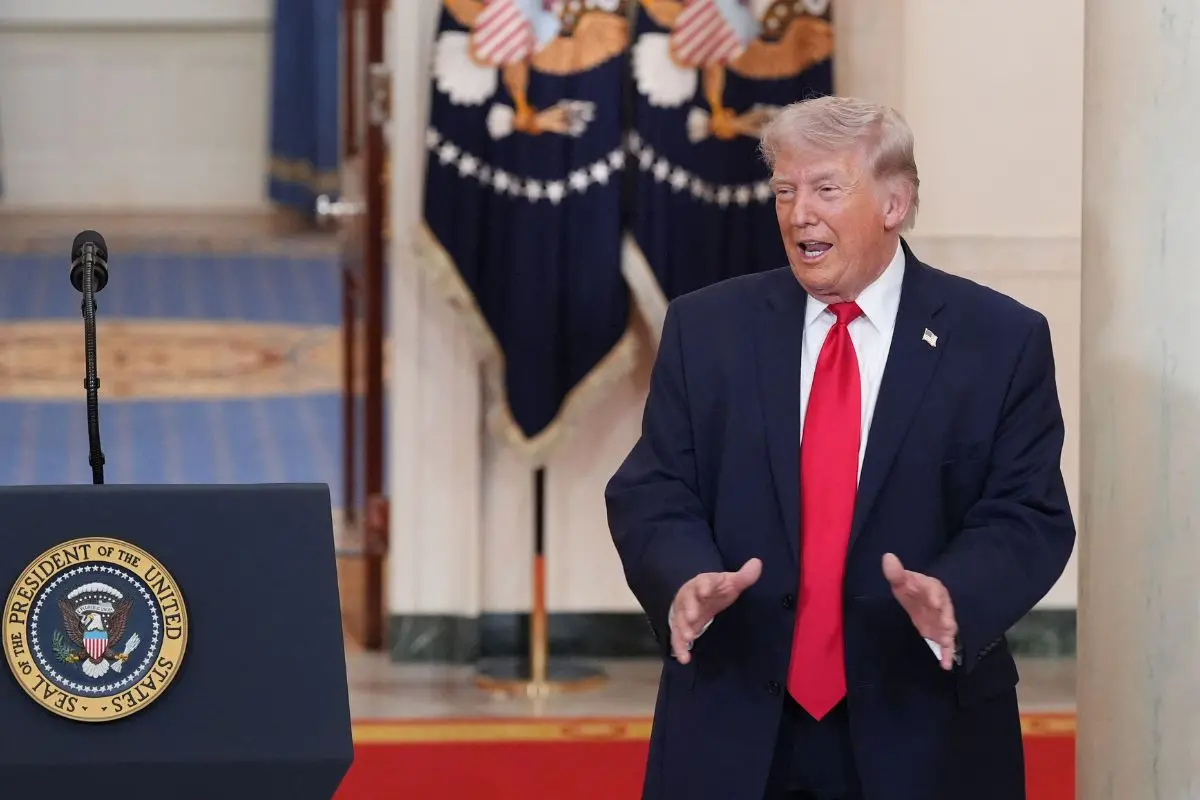
Donald Trump has said the United States is approaching the end of its military campaign against Iran, while warning that some of the most powerful strikes are still to come.
In a nationally televised address, Mr Trump defended the war effort, arguing that key strategic objectives have largely been achieved after more than a month of fighting. The conflict, which began in late February, has become one of the most significant military escalations in the region in recent years.
“Our armed forces have been extraordinary,” he said. “Tonight, I’m pleased to say that these core strategic objectives are nearing completion. We’re going to hit them extremely hard over the next two to three weeks.”
His remarks point to a dual message: an apparent endgame within reach, coupled with plans for intensified military action. Mr Trump described Iran as “completely decimated” militarily and economically, though analysts have urged caution, noting that active hostilities continue.
The president also stressed that the United States no longer depends on oil shipments through the Strait of Hormuz, one of the world’s most critical energy transit routes. He called on other countries that rely on the passage to ensure its security.
Despite the administration’s confidence, the situation remains volatile. Iranian forces have continued retaliatory attacks, targeting US positions and allied infrastructure across the region. Military experts say these actions suggest Iran still retains operational capabilities, raising questions about Washington’s claims of decisive progress.
The war has already had significant global economic consequences. Oil prices have risen sharply amid fears of supply disruption, contributing to higher fuel costs and broader inflation. Financial markets have also shown signs of instability, with investors wary of a prolonged conflict.
The continued importance of the Strait of Hormuz has been central to these concerns. A significant share of the world’s oil supply passes through the narrow waterway, making any threat to its security a major risk to global energy markets.
Meanwhile, the United States has deployed additional troops and military assets to the Middle East. Officials say the move is precautionary, aimed at protecting American interests and maintaining regional stability, but it has also fuelled speculation about possible escalation.
International reaction has been mixed. Some allies have expressed cautious backing for US objectives, while others have called for de-escalation and renewed diplomatic efforts. European leaders, in particular, have warned of the potential humanitarian and economic consequences of a prolonged war.
As the conflict enters its second month, uncertainty continues to surround its trajectory. While Mr Trump insists that victory is close, ongoing Iranian resistance and rising geopolitical tensions suggest the coming weeks will be critical in determining whether the war is truly nearing its end — or entering a more dangerous phase.