
Wednesday, May 13, 2026
  • Who’sWho Africa AWARDS
  • About One Africa Magazine
  • Contact Us
  • Home
  • Magazine
  • News
  • Interviews
  • Sports
  • World News
    • US
    • South America
    • Asia
    • Europe
    • Middle East
    • Australia and Antarctica
  • Crime
  • Politics
  • Lifestyle
  • Column
  • Special Report
  • WHO’SWHO AWARDS
No Result
View All Result
  • Home
  • Magazine
  • News
  • Interviews
  • Sports
  • World News
    • US
    • South America
    • Asia
    • Europe
    • Middle East
    • Australia and Antarctica
  • Crime
  • Politics
  • Lifestyle
  • Column
  • Special Report
  • WHO’SWHO AWARDS
No Result
View All Result
No Result
View All Result
  • Home
  • WHO’SWHO AWARDS
  • News
  • Magazine
  • World News

Home » Health » Scientists find new lifeform hiding inside human bodies

Scientists find new lifeform hiding inside human bodies

By ELLYN LAPOINTE

December 20, 2024
in Health
0
Share on FacebookShare on Twitter

Scientists have discovered a ‘crazy’ new lifeform lurking inside our bodies. They found entirely new virus-like entities, named ‘obelisks,’ which are are circular bits of genetic material that contain one or two genes and self-organize into a rod-like shape.

Obelisks appear in half of the world’s population, but were only discovered when researchers were searching for patterns that didn’t match any known organisms in genetic libraries.

They colonize the bacteria inside the mouths and guts of humans, living inside their host for about one year, but scientists do not know how they spread.
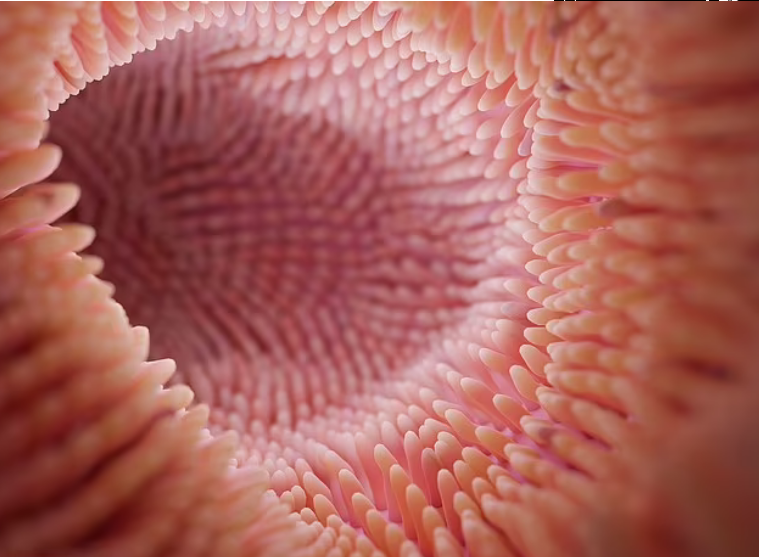
Scientists have discovered a new lifeform called ‘obelisks’ lurking inside the bacteria that live in our guts and mouths (STOCK)

Obelisks have genomes of loops of RNA that resemble viroids, which are viruses that infect plants, leaving experts puzzled to why they were found in human-associated bacteria.

‘It’s insane,’ Mark Peifer, a cell and developmental biologist who was not involved in the research, told Science. ‘The more we look, the more crazy things we see.’

ReadAlso

US ‘Shameless Exploitation’ in Proposed Zambian Health Aid Deal Exposed

Early signs of Parkinson’s disease is shown in the gut, study finds

It is unclear if obelisks are harmful or beneficial, but the team suggested they could ‘exist as stealthy evolutionary passengers.’

Scientists also said that these tiny, primitive entities may have played a critical role in shaping the biodiversity that exists on Earth today, as they could be capable of infecting organisms of many different species throughout their evolution.

ADVERTISEMENT

Scientists aren’t yet sure whether these newly discovered lifeforms can make people sick, but there is one species of viroid that can: Hepatitis D.

Obelisks, viroids and viruses are all technically non-living organisms that depend on a host for survival. They don’t eat, regenerate or copulate.

Even so, some researchers believe that viroids and their relatives — perhaps obelisks too — represent Earth’s oldest ‘lifeforms.’

The research team, led by Stanford biochemist Ivan Zheludev, detected the obelisks by sifting through data from an RNA database containing thousands of sequences collected from human mouths, guts and other sources.

They analyzed this data to look for single-stranded circular RNA molecules that did not match any known viroid sequences and did not code for proteins.

Their analysis revealed 30,000 distinct obelisk types. Their genomes had previously been overlooked because they are so unlike any lifeform found and documented before.

But the findings, published in the journal Cell, indicate obelisks are anything but rare.

Researchers found half of the world’s populations is carrying obelisks in their mouth, while a small seven percent in their gut.

Further research will be needed to fully understand just how prevalent they are.

The type of obelisk varied based on what part of the body they were found in and which human sample they came from.

Long-term analysis suggested that a single obelisk type can live inside a human host for about a year.

The researchers believe these beings colonize bacterial cells in order to replicate, similarly to the way a virus infects a host and then replicates inside it.

They found evidence of this host-pathogen relationship in Streptococcus sanguinis, which is a common bacterial component of dental plaque. This microbe hosts a specific type of obelisk.

This is an important because this species of bacteria can be grown easily in the lab, allowing future studies to understanding how obelisks survive and replicate inside microbial cells.

All of the obelisks that have been discovered so far encode a major protein known as obulin, and many also encode a second, smaller form of this protein.

Obulins are completely unlike all other known proteins, and scientists still are not sure what purpose they serve or how they function.

At this time, scientists can only speculate about the evolutionary and ecological roles Obelisks play.

It’s possible that they could be parasitic and harmful to their host cells, but they could also be beneficial or totally benign.

If future studies reveal that obelisks have a significant impact on the health or functionality of the human microbiome, that would be an important discovery for human health, experts say.
Related

Tags: BacteriaHealthscientists
ADVERTISEMENT
Previous Post

‘Co-president’ Elon Musk? Tests influence in government shutdown fight

Next Post

TikTok fights for survival, may be banned mid-January 2025

You MayAlso Like

Featured

Climate Change Is Fueling Africa’s Deadliest Malaria Surge

May 13, 2026
Health

Inside the ‘life-saving’ drug rollout that could end AIDS

May 12, 2026
Health

Cruise ship Hantavirus outbreak sparks international effort to track passengers

May 10, 2026
Health

World Asthma Day 2026: CIDO Foundation Provides Free Asthma Care in Delta State

May 6, 2026
Health

Africa’s Biggest Science Festival 2026 Brings 27 Nations Together in Abidjan

April 23, 2026
Health

Early signs of Parkinson’s disease is shown in the gut, study finds

April 20, 2026
Next Post

TikTok fights for survival, may be banned mid-January 2025

President Netumbo Nandi-Ndaitwah

Three Cheers for Namibia’s First Female President

Discussion about this post

Tansian University: Setting The Record Straight. I Must Speak Again

How the Church’s Inaction Emboldened a Priest-Lawyer to Take Over Tansian University

Fr. Obiora Is Turning Tansian University into His Personal Fiefdom — Says Msgr. Akam’s Brother, Prof. G.U. Akam

The Fuehrer of Rivers

One Month Before Kick-Off, Questions Mount Over 2026 FIFA World Cup as Concerns Grow Over Cost, Security and Logistics

France Targets Anglophone Africa at Kenya Summit

  • Tansian University: Setting The Record Straight. I Must Speak Again

    597 shares
    Share 239 Tweet 149
  • How the Church’s Inaction Emboldened a Priest-Lawyer to Take Over Tansian University

    625 shares
    Share 250 Tweet 156
  • Fr. Obiora Is Turning Tansian University into His Personal Fiefdom — Says Msgr. Akam’s Brother, Prof. G.U. Akam

    565 shares
    Share 226 Tweet 141
  • The Fuehrer of Rivers

    541 shares
    Share 216 Tweet 135
  • One Month Before Kick-Off, Questions Mount Over 2026 FIFA World Cup as Concerns Grow Over Cost, Security and Logistics

    543 shares
    Share 217 Tweet 136
  • Trending
  • Comments
  • Latest

Tansian University: Setting The Record Straight. I Must Speak Again

May 12, 2026

How the Church’s Inaction Emboldened a Priest-Lawyer to Take Over Tansian University

September 7, 2025

Fr. Obiora Is Turning Tansian University into His Personal Fiefdom — Says Msgr. Akam’s Brother, Prof. G.U. Akam

December 22, 2025

The Fuehrer of Rivers

May 12, 2026

Climate Change Is Fueling Africa’s Deadliest Malaria Surge

May 13, 2026
French President Emmanuel Macron speaks to FRANCE 24, RFI and TV5Monde at the close of the Africa Forward Summit.
(© FRANCE 24)

Kenya Summit: Five Key Takeaways From Macron’s Exclusive Interview

May 13, 2026

The Fuehrer of Rivers

May 12, 2026

Oborevwori and party realignment

May 12, 2026

ABOUT US

TIMEAFRICA MAGAZINE is an African Magazine with a culture of excellence; a magazine without peer. Nearly a third of its readers hold advanced degrees and include novelists, … READ MORE >>

SECTIONS

  • Aviation
  • Column
  • Crime
  • Europe
  • Featured
  • Gallery
  • Health
  • Interviews
  • Israel-Hamas
  • Lifestyle
  • Magazine
  • Middle-East
  • News
  • Politics
  • Press Release
  • Russia-Ukraine
  • Science
  • Special Report
  • Sports
  • TV/Radio
  • UAE
  • UK
  • US
  • World News

Useful Links

  • AllAfrica
  • Channel Africa
  • El Khabar
  • The Guardian
  • Cairo Live
  • Le Republicain
  • Magazine: 9771144975608
  • Subscribe to TIMEAFRICA MAGAZINE biweekly news magazine

    Enjoy handpicked stories from around African continent,
    delivered anywhere in the world

    Subscribe

    • About One Africa Magazine
    • Privacy Policy
    • Contact Us
    • WHO’SWHO AWARDS

    © Copyright TimeAfrica Magazine Limited 2026 - All rights reserved.

    No Result
    View All Result
    • WHO’SWHO AWARDS
    • Politics
    • Column
    • Interviews
    • Gallery
    • Lifestyle
    • Special Report
    • Sports
    • TV/Radio
    • Aviation
    • Health
    • Science
    • World News

    © Copyright TimeAfrica Magazine Limited 2026 - All rights reserved.

    This website uses cookies. By continuing to use this website you are giving consent to cookies being used. Visit our Privacy and Cookie Policy.