
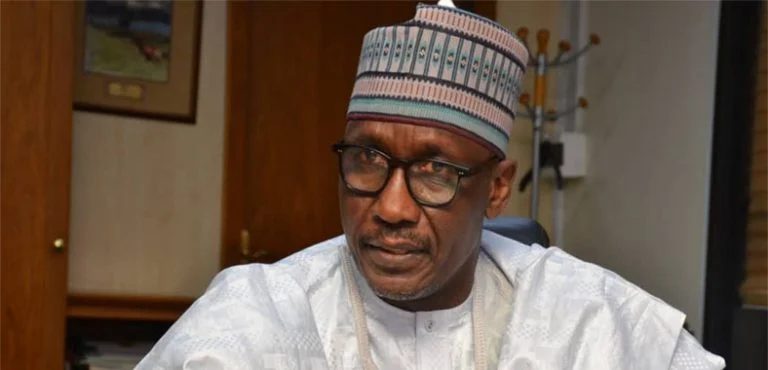
Abuja – Nigeria’s Senate has moved to escalate a financial dispute surrounding the country’s national oil company, threatening to issue arrest warrants for former top executives unless they appear before lawmakers to answer questions about vast sums of public money that remain unexplained.
The Senate Committee on Public Accounts has summoned the immediate past Group Chief Executive Officer of the Nigerian National Petroleum Company Limited, Mele Kyari, as well as former Chief Financial Officer Umar Ajia Isa and former National Petroleum Investment Management Services head Bala Wunti. The invitation follows audit reports that flagged a combined ₦210 trillion as not properly accounted for by the company between 2017 and 2023.
The committee’s concerns centre on financial records reviewed alongside auditors’ findings. Lawmakers say the controversial figure represents two main components: ₦103 trillion linked to expenditures alleged to lack clear justification, and ₦107 trillion listed as “sundry receivables” in the company’s audit statements.
Senator Aliyu Wadada, chairman of the committee, told reporters that the Senate regards the unresolved figures as unacceptable and requiring urgent clarification. “NNPCL should refund the sum of ₦210 trillion, being the combined sum of **₦103 trillion and ₦107 trillion, which were not properly accounted for as contained in the audit reports,” he said after a meeting in Abuja.
Lawmakers also queried why about ₦5 billion was reportedly spent on the company’s rebranding — part of wider industry reforms — from the former Nigerian National Petroleum Corporation (NNPC) to NNPCL, another point that senators said demands a full explanation.
The Senate panel has issued a blunt warning: the former executives must appear before the committee on a date that will be announced. Should they fail to comply, the committee has said it will seek warrants of arrest against Kyari and his colleagues.
The seriousness of this approach underlines how lawmakers view fiscal accountability for public funds, particularly in the oil sector, which has long been Nigeria’s economic backbone. In cases where public servants or officials have ignored legislative summons in the past, Nigerian parliamentary committees have pursued arrest powers to enforce compliance.
According to the committee, previous attempts to obtain clear explanations from NNPCL’s leadership about the audit queries have been inadequate. Lawmakers say they posed 19 questions arising from the audit findings last year, but the responses provided did not satisfy the panel.
One explanation from NNPCL reportedly claimed that the ₦103 trillion was cumulative spending by joint venture partners under cash calls. But the panel rejected this defence, describing it as unacceptable, partly because such cash call arrangements had been phased out years earlier.
Similarly, the ₦107 trillion figure classified as sundry receivables — which the company said was owed by banks and other entities — was seen as too vague and insufficiently broken down. Lawmakers said the lack of a clear breakdown makes it difficult to assess whether such sums are legitimate or properly substantiated.
Beyond summoning former executives, the Senate committee has urged the Office of the Auditor‑General for the Federation to conduct a forensic audit of the company’s accounts covering the period in question, citing constitutional authority under Section 85 of the 1999 Constitution.
Forensic audits go deeper than routine checks; they aim to trace detailed transactions, verify records, and uncover potential misstatement or misuse of funds. Lawmakers believe this step could shed clearer light on discrepancies flagged by the committee and ensure objective scrutiny of NNPCL’s financial management.
In an additional resolution, lawmakers directed that any production costs charged against crude oil revenue between 2017 and 2023 should be remitted to the federal treasury, arguing that neither NNPCL nor its subsidiaries directly produce crude oil.
The Senate specifically asked that the former executives appear alongside the current Group Chief Executive Officer, Bayo Ojulari, when they present before the panel. Members of the audit firm that reviewed the company’s accounts during the period under investigation are also expected to attend, potentially to explain how the audit figures were compiled.
This approach suggests lawmakers want a comprehensive hearing that connects past leadership accounts with current management oversight, rather than focusing solely on individuals.
News of the Senate’s summons has triggered strong reactions among Nigerians, especially on social media, where many have expressed shock at the sheer scale of the sums involved. Commentary highlights public frustrations over economic challenges such as inflation, infrastructure gaps, and public service shortages — issues observers say should be priorities for national resources.
Some commentators have compared the alleged missing funds to national budgets, noting that ₦210 trillion represents several years’ worth of federal spending on education, health, security, and essential services combined.
Yet public views are not uniform. Some emphasise the need for due process and careful audit rather than premature conclusions, arguing that large oil sector finances are complex and require expert accounting analysis. Others insist that financial integrity and accountability are essential for public trust in government and state institutions.
This latest development comes amid broader efforts by officials to strengthen transparency, probity, and accountability in Nigeria’s management of public finances. The Senate committee reaffirmed its support for these goals, noting that oversight of state entities must be robust and not shy away from difficult questions about past leadership decisions.
Nevertheless, the dispute raises broader questions about governance in Nigeria’s oil industry — a sector that contributes a significant portion of national revenue but has also been prone to scrutiny over financial and operational transparency.
As matters progress, attention will centre on whether Mele Kyari and other former executives comply with the Senate’s invitation, and whether any arrest warrants are formally issued. Should they appear before the committee, the hearings are expected to be closely watched by both domestic audiences and international observers interested in governance reforms.
For now, the “₦210 trillion question” remains unanswered — a stark reminder of the challenges Nigeria faces in ensuring transparent stewardship of its public resources.