
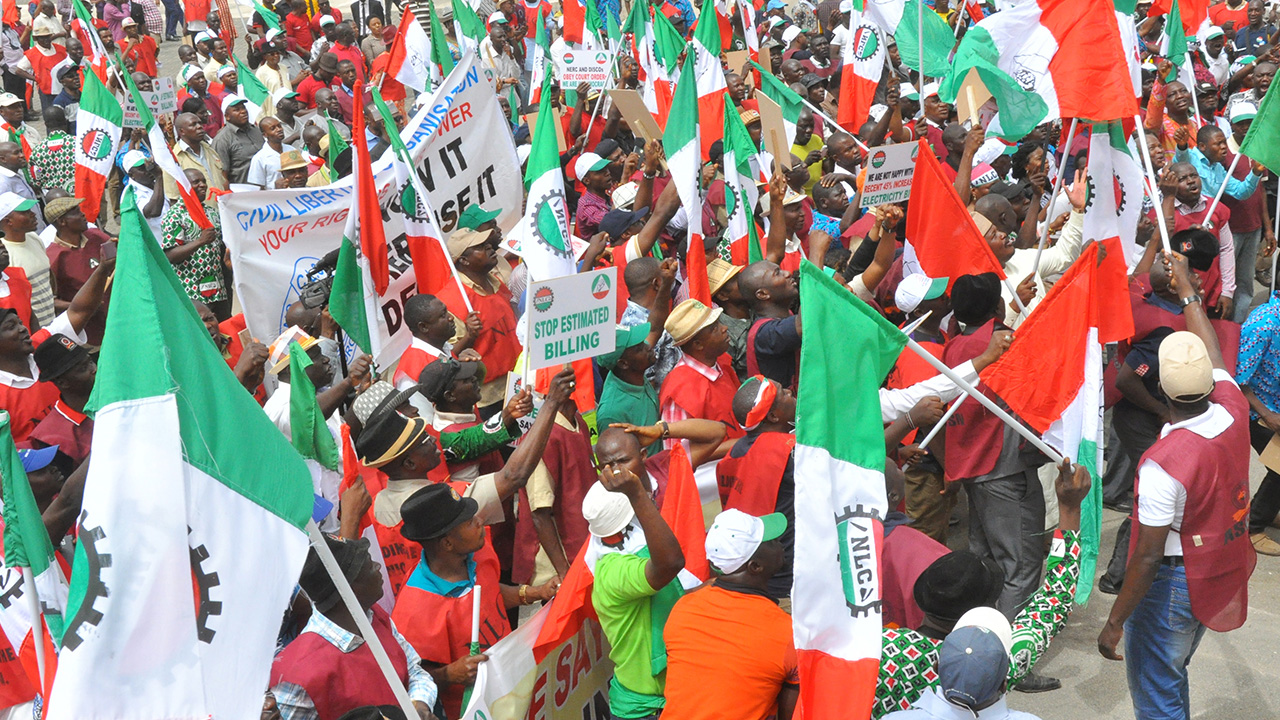
Barely a month before the 2026 International Workers’ Day, Nigeria’s main labour body has instructed workers in states yet to fully implement the 2024 national minimum wage to take to the streets in protest, escalating pressure on authorities accused of failing to comply with the law.
In a circular issued on Friday, the Nigeria Labour Congress (NLC), through its general secretary, Emmanuel Ugboaja, urged its state councils in non-compliant regions to boycott official May Day celebrations organised by those governments. Instead, it called for coordinated mass demonstrations to highlight what it described as persistent violations of workers’ rights.
The directive reflects mounting frustration within the labour movement over what it sees as widespread disregard for the minimum wage legislation. According to the NLC, several state governments have not only failed to implement the agreed wage structure but have also neglected consequential salary adjustments tied to the law.
Further grievances outlined in the memo include irregular payment of the revised wage and the exclusion of significant segments of the public workforce. Among those reportedly affected are local government employees, primary school teachers and healthcare workers—groups the NLC says remain marginalised despite the statutory provisions.
Under the new directive, workers in affected states are to shun indoor ceremonies and official receptions typically held on May Day in collaboration with government authorities. Instead, they are expected to gather at designated labour houses, union offices or public squares from 7:00 a.m. on 1 May, before embarking on peaceful marches across their respective state capitals.
The planned processions are to culminate at key government institutions, including state government houses, state assemblies and offices of heads of service. At these locations, labour representatives are expected to formally present memoranda outlining their demands, with a focus on full compliance with the minimum wage law and associated adjustments.
The NLC warned that its directive is binding on all affected councils, cautioning that any state leadership that fails to comply could face disciplinary measures from the national body. The move signals a determination by the union to enforce unity and avoid fragmentation in its response to the issue.
In the circular, the labour organisation framed May Day as both a moment of reflection and a platform for collective action. It emphasised the historical significance of the day as a symbol of workers’ struggles and achievements, while lamenting what it described as a troubling regression in labour standards in parts of the country.
“May Day … has always been a day of solemn reflection on the state of workers’ rights,” the statement said, adding that ongoing violations of the 2024 National Minimum Wage Act undermine the spirit of the occasion.
The union also underscored that the minimum wage was secured through sustained agitation rather than concession, warning against what it characterised as complacency in the face of non-compliance. “To celebrate May Day indoors while our rights are trampled upon is to betray that legacy,” the statement read.
The planned protests are expected to test relations between organised labour and state governments in the coming weeks, particularly in regions where implementation has lagged. Analysts say the outcome could shape broader discussions on wage enforcement, fiscal capacity and the balance of power between federal directives and state-level governance in Nigeria.
With tensions rising, attention will now turn to how state authorities respond—and whether the demonstrations will prompt renewed negotiations or deepen the standoff between workers and government.