
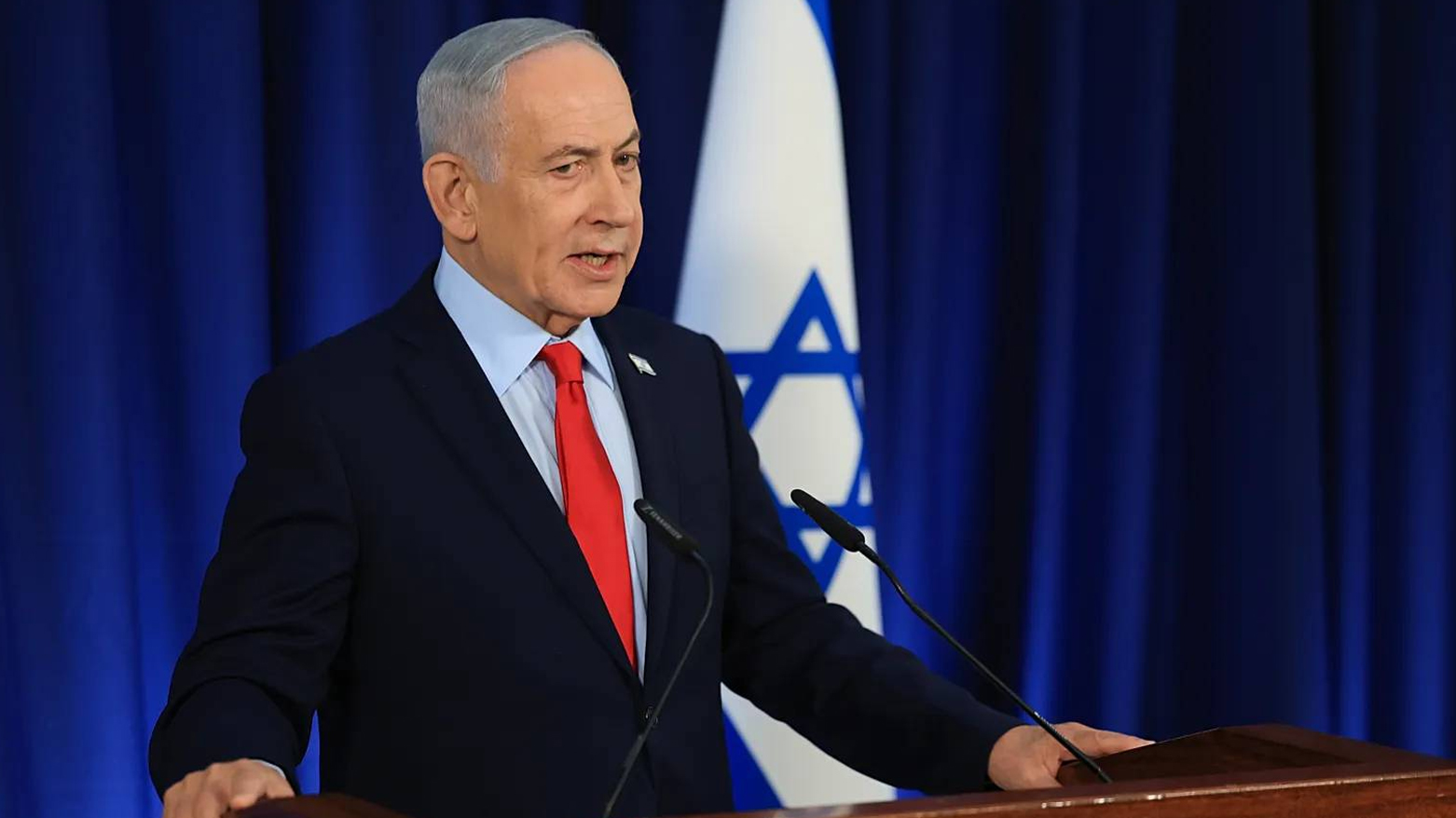
Israel’s prime minister, Benjamin Netanyahu, has said his country will continue to “crush Iran” as the conflict between the two powers enters its sixth week, with rising casualties and growing economic fallout.
Speaking on Friday, Netanyahu said Israel was in a position of strength and claimed Iran’s leadership was weakening under sustained military pressure. “This regime is weaker than ever – Israel is stronger than ever,” he said, adding that operations were being closely coordinated with Donald Trump.
Netanyahu also said the Israeli air force had inflicted major damage on Iran’s industrial capacity, claiming that around 70% of its steel production had been destroyed. He described this as a “tremendous achievement” that would limit Iran’s ability to fund military activities and produce weapons, particularly for the Islamic Revolutionary Guard Corps.
The war, which began with strikes on Iranian targets in late February, has since expanded into one of the most serious confrontations in the Middle East in recent years. Iran has responded with missile and drone attacks on Israeli territory and on United States positions in the Gulf, raising fears of a wider regional conflict.
Trump said US forces would continue to strike Iran “very hard” in the coming weeks, signalling a further escalation in military operations. His comments have added to concerns among international observers that the conflict could intensify and draw in more countries.
The human cost of the war continues to rise. More than 1,900 people have been killed in Iran, while at least 19 people have died in Israel. Casualties have also been reported in other parts of the region, including the Gulf and the occupied West Bank.
In Lebanon, fighting along Israel’s northern border has intensified. More than 1,300 people have been killed and over one million displaced, according to estimates. Israeli officials say at least 10 of their soldiers have died in operations there. The United States has also confirmed the deaths of 13 service members during the conflict.
The war has triggered sharp increases in global oil prices, driven by fears of disruption to supplies from the Gulf. The region is a key source of the world’s energy exports, and any threat to shipping routes has immediate effects on international markets.
Analysts warn that continued instability could lead to prolonged economic pressure, with higher fuel costs affecting households and businesses worldwide. The impact is already being felt in several countries, where rising energy prices are contributing to inflation and slowing economic growth.
Despite the escalation, there are few signs of a diplomatic breakthrough. International calls for restraint have so far had little effect, and both sides continue to signal their readiness to press on with military operations.
Netanyahu has framed the war as a necessary effort to weaken Iran’s influence and reshape the balance of power in the region. However, the longer the conflict continues, the greater the risk of further escalation.
Iran has warned it will respond to continued attacks, while regional governments fear being drawn into a broader confrontation. As the fighting enters its sixth week, concerns are growing that the conflict could become more prolonged and more difficult to contain.