
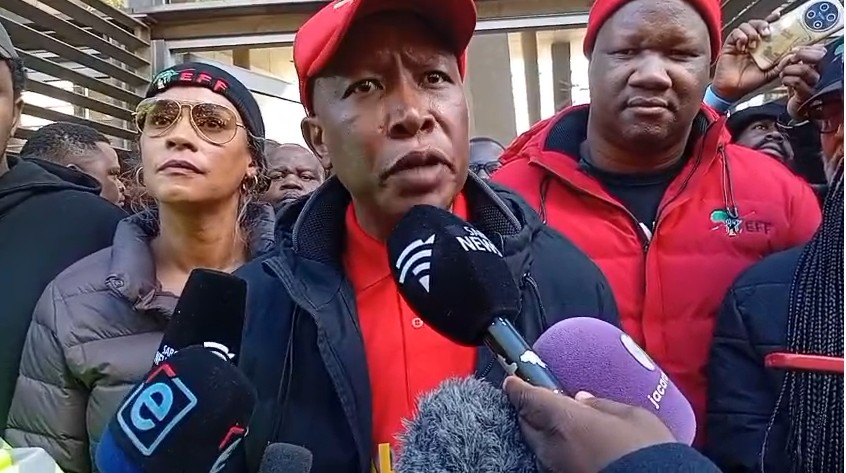
Julius Malema, the leader of the opposition Economic Freedom Fighters (EFF), has called for Ramaphosa to immediately resign and for impeachment proceedings against him to begin after South Africa’s Constitutional Court ruled that parliament acted unlawfully when it blocked an earlier attempt to hold the president accountable over the Phala Phala cash scandal.
The judgment has revived one of the most damaging controversies of Cyril Ramaphosa’s presidency and intensified pressure on the governing African National Congress (ANC), which lost its parliamentary majority for the first time since the end of apartheid in the 2024 elections.
The scandal centres on the alleged theft in 2020 of more than $500,000 (£400,000) in cash hidden inside furniture at Ramaphosa’s private game farm in Limpopo province. The president has consistently denied wrongdoing, saying the money was proceeds from the sale of buffaloes to a Sudanese businessman and insisting that he reported the theft to the head of his presidential security team.
However, an independent parliamentary panel concluded in 2022 that there was prima facie evidence that Ramaphosa may have violated the constitution and anti-corruption laws. Despite the findings, ANC lawmakers — who still held a parliamentary majority at the time — voted against establishing a formal impeachment inquiry, prompting opposition parties to challenge the decision in court.
In its ruling, South Africa’s highest court found that parliament had failed in its constitutional obligation to hold the president accountable. The decision effectively forces lawmakers to reconsider the panel’s report and clears the way for impeachment proceedings to be revived.
Speaking outside the court, Malema said the ruling represented a victory for accountability and demanded urgent action against the president.
“We cannot allow parliament to protect individuals who are facing serious allegations,” he said. “The impeachment process must start immediately.”
The EFF was among several opposition groups that took the matter to court, accusing ANC legislators of abusing their majority to shield Ramaphosa from scrutiny.
The controversy has become a persistent political burden for Ramaphosa, who is serving his second and final term as president. Opposition parties and critics have repeatedly questioned why such a large sum of money linked to a supposedly legitimate business transaction would be concealed inside a couch at a private residence.
Ramaphosa has also faced allegations of tax evasion, money laundering and breaches of foreign currency regulations, although he has denied all accusations.
Two separate investigations — one by the South African Reserve Bank and another by the country’s public protector — previously cleared him of wrongdoing. Supporters within the ANC have argued that the case has been politically exploited by opponents seeking to weaken his administration.
Ramaphosa’s spokesperson, Vincent Magwenya, said the president respected the court’s decision and would continue cooperating with all legal and parliamentary processes.
“President Ramaphosa maintains that no person is above the law and that any allegations should be subjected to due process without fear, favour or prejudice,” Magwenya said.
Although the court ruling has reignited calls for Ramaphosa’s removal, analysts say the president is still likely to survive any impeachment attempt because opposition parties would require a two-thirds majority in parliament to remove him from office.