
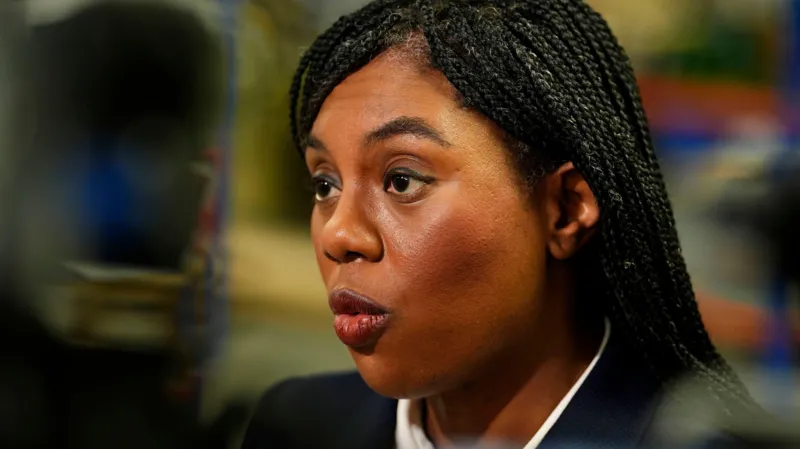
The UK government has come under fire from Conservative Party leader Kemi Badenoch over its decision to abstain from a United Nations resolution recognising the transatlantic slave trade as one of history’s gravest crimes and calling for reparatory measures.
Badenoch, a British MP born in Nigeria, took to social media this week to lambast ministers, accusing them of failing to defend Britain’s historical record. “Russia, China and Iran vote with others to demand trillions in reparations from UK taxpayers … and the Labour government abstain!,” she wrote on X, formerly Twitter. She added that the decision “smacks of ignorance … or cowardice.”
The UN General Assembly adopted the resolution on 26 March 2026, with 123 countries backing the non-binding text. It described the trafficking of enslaved Africans and racialised chattel enslavement as the “gravest crime against humanity” and urged member states to consider actions such as formal apologies, restitution of cultural artifacts, compensation, and broader reparatory justice initiatives. Only three countries — the United States, Israel, and Argentina — voted against it, while the UK, the EU, and several other Western democracies abstained.
Supporters of the resolution, including the African Union and Caribbean Community (CARICOM) nations, have argued that its adoption marks an important step towards recognising the enduring legacies of slavery, from racial inequality to underdevelopment in former colonies. Ghanaian President John Dramani Mahama said the vote was “necessary to acknowledge the continued impact of the slave trade on African nations and people of African descent globally.”
Badenoch’s remarks reflect her long-standing position that Britain should not be financially liable for historical wrongs committed under different legal and political contexts. She has repeatedly emphasised the country’s later role in abolishing the transatlantic slave trade and argued that Britain should not bear responsibility for the actions of others.
The UK’s abstention has drawn criticism from activists and reparations advocates, who described it as evasive and morally insufficient. Some have called for a formal government apology and a parliamentary inquiry to explore reparatory justice mechanisms. In Parliament, Labour MP Bell Ribeiro Addy presented a petition urging the Commons to adopt a state apology and establish an all-party commission to examine reparatory justice issues.
Badenoch’s intervention has further highlighted divisions within British politics over how the nation should confront its imperial past. While her comments resonate with sections of the Conservative base opposed to reparations, critics warn that distancing the UK from international consensus risks alienating global partners and communities affected by centuries of exploitation.
As discussions continue on how to implement the UN resolution’s moral and educational objectives, the UK’s abstention and Badenoch’s criticism are likely to intensify debates over national identity, historical accountability, and the politics of reparations.