
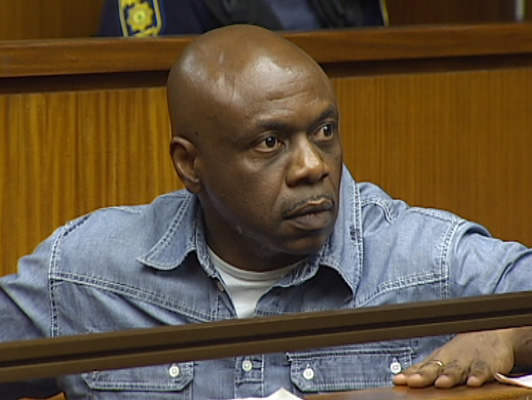
Henry Emomotimi Okah, the imprisoned Niger Delta militant serving a life sentence in South Africa for his role in the 2010 Independence Day bombings in Abuja that killed 12 people, has launched a blistering attack on former Nigerian president Goodluck Jonathan, describing him as “inept and a weakling” and accusing Britain of meddling in Nigeria’s domestic politics through the prosecution of former oil minister Diezani Allison-Madueke.
In a lengthy statement issued from his prison cell in Pretoria, Okah used his reflections on the state of the Ijaw nation and the ongoing corruption trial of Allison-Madueke in London to mount a sweeping critique of Nigeria’s political leadership and what he alleges is foreign interference in the country’s affairs.
Okah, once a prominent figure in the armed struggle for resource control in the oil-rich Niger Delta, was arrested in Angola in 2007 and later transferred to Nigeria before being extradited to South Africa. In 2013, he was convicted by a South African court for masterminding the twin car bomb attacks in Abuja on 1 October 2010, Nigeria’s 50th Independence Day. He has consistently denied the charges.
In his latest intervention, framed as a letter to the Ijaw nation and titled “Coordinated Attacks On The Unity Of The Ijaw Nation: Diezani Allison-Madueke,” Okah portrays himself as a victim of political persecution and alleges a long-running campaign to silence Niger Delta voices.
“As I have repeatedly said, Goodluck Jonathan is inept and a weakling who is unfit to be a governor, and as president of Nigeria, was an aberration,” Okah wrote.
Jonathan, who served as Nigeria’s president from 2010 to 2015 and is himself an Ijaw from Bayelsa State, rose to office following the death of President Umaru Musa Yar’Adua. His presidency was marked by both efforts at amnesty in the Niger Delta and fierce criticism over corruption and insecurity.
Okah claims that during his time in office, Jonathan collaborated with foreign governments to sideline perceived rivals and critics within the Niger Delta political establishment. He alleges collusion involving the British government and South Africa’s then president Jacob Zuma, as well as current president Cyril Ramaphosa.
According to Okah, these alleged actions were motivated by Jonathan’s desire to consolidate power and shape Nigeria’s political succession. He further suggests that similar tactics are now being deployed in London, where Diezani Allison-Madueke is facing charges related to alleged bribery and financial misconduct during her tenure as minister of petroleum resources.
Allison-Madueke, who served under Jonathan and was once one of the most powerful women in global energy politics, has denied wrongdoing. British prosecutors allege she accepted lavish gifts and financial benefits in exchange for oil contracts.
Okah describes her prosecution as politically motivated and strategically timed.
“Diezani’s politically motivated prosecution in London is in my opinion a gross act of provocation that should test the mettle and unity of the Ijaw Nation, and which ought to be met with a robust and decisive response,” he wrote.
He went further, questioning the focus of British authorities.
“It is said that she accepted gifts from individuals which by the British government’s estimation is tantamount to receiving bribes. My question to the British government is, are there bigger thieves in Nigeria than President Bola Tinubu and his family whose stolen wealth is exposed in England? If so, why ignore Nigerian political leaders who have stashed away in England billions of pounds of Nigeria’s looted wealth?”
“What happened to all the loot stashed in England by Generals Abacha, Buhari and their cronies, many of whom are alive and frequent visitors to your country?”
These remarks place Okah squarely in the middle of Nigeria’s increasingly fractious political landscape, as President Bola Tinubu consolidates power ahead of the 2027 elections. Tinubu has repeatedly denied allegations of corruption.
Okah also sought to downplay the political prospects of his former ally.
“Diezani’s politically motivated persecution in England is hilarious considering that Jonathan most certainly cannot win an election in his home state, not to speak of Nigeria,” he stated.
While acknowledging that some former leaders were themselves flawed, Okah insisted that the principle at stake was national sovereignty.
“The British government was previously used by Obasanjo to eliminate Alamieseigha from Nigeria’s presidential race and by Jonathan to settle a score with Mr James Ibori, former governor of Delta State who concurrently was by underhanded means prevented from participating in Nigeria’s presidential race,” he wrote.
“Clearly neither Alamieyeseigha nor Ibori were morally competent to lead Nigeria, as is the case with Tinubu but what must be found objectionable is foreign interference in Nigeria’s domestic affairs.”
Okah’s comments revive long-standing sensitivities in Nigeria about the role of former colonial power Britain in high-profile corruption cases. London has been a preferred destination for Nigerian political and business elites, and British courts have handled several major cases involving Nigerian officials over the past two decades.
In his letter, Okah drew parallels between Allison-Madueke’s trial and his own imprisonment in South Africa. He alleged that South African authorities, along with elements within Nigeria’s political class, conspired to secure his conviction.
“Despite the seeming appearance of legality, just as Presidents Zuma and Ramaphosa together with judges in South Africa were bribed to imprison me, the same can happen to Diezani in England,” he claimed, without providing evidence.
South African authorities have consistently maintained that Okah received a fair trial in accordance with the country’s judicial processes.
Okah concluded his statement with a call to solidarity among the Ijaw people, urging vigilance against what he characterised as external manipulation.
“Neither the Niger Delta nor Nigeria is a colony of South Africa or the revived British Empire so we must endeavour by all possible means to make unfashionable, interference in our internal affairs by greedy foreign governments and interests whose motivation is the looting of the Niger Delta,” he wrote.
“As I have done for nearly 16 years, bearing in mind that the governments of South Africa, the United Kingdom and Nigeria utilise thousands of agents to scour the Internet and post favourable comments, readers of this exhortation will do well to consider with caution, negative comments that may follow.”
Okah’s intervention is unlikely to alter the course of proceedings in London, but it underscores the enduring volatility of Niger Delta politics and the deep mistrust many activists harbour towards both Nigeria’s federal government and Western powers.
For Britain, the prosecution of Allison-Madueke represents part of a broader effort to clamp down on international corruption and illicit financial flows through the City of London. For critics like Okah, however, it is yet another example of what they see as selective justice shaped by geopolitical interests.
From behind bars in Pretoria, Okah remains a polarising figure – to some, a militant who turned to violence; to others, a symbol of the unresolved grievances of Nigeria’s oil-producing communities. His latest broadside ensures that, even in incarceration, his voice continues to reverberate through the turbulent politics of the Niger Delta and beyond.