
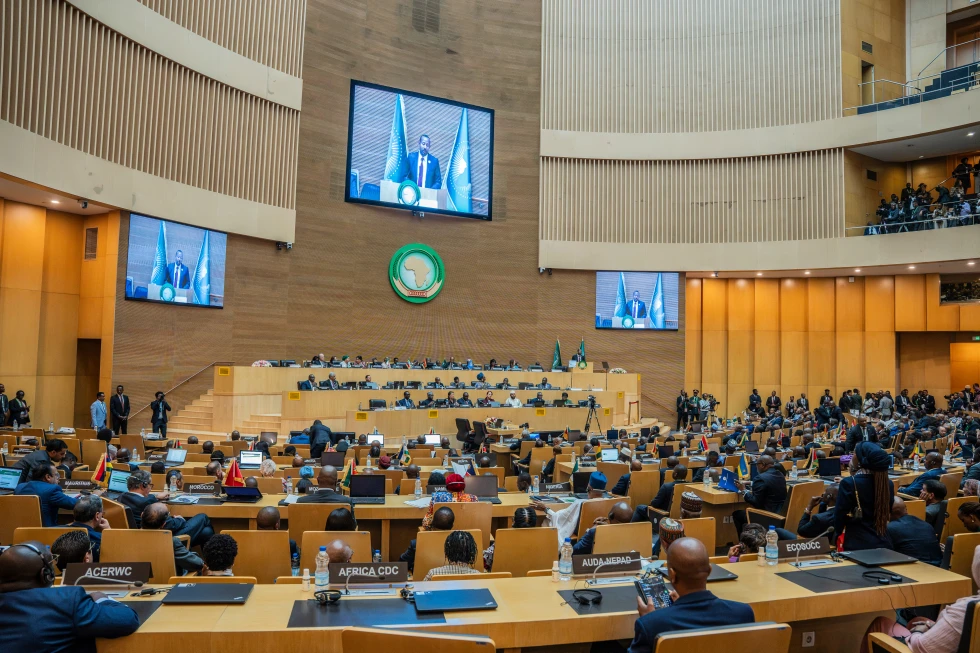
Italy has promised to work more closely with African countries during its second Italy-Africa summit, held on African soil for the first time. The summit, which took place in Addis Ababa, Ethiopia’s capital, aimed to review the progress of projects launched under Italy’s Mattei Plan for Africa, focusing on key areas such as energy, infrastructure, health, and education.
The Mattei Plan, which began in 2024, seeks to promote cooperation through investment rather than traditional aid. Italy wants to support African countries by bringing in technology, knowledge, and capital, while working together with African governments to meet local needs.
Italy’s Prime Minister, Giorgia Meloni, addressed dozens of African heads of state and government at the summit. She emphasised that the success of partnerships depends on learning from African experiences and wisdom.
“We want to build things together,” Meloni said. “We want to make sure we meet the real needs of the countries involved, not just what we think is best.”
Ethiopian Prime Minister Abiy Ahmed welcomed the summit and described Italy’s efforts as a bridge connecting Africa to Europe.
“This is a moment to move from talking to action,” he said. “By combining Africa’s young, energetic, and creative population with Europe’s experience, technology, and capital, we can create solutions that bring prosperity to both continents and beyond.”
After the Italy-Africa summit concludes, African leaders will remain in Addis Ababa for the annual African Union Summit, which begins the following day.
Kenyan writer and political analyst Nanjala Nyabola noted that the effectiveness of such summits depends on the preparation of participating countries. She said that African governments often focus more on appearances than on making summits meaningful.
“Instead of waiting to receive a list of demands, countries should present the results of careful planning of their national needs,” Nyabola said. “Only then can real dialogue happen, and solutions can be found together.”
Since its launch two years ago, the Mattei Plan has directly involved 14 African countries. It has started or advanced around 100 projects across critical sectors. These include energy and climate transition, agriculture and food security, physical and digital infrastructure, health care, water, culture, education, training, and the development of artificial intelligence, according to the Italian government.
The initiative represents a shift from traditional aid approaches to a more investment-focused model, aiming to create sustainable economic growth and strengthen partnerships between Europe and Africa. By focusing on long-term projects and skills development, Italy hopes to contribute to Africa’s development while also encouraging trade and cooperation between the two regions.
The summit highlights the importance of partnerships that respect local priorities and knowledge. Leaders agreed that lasting progress will require continued dialogue, joint planning, and transparent collaboration. For African nations facing high unemployment and rapid population growth, initiatives like the Mattei Plan offer an opportunity to create meaningful jobs, improve infrastructure, and foster innovation.
Italy’s engagement under the Mattei Plan shows a commitment to building partnerships that go beyond financial aid. By focusing on investment, knowledge transfer, and shared planning, the initiative seeks to create a more balanced and mutually beneficial relationship between Europe and Africa.