

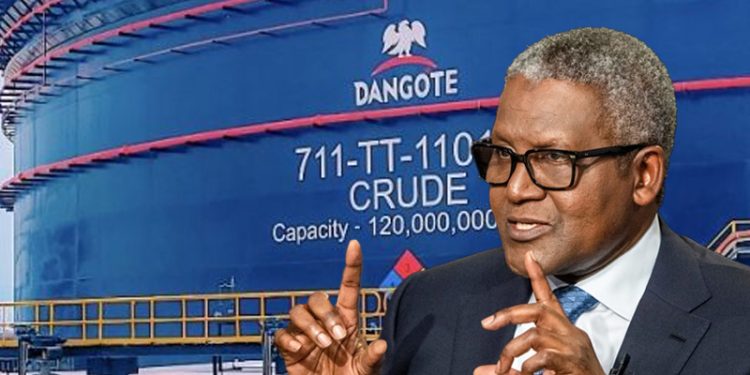
LAGOS, Nigeria — Dangote Petroleum Refinery has launched a fresh legal challenge against the Nigerian government, filing a lawsuit against the Attorney General of the Federation in an attempt to invalidate fuel import licences issued to oil marketers and the state-owned Nigerian National Petroleum Company Limited (NNPC Ltd). The case, filed at the Federal High Court in Lagos, also targets permits granted by the Nigerian Midstream and Downstream Petroleum Regulatory Authority (NMDPRA), according to court documents cited by Reuters.
The refinery is asking the court to set aside recent import approvals issued or renewed in May, arguing that they were granted in breach of an earlier court directive maintaining the status quo while related disputes remain unresolved. It contends that the regulator’s actions undermine existing judicial proceedings and violate provisions of Nigeria’s Petroleum Industry Act (PIA), which the company interprets as permitting fuel imports only when domestic supply is insufficient.
Dangote Petroleum Refinery further argues that the continued issuance of import licences to marketers and NNPC Ltd directly disrupts its operations and weakens the economic rationale of its massive investment in domestic refining capacity. The company maintains that Nigeria should prioritise locally refined petroleum products now that significant domestic refining capacity is coming on stream.
The disputed licences are reported to have been issued to several major petroleum marketers, including NIPCO, AA Rano, Matrix Energy, Shafa Energy, Pinnacle Oil and Gas, and Bono Energy. Collectively, they are understood to have been authorised to import between 600,000 and 720,000 metric tonnes of Premium Motor Spirit, commonly known as petrol, into the Nigerian market.
Regulators and fuel marketers, however, have long defended the continued use of imports, arguing that Nigeria’s demand for petrol still outstrips domestic production capacity and that imports remain essential to safeguard supply stability and prevent shortages. The NMDPRA has yet to issue an official response to the latest court action.
The dispute highlights a persistent policy tension within Nigeria’s downstream petroleum sector, where authorities are attempting to balance emerging domestic refining capacity with the need to maintain uninterrupted fuel supply in a market historically dependent on imports.
Nigeria has for decades relied heavily on imported refined petroleum products due to the chronic underperformance of state-owned refineries. The Dangote Petroleum Refinery, a $20bn facility with a capacity of about 650,000 barrels per day, was widely presented as a transformative project capable of reducing or even eliminating that dependence.
While the refinery has begun operations and steadily increased output, imports have continued to play a significant role in meeting national demand as production levels stabilise and distribution systems adapt. Industry analysts note that the transition away from imports is likely to be gradual rather than immediate.
The latest lawsuit marks a renewed escalation in a dispute that had appeared to ease earlier in 2025, when Dangote Petroleum Refinery withdrew a previous legal challenge over similar import licences without explanation. That withdrawal left unresolved questions over regulatory policy and market competition in one of Africa’s largest fuel-consuming economies.















Discussion about this post