
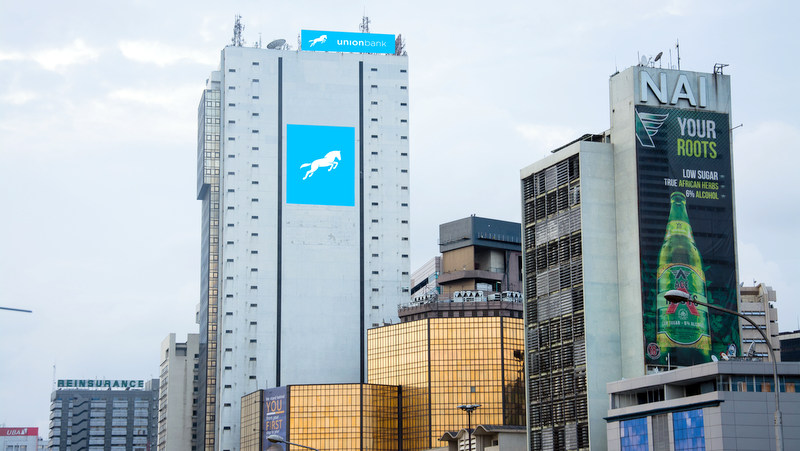
Lagos NIGERIA – A Federal High Court in Lagos has nullified the Central Bank of Nigeria’s takeover of Union Bank, declaring the intervention unlawful and ruling that the country’s banking regulator acted beyond its statutory authority.
In a detailed judgment delivered on Wednesday, Justice Chukwujekwu Aneke held that the actions of the Central Bank of Nigeria (CBN) in dissolving the board and management of Union Bank of Nigeria in January 2024 were ultra vires and not in compliance with the provisions of the Banks and Other Financial Institutions Act 2020 (BOFIA).
The ruling, in suit number FHC/L/MISC/1377/2025, represents a significant judicial rebuke of the central bank’s interventionist approach and raises fresh questions about regulatory limits in Nigeria’s financial sector.
Justice Aneke nullified the entire process through which the CBN removed the bank’s leadership, set aside its public announcement dissolving the board, and invalidated all decisions taken by the regulator-appointed management.
He further ordered the immediate reinstatement of the former board and management led by Farouk Gumel, effectively restoring control of the bank to its previous leadership.
The court also restrained the CBN and its agents from taking any further steps affecting the bank’s governance, including restructuring its share capital or altering its ownership structure. In addition, it halted an ongoing recapitalisation process and investor selection programme initiated under the apex bank’s supervision.
The case was brought by Titan Trust Bank Limited alongside Luxis International DMCC and Magna International DMCC, who claimed to be the ultimate beneficial owners of Union Bank. They challenged the legality of the CBN’s intervention, arguing that it diluted their shareholding and excluded them from key corporate decisions.
According to court filings, the applicants’ stake in the bank was reduced from full ownership to 40 per cent during the period of regulatory control — a move the court described as unjustified and indicative of bad faith.
Justice Aneke found that the applicants’ fundamental right to fair hearing had been breached, noting that they were sanctioned without being given an opportunity to respond to allegations of regulatory infractions arising from a purported special examination of the bank.
“The respondents acted in violation of due process,” the judge held, adding that regulatory authority must be exercised within the confines of the law, regardless of the circumstances.
On the question of jurisdiction, the court clarified that Section 51 of BOFIA does not shield the central bank from judicial scrutiny where it acts outside its statutory mandate. It also ruled that the actions of the CBN-appointed board were subject to review, describing them as agents of the regulator.
The court dismissed procedural objections raised by the respondents, holding that such technicalities were insufficient to defeat the substance of the case. It further found that the applicants had suffered a “continuing injury,” having been excluded from the bank’s management and decision-making processes between January 2024 and December 2025, during which significant corporate actions were undertaken.
While the court acknowledged that the applicants had invested approximately $190m in the bank — a figure admitted by the respondents — it declined to award additional damages due to the absence of oral evidence to substantiate further claims.
The CBN had defended its intervention as part of its prudential oversight responsibilities, citing severe financial distress at Union Bank. It pointed to a negative capital adequacy ratio, a capital shortfall exceeding N224bn, and a high level of non-performing loans as justification for dissolving the board and appointing interim management.
However, Justice Aneke ruled that even in cases of financial instability, the central bank must adhere strictly to the procedures outlined in law.
“Regulatory powers, no matter how wide, are not absolute,” the court held, reinforcing the principle that actions taken in the public interest must still comply with statutory provisions.
The dispute stems from a broader intervention by the CBN in January 2024, when it simultaneously dissolved the boards of Union Bank, Keystone Bank and Polaris Bank over alleged corporate governance failures and regulatory breaches.
At the time, the apex bank cited provisions of BOFIA, arguing that the affected institutions had failed to comply with licensing conditions and posed risks to financial stability. It subsequently installed interim management teams and initiated corrective measures, including recapitalisation and restructuring programmes.
The move followed a pattern of assertive regulatory actions in Nigeria’s banking sector. In 2021, the CBN removed the board of First Bank of Nigeria Holdings Plc over governance concerns, while in 2016 it intervened in Skye Bank Plc, ultimately revoking its licence and transferring its operations to Polaris Bank.
Under BOFIA, the central bank is empowered to intervene in troubled institutions, including removing directors where a “grave situation” is identified. However, the court’s ruling underscores that such powers are not immune from legal challenge.
Financial analysts say the judgment could have far-reaching implications for regulatory practice in Nigeria, potentially prompting a more cautious approach by the CBN when exercising its supervisory authority.
For investors, the decision is likely to be seen as a reaffirmation of the rule of law and the protection of shareholder rights, particularly in cases involving significant capital and ownership stakes.
However, it also introduces uncertainty about the immediate future of Union Bank, especially regarding decisions taken during the period of regulatory control and the status of ongoing restructuring efforts.
The CBN is expected to review the judgment and consider its legal options, including a possible appeal, as stakeholders across the banking sector assess the wider implications of a ruling that has sharply defined the limits of regulatory power in Africa’s largest economy.