
The Democratic Republic of the Congo has officially declared the end of a devastating two‑year mpox epidemic that overwhelmed communities, strained health services, and claimed thousands of lives, health officials announced this week.
Health Minister Roger Kamba said on Thursday that after months without any new confirmed infections, the outbreak “has been brought under control” and is no longer considered a national public health emergency. His announcement in the capital, Kinshasa, marked a rare piece of good news amid a long period of regional health crises.
“It is with relief and gratitude to the resilience of the Congolese people and dedication of our health workers that we declare the mpox epidemic over,” Kamba told reporters, emphasising continued surveillance to guard against any new flare‑ups.
The outbreak, which began in early 2024, became the largest mpox epidemic in Africa in recent years. Scientists and public health authorities tracked rising cases linked to a strain of the virus known as clade I, which spread across multiple provinces of Congo and into neighbouring countries. Congo’s health system, already under strain from other infectious diseases and years of under‑investment, struggled to cope with the surge.
Official data show that more than 161,000 suspected cases were recorded during the crisis, with roughly 37,000 confirmed by laboratory testing. Reported deaths exceeded 2,200, though only about 127 were confirmed through lab results, reflecting broader challenges in testing capacity and reporting in remote areas.
The outbreak attracted global attention in 2024 when it spread beyond Congo’s borders, prompting the World Health Organization to declare a global health emergency. That designation was lifted in September 2025 as case numbers declined sharply and the risk of wider international spread diminished.
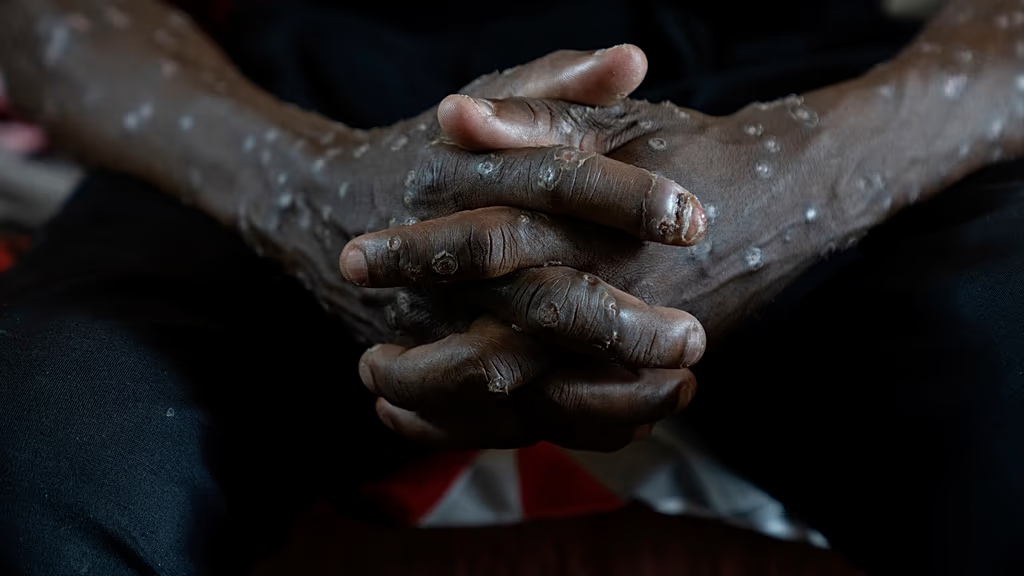
Mpox, formerly known as monkeypox, is a viral zoonotic disease that can pass to humans from animals and, in recent years, between people through close contact. Typical symptoms include fever, rash and swelling of lymph nodes. While many patients recover within weeks, the disease can be severe or even fatal in vulnerable populations, such as people with weakened immune systems or young children.
International support played a significant role in Congo’s response. Vaccines were delivered to help curb the spread of the virus in high‑risk areas, and health workers on the ground played a critical role in case management and community education.
At the height of the outbreak, treatment centres were overwhelmed, especially in eastern provinces where mpox spread rapidly and health infrastructure is limited. Reports from frontline areas described shortages of medicines, protective equipment and staff, while movement restrictions and local conflict complicated the delivery of care.
Epidemiologists say the Congo outbreak illustrated the broader vulnerability of the region to emerging infectious diseases. Mpox is endemic in parts of central and west Africa and has been present for decades, often linked to interactions between people and wildlife. Before the 2022 global outbreak, most human infections were confined to parts of central and west Africa.
Public health experts warn that ending a major outbreak does not mean the disease has disappeared. Congo’s health ministry said it will maintain enhanced surveillance and rapid response teams to ensure any future cases are identified quickly and isolated to prevent further spread.
The announcement also comes amid other ongoing health challenges in Congo, including periodic outbreaks of diseases such as Ebola and measles that continue to strain fragile health services.
For communities hit hardest by mpox, ending the outbreak offers a chance to rebuild and refocus on long‑term recovery. But health officials and international partners say sustained investment in Congo’s public health infrastructure is essential to prevent similar crises in the future.
Authorities have urged continued vigilance, community education and support for vaccination and treatment efforts to safeguard the gains made over two difficult years.