
Cameroon’s parliament has approved a contentious constitutional amendment reintroducing the post of vice president, in a move that has intensified debate over succession and democratic governance in the Central African nation.
Lawmakers meeting in the capital, Yaoundé, voted overwhelmingly in favour of the bill on Saturday, with 200 members backing the proposal, 18 voting against it and four ballots declared invalid. The legislation passed after only two days of parliamentary debate, underlining the urgency with which the government pursued the reform.
The amendment creates a vice presidency with sweeping authority over succession. Under the new provisions, the vice president would automatically assume office in the event of the incumbent’s death, resignation or incapacity, removing any requirement for fresh elections.
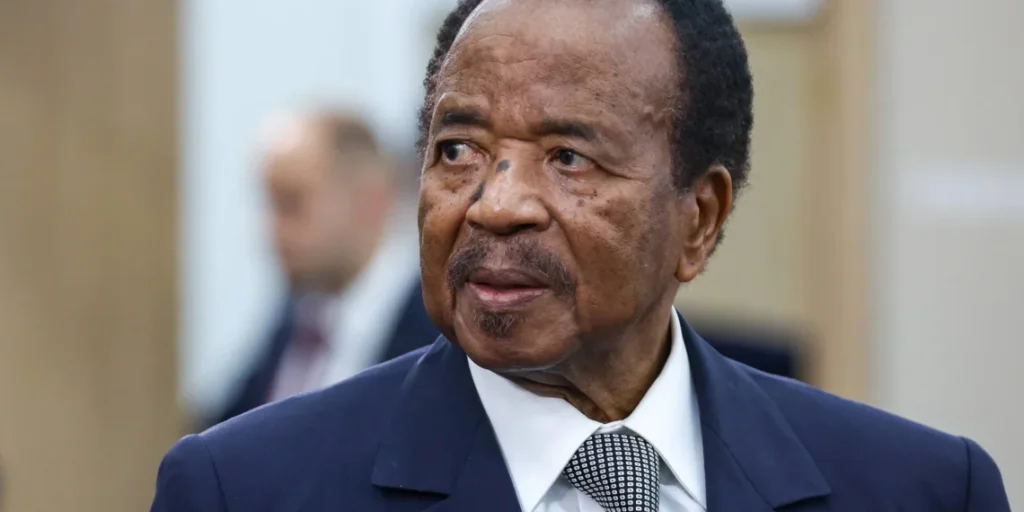
The change is widely seen as paving the way for Paul Biya, 93, to appoint a preferred successor. The vice president, chosen directly by the head of state rather than elected, would complete the remainder of the current seven-year presidential term, running from 2025 to 2032.
Supporters argue the reform establishes a clear and structured mechanism for continuity in governance. They say the absence of a defined succession process has long posed a risk to political stability, particularly given Mr Biya’s age and his more than four decades in power since 1982.
Government allies contend that the measure strengthens institutional resilience and would ensure an orderly transfer of power in the event of an unexpected transition, rather than a potentially destabilising vacuum.
However, opposition figures have sharply criticised the amendment as a consolidation of executive power. Maurice Kamto, a leading opposition figure, described the bill as a “power grab”, warning it could further erode democratic accountability.
Analysts note that the president retains the authority to appoint and dismiss the vice president, fuelling concerns that the role could serve as a mechanism for selecting a successor without public input. Critics argue this effectively sidelines electoral processes at a pivotal moment in the country’s political future.
The timing has added to the controversy. Mr Biya was re-elected last October in a vote disputed by opposition groups, who alleged irregularities and voter suppression. The introduction of a succession framework that bypasses elections has heightened suspicion among those who see it as entrenching long-standing political dominance.
The move also marks a significant institutional shift. Cameroon abolished the vice presidency decades ago, and its return signals a major constitutional change. Observers link it to a broader pattern of reforms that have expanded presidential authority, including the removal of term limits in 2008.
Civil society groups have also raised concerns that the amendment could deepen public distrust in democratic institutions, particularly as the country grapples with separatist tensions in its English-speaking regions and mounting economic pressures.
While the government insists the reform is necessary to safeguard stability, critics argue that continuity achieved without electoral legitimacy risks undermining confidence in the state.
As the bill awaits formal enactment, the question of succession — and the balance between order and democratic principle — has moved firmly to the centre of Cameroon’s political debate.