
With a 221 billion US dollars annual infrastructure financing gap and trillions sitting idle in domestic capital pools, African leaders are betting on a new continental financing architecture to reclaim economic control.
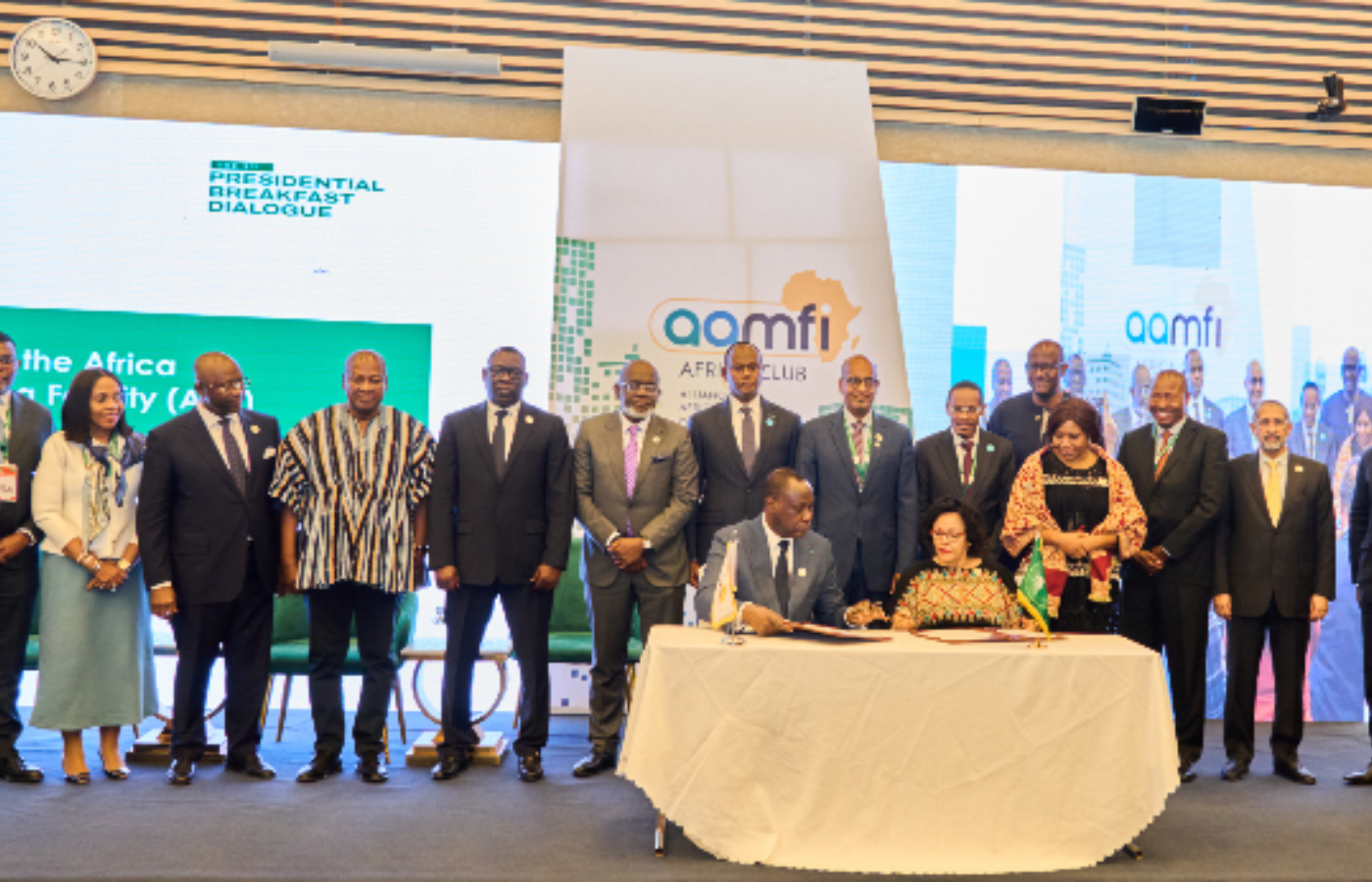
African heads of state formally launched the Africa Infrastructure Financing Facility (AIFF) this month, positioning it as a decisive step toward strengthening the continent’s financial sovereignty and accelerating cross-border infrastructure projects under the African Union’s Agenda 2063 blueprint.
The facility was unveiled on 14 February during the third presidential high-level dialogue of the Alliance of African Multilateral Financial Institutions (AAMFI), convened on the margins of the 39th African Union summit in Addis Ababa under the theme “Strengthening Africa’s Financial Architecture to Finance Agenda 2063”.
Leaders framed the initiative as a response to long-standing structural constraints: fragmented capital markets, elevated borrowing costs and persistent reliance on external financing systems that many argue misprice African risk.
“Africa has domestic capital pools exceeding 2.5 trillion US dollars,” said Ghana’s president, John Dramani Mahama, who serves as the African Union’s champion on AU financial institutions. “The challenge is not the availability of capital, but how intentionally we deploy it into infrastructure, industrialisation and job creation to realise Agenda 2063 and the African Continental Free Trade Area.”
Africa’s infrastructure financing gap is estimated at roughly 221 billion US dollars a year between 2023 and 2030. While political commitment to large-scale transport, energy and industrial corridors has remained strong, many projects stall at early preparation stages due to weak structuring, limited feasibility funding and inadequate coordination between institutions.
The AIFF is intended to address that bottleneck. Established under a cooperation framework agreement between AUDA-NEPAD and AAMFI, the platform aims to coordinate project preparation and facilitate indicative, non-binding financing engagement for priority cross-border infrastructure schemes.
Francisca Tatchouop Belobe, the African Union commissioner for economic development, trade, tourism, industry and minerals, described the launch as a demonstration of political will aligning with institutional coordination. “We are confident that this facility will contribute meaningfully to closing Africa’s infrastructure financing gap,” she said.
Samaila Zubairu, president and chief executive of Africa Finance Corporation and outgoing chair of AAMFI, said the alliance’s combined balance sheets – exceeding 70 billion US dollars – would be central to mobilising long-term capital at scale. “Our collective action is central to mobilising the resources needed to deliver transformative infrastructure and regional integration,” he said.
George Elombi, president of Afreximbank, argued that Africa’s problem has been less about project relevance and more about financial execution. “Too many projects stall not because they lack relevance, but because they are insufficiently prepared, inadequately structured, or misaligned with the requirements of long-term capital,” he said. Pooling expertise and risk frameworks, he added, would allow African institutions to move from “fragmented interventions to a coherent system capable of mobilising capital at scale”.
The dialogue also saw Cameroon deposit its instrument of ratification of the protocol and statutes of the proposed African Monetary Fund, signalling renewed momentum behind efforts to operationalise key African Union financial institutions aimed at strengthening macroeconomic stability and monetary cooperation.
Supporters of the AIFF argue that a coordinated, Africa-led mechanism could lower project risk perceptions, crowd in private capital and reduce dependency on external financial systems. Skeptics, however, note that implementation will test whether political declarations can translate into disciplined capital deployment and institutional reform.