

Wednesday, May 13, 2026
  • Who’sWho Africa AWARDS
  • About One Africa Magazine
  • Contact Us
  • Home
  • Magazine
  • News
  • Interviews
  • Sports
  • World News
    • US
    • South America
    • Asia
    • Europe
    • Middle East
    • Australia and Antarctica
  • Crime
  • Politics
  • Lifestyle
  • Column
  • Special Report
  • WHO’SWHO AWARDS
No Result
View All Result
  • Home
  • Magazine
  • News
  • Interviews
  • Sports
  • World News
    • US
    • South America
    • Asia
    • Europe
    • Middle East
    • Australia and Antarctica
  • Crime
  • Politics
  • Lifestyle
  • Column
  • Special Report
  • WHO’SWHO AWARDS
No Result
View All Result
No Result
View All Result
  • Home
  • WHO’SWHO AWARDS
  • News
  • Magazine
  • World News

Home » Column » We don’t need ‘miracle’ technologies to fix the climate. We have the tools now

We don’t need ‘miracle’ technologies to fix the climate. We have the tools now

February 7, 2023
in Column, Featured
0
Share on FacebookShare on Twitter

ReadAlso

Coal Could Provide African SMEs Much-Needed Fiscal Relief Amid Escalating Fuel Prices

Why Africa’s Energy Supply Gap is its Defining Commercial Opportunity

Nearly 7 million people die each year from air pollution. Moreover, global warming is already causing catastrophic damage. We have only seven years to eliminate 80% of the world’s greenhouse gas emissions – and 12 to 27 years to eliminate the rest – to avoid 1.5C global warming since the 1850 to 1900 period. We are already 1.1C above average.
The world also faces serious energy-security risks related to climate change: the economic, social, and political instability that will result when fossil fuels and uranium run out; blackmail by countries that control the supply of fuel to other countries; the high costs of shipping energy long distances; blackouts when a centralized fossil-fuel or nuclear power plant unexpectedly goes down; and health and environmental problems associated with continuous fuel mining, waste storage, nuclear reactor meltdown, and nuclear energy-related weapons proliferation.

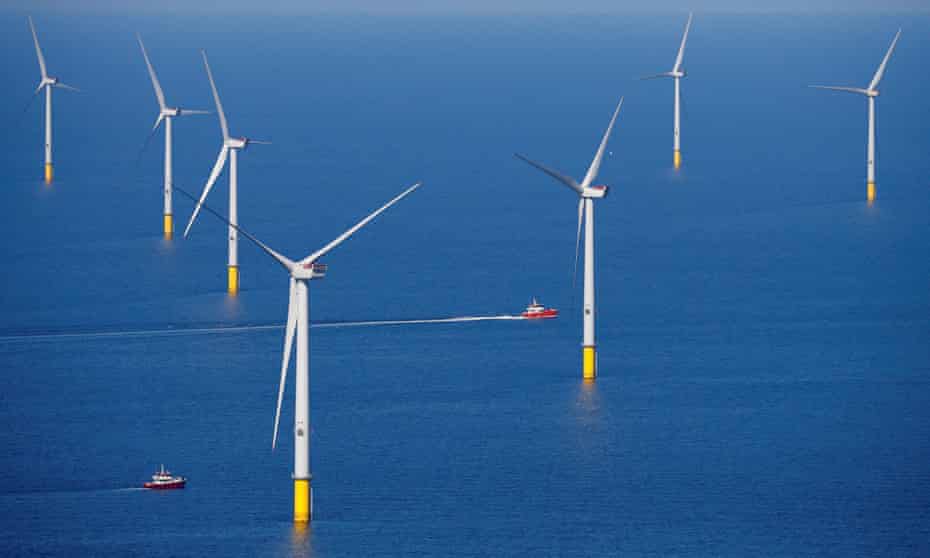
Given the magnitude of these problems and the urgency of a solution to them, it is no surprise that the best solution is one that can be implemented quickly and at low cost. Enter wind, water and solar (WWS). WWS includes energy from the wind (onshore and offshore wind electricity), the water (hydroelectricity, tidal and ocean current electricity, wave electricity, geothermal electricity and geothermal heat), and the sun (solar photovoltaic electricity, concentrated solar power electricity and heat, and direct solar heat).

When combined with electricity storage, heat storage, cold storage and hydrogen storage; techniques to encourage people to shift the time of their electricity use (demand response); a well-interconnected electrical transmission system; and nifty and efficient electrical appliances, such as heat pumps, induction cooktops, electric vehicles and electric furnaces for industry, WWS can solve the ginormous problems associated with climate change at low cost worldwide.

The biggest reason a WWS system is low cost is that it uses much less energy than does a combustion-based energy system. Worldwide, in fact, the energy that people use goes down by over 56% with a WWS system. There are five reasons for the reduction: the efficiency of electric vehicles over combustion vehicles, the efficiency of electric heat pumps for air and water heating over combustion heaters, the efficiency of electrified industry, eliminating energy needed to obtain fossil fuels and uranium, and some efficiency improvements beyond what is expected.

On top of that, a WWS system reduces the cost per unit energy by another 12% on average, resulting in a 63% lower annual energy cost worldwide. Adding health and climate cost savings gives an overall 92% reduction in annual social cost (which is the energy plus health plus climate cost) relative to a conventional system.

The worldwide upfront capital cost of such a 2050 WWS system is around $62tn. However, due to the $11tn annual energy cost savings, the payback time is less than six years. The new system may also create over 28m more long-term, full-time jobs than lost worldwide, and may require only about 0.53% of the world’s land for new energy – less than the land required for the current energy system.

What is more, we have 95% of the technologies we need to solve the problem. The ones we don’t have include long-distance aircraft and ships and some industrial technologies, but we know how to transition those technologies. We also need to address non-energy emissions as well, but we know how to do that, as well. So, if we have almost all that we need, why do we need “miracle technologies” being proposed ad nauseam to solve these problems?

We don’t. We do not need carbon capture and storage or use, direct air capture storage or use, blue hydrogen, new nuclear power, or bioenergy. Carbon capture equipment extracts carbon dioxide from power plants or other industrial sources. Direct air capture equipment extracts carbon dioxide directly from the air. Blue hydrogen is hydrogen produced from natural gas with carbon capture equipment added to remove the resulting carbon dioxide.

These three technology, which all require equipment and energy, merely increase air pollution, fuel mining and fossil-fuel infrastructure, thus energy insecurity, while hardly reducing carbon dioxide. They all increase energy requirements by 30% or so compared with no capture, have average capture efficiencies of 20 to 80% rather than the 90 to 95% claimed, and increase, not decrease, carbon dioxide from the fuel mining and transport by requiring more energy.

Furthermore, 73% of all carbon dioxide captured today is used to help dig more oil out of the ground. This process releases about 40% of the captured carbon back to the air in addition to producing more dirty oil. These technologies are opportunity costs whose real effects are to extend the life of the fossil fuel industry.

In addition, new nuclear suffers from a 10- to 21-year time lag between planning and operation (too long to be useful for immediately addressing the climate crisis), costs that are five to eight times those of new wind and solar per unit energy, weapons proliferation risk, meltdown risk, waste risk, underground uranium mining health risk, and carbon dioxide emissions that are nine to 37 times those of onshore wind. Bioenergy produces air pollution and greenhouse gases while using rapacious amounts of land and water.

The good news is that we have almost all the technologies we need, their costs are mostly low and dropping, and implementing the solution has multiple co-benefits. At this time, we need social acceptance and political willpower to affect a change. I am optimistic we can obtain both.

TheGuardian/By Mark Z Jacobson is a professor of civil and environmental engineering at Stanford. His work informs the scientific bases for the Green New Deal. He is also the author of six books, including No Miracles Needed: How Today’s Technology Can Save Our Climate and Clean Our Air


ADVERTISEMENT

Related

Tags: Climate Changeelectricityhydroelectricitysolar powerWater and solarWindWWS
ADVERTISEMENT
Previous Post

Kenya: Farmers disappointed in President Ruto over failed promise to subsidise fertiliser

Next Post

Organ Harvest trial: Prosecutor tenders significant facts against Ekweremadus

You MayAlso Like

Featured

Climate Change Is Fueling Africa’s Deadliest Malaria Surge

May 13, 2026
Column

The Fuehrer of Rivers

May 12, 2026
Column

Oborevwori and party realignment

May 12, 2026
Column

Tansian University: Setting The Record Straight. I Must Speak Again

May 12, 2026
A young man smokes Kush, a derivative of cannabis mixed with synthetic drugs like fentanyl and tramadol and chemicals like formaldehyde, at a hideout in Freetown, Sierra Leone, April 29, 2024 © Misper Apawu, AP
Featured

How India Pharmaceutical Pipeline Is Fueling West Africa Opioid Crisis

May 12, 2026
Featured

One Month Before Kick-Off, Questions Mount Over 2026 FIFA World Cup as Concerns Grow Over Cost, Security and Logistics

May 11, 2026
Next Post

Organ Harvest trial: Prosecutor tenders significant facts against Ekweremadus

5 Catholic priests sentenced to 10 years for conspiracy

Discussion about this post

Tansian University: Setting The Record Straight. I Must Speak Again

How the Church’s Inaction Emboldened a Priest-Lawyer to Take Over Tansian University

Fr. Obiora Is Turning Tansian University into His Personal Fiefdom — Says Msgr. Akam’s Brother, Prof. G.U. Akam

One Month Before Kick-Off, Questions Mount Over 2026 FIFA World Cup as Concerns Grow Over Cost, Security and Logistics

The Fuehrer of Rivers

France Targets Anglophone Africa at Kenya Summit

  • Tansian University: Setting The Record Straight. I Must Speak Again

    598 shares
    Share 239 Tweet 150
  • How the Church’s Inaction Emboldened a Priest-Lawyer to Take Over Tansian University

    625 shares
    Share 250 Tweet 156
  • Fr. Obiora Is Turning Tansian University into His Personal Fiefdom — Says Msgr. Akam’s Brother, Prof. G.U. Akam

    565 shares
    Share 226 Tweet 141
  • One Month Before Kick-Off, Questions Mount Over 2026 FIFA World Cup as Concerns Grow Over Cost, Security and Logistics

    543 shares
    Share 217 Tweet 136
  • The Fuehrer of Rivers

    541 shares
    Share 216 Tweet 135
  • Trending
  • Comments
  • Latest

Tansian University: Setting The Record Straight. I Must Speak Again

May 12, 2026

How the Church’s Inaction Emboldened a Priest-Lawyer to Take Over Tansian University

September 7, 2025

Fr. Obiora Is Turning Tansian University into His Personal Fiefdom — Says Msgr. Akam’s Brother, Prof. G.U. Akam

December 22, 2025

One Month Before Kick-Off, Questions Mount Over 2026 FIFA World Cup as Concerns Grow Over Cost, Security and Logistics

May 11, 2026

Climate Change Is Fueling Africa’s Deadliest Malaria Surge

May 13, 2026
French President Emmanuel Macron speaks to FRANCE 24, RFI and TV5Monde at the close of the Africa Forward Summit.
(© FRANCE 24)

Kenya Summit: Five Key Takeaways From Macron’s Exclusive Interview

May 13, 2026

The Fuehrer of Rivers

May 12, 2026

Oborevwori and party realignment

May 12, 2026

ABOUT US

TIMEAFRICA MAGAZINE is an African Magazine with a culture of excellence; a magazine without peer. Nearly a third of its readers hold advanced degrees and include novelists, … READ MORE >>

SECTIONS

  • Aviation
  • Column
  • Crime
  • Europe
  • Featured
  • Gallery
  • Health
  • Interviews
  • Israel-Hamas
  • Lifestyle
  • Magazine
  • Middle-East
  • News
  • Politics
  • Press Release
  • Russia-Ukraine
  • Science
  • Special Report
  • Sports
  • TV/Radio
  • UAE
  • UK
  • US
  • World News

Useful Links

  • AllAfrica
  • Channel Africa
  • El Khabar
  • The Guardian
  • Cairo Live
  • Le Republicain
  • Magazine: 9771144975608
  • Subscribe to TIMEAFRICA MAGAZINE biweekly news magazine

    Enjoy handpicked stories from around African continent,
    delivered anywhere in the world

    Subscribe

    • About One Africa Magazine
    • Privacy Policy
    • Contact Us
    • WHO’SWHO AWARDS

    © Copyright TimeAfrica Magazine Limited 2026 - All rights reserved.

    No Result
    View All Result
    • WHO’SWHO AWARDS
    • Politics
    • Column
    • Interviews
    • Gallery
    • Lifestyle
    • Special Report
    • Sports
    • TV/Radio
    • Aviation
    • Health
    • Science
    • World News

    © Copyright TimeAfrica Magazine Limited 2026 - All rights reserved.

    This website uses cookies. By continuing to use this website you are giving consent to cookies being used. Visit our Privacy and Cookie Policy.