
Friday, May 15, 2026
  • Who’sWho Africa AWARDS
  • About One Africa Magazine
  • Contact Us
One Voice. One Vision. One Africa.
  • Home
  • Magazine
  • News
  • Interviews
  • Sports
  • World News
    • US
    • South America
    • Asia
    • Europe
    • Middle East
    • Australia and Antarctica
  • Crime
  • Politics
  • Lifestyle
  • Column
  • Special Report
  • WHO’SWHO AWARDS
No Result
View All Result
One Voice. One Vision. One Africa.
  • Home
  • Magazine
  • News
  • Interviews
  • Sports
  • World News
    • US
    • South America
    • Asia
    • Europe
    • Middle East
    • Australia and Antarctica
  • Crime
  • Politics
  • Lifestyle
  • Column
  • Special Report
  • WHO’SWHO AWARDS
No Result
View All Result
One Voice. One Vision. One Africa.
No Result
View All Result
  • Home
  • WHO’SWHO AWARDS
  • News
  • Magazine
  • World News

Home » Featured » Rainwater is no longer safe to drink anywhere on Earth, due to ‘forever chemicals’ linked to cancer

Rainwater is no longer safe to drink anywhere on Earth, due to ‘forever chemicals’ linked to cancer

August 14, 2022
in Featured, Lifestyle
0
Share on FacebookShare on Twitter

By Morgan McFall-Johnsen

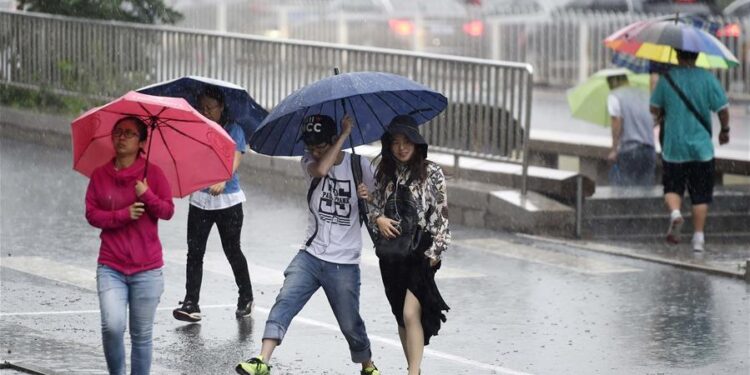
Rainwater is no longer safe to drink anywhere on Earth by US contamination guidelines, according to a team of environmental scientists. That’s because rainwater across the planet now contains hazardous chemicals called per- and polyfluoroalkyl substances (PFAS). In a paper published in the journal Environmental Science & Technology on August 2, researchers at University of Stockholm, which has been studying PFAS for a decade, found evidence that these substances have spread throughout the entire atmosphere, leaving no place untouched.

There are thousands of PFAS, all human-made, used in food packaging, water-repellant clothing, furniture, carpets, nonstick coating on pots and pans, fire-extinguishing foams, electronics, and some shampoos and cosmetics. During manufacturing and daily use, they can be released into the air. They also leach into ocean water and get aerosolized in sea spray. From there, they spread through the atmosphere and fall back to Earth in rain.

They’re often called “forever chemicals” because they linger for a long time without breaking down, allowing them to build up in people, animals, and environments.

ReadAlso

No Content Available

PFAS have been found in Antarctica and in Arctic sea ice. Their prevalence across the planet is a hazard to human health, since peer-reviewed studies have linked them to some cancers, decreased fertility, reduced vaccine response, high cholesterol, and developmental delays in children.

Like microplastics, it is difficult to identify all the long-lasting health effects of PFAS exposure because they include so many different compounds and they are so prevalent in the environment. The new paper suggests that everybody on Earth is at risk.

ADVERTISEMENT

Perhaps the most notorious among these substances are perfluorooctanoic acid (PFOA) and perfluorooctanesulfonic acid (PFOS). In June, based on new evidence about health impacts, the Environmental Protection Agency significantly tightened its guidelines for how much PFOA and PFOS can safely be present in drinking water.

Previously, EPA had set the acceptable level for both substances at 70 parts per trillion. The new guidelines cut that by a factor of up to 17,000 — limiting safe levels to 0.004 parts per trillion for PFOA and 0.02 parts per trillion for PFOS.

The University of Stockholm researchers assessed the levels of PFOA, PFOS, and two other PFAS in rainwater and soil across the planet, and compared them to regulators’ limits. Both substances’ levels in rainwater “often greatly exceed” EPA limits, the study authors concluded.

“Based on the latest US guidelines for PFOA in drinking water, rainwater everywhere would be judged unsafe to drink,” Ian Cousins, the lead author of the study and professor at the University of Stockholm Department of Environmental Science, said in a press release.

“Although in the industrial world we don’t often drink rainwater [directly], many people around the world expect it to be safe to drink, and it supplies many of our drinking water sources,” Cousins added.

The paper also found that soil across the globe was “ubiquitously contaminated” with PFAS. Because PFAS persist for so long and cycle through the planet’s oceans, atmosphere, and soil so effectively, the researchers expect levels will continue to be dangerously high.

Ultimately, the researchers conclude that PFAS have exceeded the safe “planetary boundary” for human health.

“It is vitally important that PFAS uses and emissions are rapidly restricted,” they wrote.

Read the original article on Business Insider
 

Related

Tags: Environmental Science & Technology
ADVERTISEMENT
Previous Post

Europe’s rivers run dry as scientists warn drought could be worst in 500 years

Next Post

Africa: Countries should remove barriers that keep young mothers out of school

You MayAlso Like

Smoke billows in the Red Sea city of Port Sudan after drone strikes by the paramilitary Rapid Support Forces (RSF), 6 May 2025. Photograph: AP
Column

The UAE tries hard to keep its reputation spotless. But with the war in Sudan, how can it?

May 15, 2026
Featured

Climate Change Is Fueling Africa’s Deadliest Malaria Surge

May 13, 2026
A young man smokes Kush, a derivative of cannabis mixed with synthetic drugs like fentanyl and tramadol and chemicals like formaldehyde, at a hideout in Freetown, Sierra Leone, April 29, 2024 © Misper Apawu, AP
Featured

How India Pharmaceutical Pipeline Is Fueling West Africa Opioid Crisis

May 12, 2026
Featured

One Month Before Kick-Off, Questions Mount Over 2026 FIFA World Cup as Concerns Grow Over Cost, Security and Logistics

May 11, 2026
Featured

US ‘Shameless Exploitation’ in Proposed Zambian Health Aid Deal Exposed

May 10, 2026
Column

Who will be the next UN chief?

April 26, 2026
Next Post
Angela, 15, holds her newborn baby girl in a hospital in Tanzania. Unmarried and living with her parents, she hopes to continue with her studies and one day become a nurse. Shinyanga, Tanzania. August 4, 2014.

Africa: Countries should remove barriers that keep young mothers out of school

Mrs. Theresa Adankwo Odum: A consequential matriarch at 86

Discussion about this post

Tansian University: Setting The Record Straight. I Must Speak Again

Trump Drops $15,000 Visa Bond for African World Cup Fans

UN pleads for Equatorial Guinea not to send US asylum seekers to their home countries: ‘Their life would be in danger’

How the Church’s Inaction Emboldened a Priest-Lawyer to Take Over Tansian University

The Fuehrer of Rivers

“Hands Off My Brother’s Legacy!” — Prof. Akam Slams Fr. Obiorah Over Alleged Meddling at Late Msgr. Akam’s Tansian University

  • Tansian University: Setting The Record Straight. I Must Speak Again

    612 shares
    Share 245 Tweet 153
  • Trump Drops $15,000 Visa Bond for African World Cup Fans

    542 shares
    Share 217 Tweet 136
  • UN pleads for Equatorial Guinea not to send US asylum seekers to their home countries: ‘Their life would be in danger’

    541 shares
    Share 216 Tweet 135
  • How the Church’s Inaction Emboldened a Priest-Lawyer to Take Over Tansian University

    626 shares
    Share 250 Tweet 157
  • The Fuehrer of Rivers

    541 shares
    Share 216 Tweet 135
  • Trending
  • Comments
  • Latest

Tansian University: Setting The Record Straight. I Must Speak Again

May 12, 2026
Fans traveling from Senegal will no longer have no pay hefty bonds during the World Cup if they have a ticket. Photograph: Sunday Alamba/AP

Trump Drops $15,000 Visa Bond for African World Cup Fans

May 14, 2026

UN pleads for Equatorial Guinea not to send US asylum seekers to their home countries: ‘Their life would be in danger’

May 14, 2026

How the Church’s Inaction Emboldened a Priest-Lawyer to Take Over Tansian University

September 7, 2025
Smoke billows in the Red Sea city of Port Sudan after drone strikes by the paramilitary Rapid Support Forces (RSF), 6 May 2025. Photograph: AP

The UAE tries hard to keep its reputation spotless. But with the war in Sudan, how can it?

May 15, 2026

UN pleads for Equatorial Guinea not to send US asylum seekers to their home countries: ‘Their life would be in danger’

May 14, 2026
Fans traveling from Senegal will no longer have no pay hefty bonds during the World Cup if they have a ticket. Photograph: Sunday Alamba/AP

Trump Drops $15,000 Visa Bond for African World Cup Fans

May 14, 2026

Climate Change Is Fueling Africa’s Deadliest Malaria Surge

May 13, 2026

ABOUT US

One Voice. One Vision. One Africa.

TIMEAFRICA MAGAZINE is an African Magazine with a culture of excellence; a magazine without peer. Nearly a third of its readers hold advanced degrees and include novelists, … READ MORE >>

SECTIONS

  • Aviation
  • Column
  • Crime
  • Europe
  • Featured
  • Gallery
  • Health
  • Interviews
  • Israel-Hamas
  • Lifestyle
  • Magazine
  • Middle-East
  • News
  • Politics
  • Press Release
  • Russia-Ukraine
  • Science
  • Special Report
  • Sports
  • TV/Radio
  • UAE
  • UK
  • US
  • World News

Useful Links

  • AllAfrica
  • Channel Africa
  • El Khabar
  • The Guardian
  • Cairo Live
  • Le Republicain
  • Magazine: 9771144975608
  • Subscribe to TIMEAFRICA MAGAZINE biweekly news magazine

    Enjoy handpicked stories from around African continent,
    delivered anywhere in the world

    Subscribe

    • About One Africa Magazine
    • Privacy Policy
    • Contact Us
    • WHO’SWHO AWARDS

    © Copyright TimeAfrica Magazine Limited 2026 - All rights reserved.

    No Result
    View All Result
    • WHO’SWHO AWARDS
    • Politics
    • Column
    • Interviews
    • Gallery
    • Lifestyle
    • Special Report
    • Sports
    • TV/Radio
    • Aviation
    • Health
    • Science
    • World News

    © Copyright TimeAfrica Magazine Limited 2026 - All rights reserved.

    This website uses cookies. By continuing to use this website you are giving consent to cookies being used. Visit our Privacy and Cookie Policy.